Iran shock upends real estate’s long-anticipated recovery
Institutional investors have reduced their target allocations to the sector for the first time since 2012
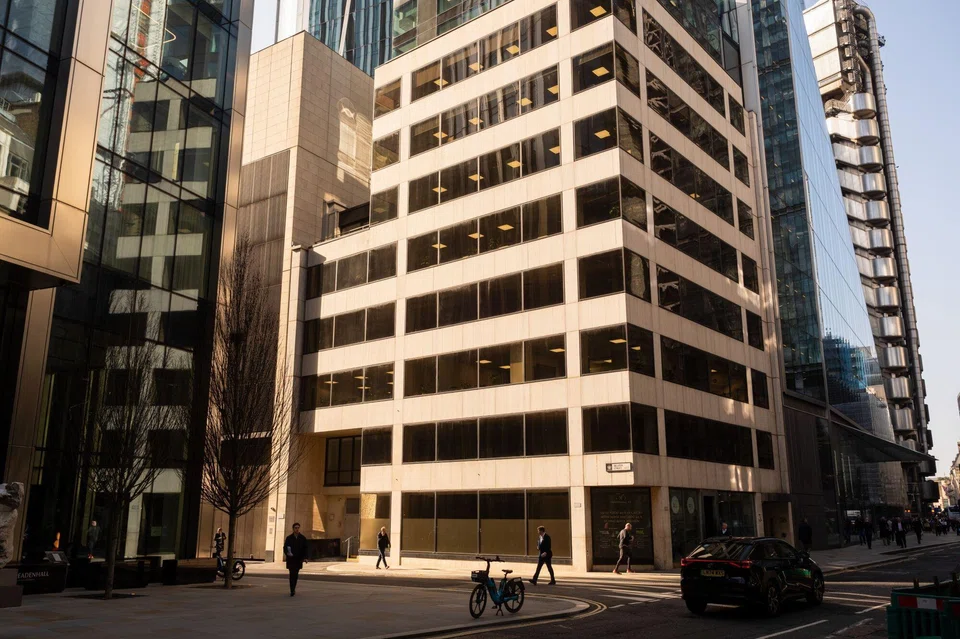
[LONDON] Five years after Russia’s invasion of Ukraine brought real estate’s decade-long party to a sudden halt, another war about 2,600 km south is now threatening to choke off the recovery investors have been anticipating ever since.
The US and Israel’s attack on Iran has sent energy prices soaring, heightening risks for an industry where valuations are hypersensitive to interest rates. A sustained conflict means faster inflation feeding through to borrowing costs.
Even before the war broke out, buyers appeared unmoved by the investment case for commercial property despite a combination of tailwinds: rates that until this month had gradually been dwindling; a clear lack of supply; and, rents that are broadly on the rise.
Institutional investors have reduced their target allocations to the sector for the first time since 2012, with optimism around a recovery not “matched by capital commitments”, according to a report published on Tuesday (Mar 10) by PwC and the Urban Land Institute.
“There was a view among the CEOs and chief investment officers that we spoke to that this is finally the year where we’re on the rebound,” said Simon Chinn, vice-president in research and advisory at the ULI. Now “there is a concern that the recovery is just like it has been for the last three years – always three-to-six months off”.
It is an awkward backdrop for an industry that this week is descending on Cannes for the Mipim property conference and eager to talk up the prospects for dealmaking.
Some 71.5 billion euros (S$105.8 billion) of European commercial real estate transactions were completed in the final quarter of 2025, down 9 per cent from the same period a year earlier, MSCI data show. Weaker European economies and sustained high borrowing costs meant 2025 was not “the vintage year promised by those “Survive ‘til 25” bumper stickers”, according to an MSCI report published in January.
“This is one of the longest, worst downturns we have had,” said David Steinbach, global chief investment officer at Hines. “It is worse than ’08 in terms of how long it has gone on.”
The year started with signs of optimism that bigger deals might be back on the horizon after a sustained hiatus. Brookfield found a buyer for CityPoint, the debt-laden office building in London’s financial district it has repeatedly attempted to offload in recent years. But the talks have since broken down, putting the tower back on the list of trophy properties looking for a buyer.
SEE ALSO

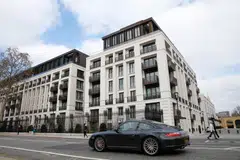

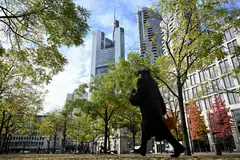

Derwent London offered the Brunel Building in the city’s Paddington district for sale for about £300 million (S$513.7 million) in August but so far has yet to agree a deal.
“We would want to make sure that if we were to sell it, we get a good price,” chief executive officer Paul Williams said.
Those deals that are still on track face a nervous week on the French Riviera with the prospect that buyers seek to renegotiate prices lower to compensate for increased uncertainty and potentially higher borrowing costs. Sellers face the choice of holding out in the hope the war wraps up quickly and the recovery gets back on track, or accepting a discount to head off the risk things get worse.
Part of the reason the downturn has been so drawn out, despite increasingly encouraging data on vacancies and rent growth, is that the lack of large deals has meant less cash is returned by fund managers to their investors. That in turn impacts their ability to commit capital to new funds, even if they’re inclined to get back into real estate.
About US$5.4 billion of capital was raised for investment in European real estate in the second half of 2025, a sharp reversal of the gradual recovery that had been building since its nadir in mid-2024, according to Preqin.
For those that do have capital, the highly volatile geopolitical environment is also reshaping debates about where best to deploy it. A key question is the extent to which they rethink investments in the US.
“Investors are talking about much more backyard investing, everyone has been staying much closer to home,” Hines’ Steinbach said. While there’s yet to be much evidence of any major shift, “Canadians are the swing and they were putting new marginal US dollars in Europe,” he said.
That debate will intensify this week, at least for those able to navigate their way to the south of France. Travel disruption caused by the widening conflict raises questions about the attendance of some of the largest real estate investors globally, who are based in the Middle East.
A representative for the Abu Dhabi Investment Authority declined to comment while Saudi Arabia’s Public Investment Fund and the Qatar Investment Authority did not respond to questions concerning their attendance.
“As we look forward to welcoming the global real estate community to Cannes, our thoughts are with our friends and colleagues across the Middle East,” Mipim director Nicolas Boffi said. “We are closely monitoring the evolving situation in the region and remain in dialogue with our clients and partners.”
With the war in its second week, it remains extremely early to assess the impact on an asset class where values typically take months or years to adjust to events. But the share prices of publicly traded real estate companies do provide an early indication of traders’ expectations.
The FTSE 350 Real estate investment trust index is down more than 10 per cent since the war broke out, with the sell-off accelerating at the start of this week.
Public markets move first and ask questions later, according to Peter Papadakos, head of research for Europe and Apac at Green Street.
“That’s not to say that the public market doesn’t get inflection points right more often than not,” he wrote in an email. “It certainly does so. In that regard, private investors should be more worried about the direction of property prices for the rest of ‘26 today than ten days ago, no question about that.” BLOOMBERG
Decoding Asia newsletter: your guide to navigating Asia in a new global order. Sign up here to get Decoding Asia newsletter. Delivered to your inbox. Free.
Share with us your feedback on BT's products and services