

Land betterment charges upped 4.1% on average for non-landed residential, 4% for landed residential uses
LBC rates raised on average by 3.2% for industrial and 0.5% for commercial use groups; no change for hotel/hospital/nursing home use

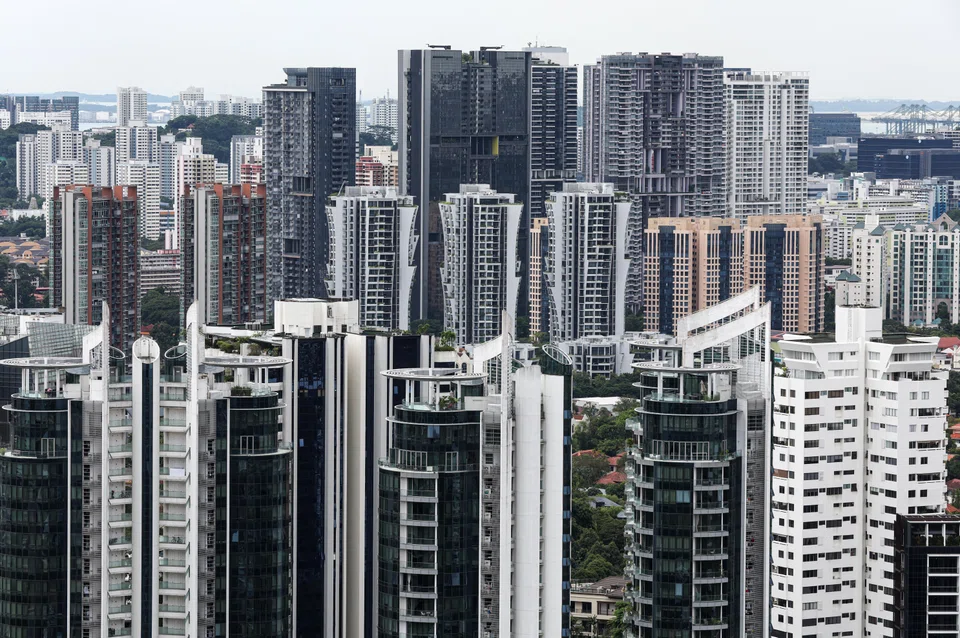
[SINGAPORE] In tandem with the uplift in sentiment in Singapore’s transaction market, the government has raised average land betterment charge (LBC) rates across most real estate sectors in its latest half-yearly update.
Only rates for the hotel/hospital/nursing home use group were left unchanged.
Announced on Friday (Feb 27), the latest rates are for the six months starting on Mar 1. LBC rates were increased for residential, commercial, industrial and place of worship/civic and community institution uses.
Developers pay an LBC for the right to enhance the use of some sites or to build bigger projects on them. The rates are stated according to use groups across 118 geographical sectors in Singapore.
LBC rates for non-landed residential use have been raised by 4.1 per cent on average. LBC rates in 114 sectors have been raised by around 3 to 23 per cent. There are no changes in the other four sectors.
For landed residential use, LBC rates have risen by 4 per cent on average. Rates have been upped for 93 sectors by around 3 to 10 per cent, with no changes in the other 25 sectors.
“The increase in residential LBC rates could dampen an already-weak collective sale market.”
Tricia Song, CBRE
LBC rates for industrial use have been raised by 3.2 per cent on average. All 118 sectors saw increases ranging from around 2 to 9 per cent.
LBC rates for commercial use have gone up by 0.5 per cent on average. Twenty of the 118 geographical sectors will see increases of around 3 to 4 per cent, with no change for the remaining 98 sectors.
For the place of worship/civic and community institution use group, LBC rates have increased by 3 per cent on average across all 118 sectors.
SEE ALSO

Commenting on the broad-based increases in LBC rates, JLL’s head of research and consultancy for South-east Asia Chua Yang Liang said: “Persistent strong results at government land sales (GLS) tenders would have motivated the chief valuer (CV) to adjust the LBC rates accordingly.
“Some of the adjustments were also motivated by the residual gap between recent market transactions and the implied land value based on Sep 1, 2025, LBC rates for that use group and location.”
LBC rates are announced twice a year, on Mar 1 and Sep 1, following a review by the Singapore Land Authority in consultation with the taxman’s CV.
For non-landed residential use, the biggest LBC rate hike of 22.7 per cent was in Sector 97 which includes the Bedok South area. JLL’s analysis showed that the S$1,330 per square foot per plot ratio (psf ppr) top bid for the Bedok Rise GLS site in November 2025 was about 36 per cent above the implied land value based on the Sep 1, 2025, LBC rate for non-landed residential use in the sector.
Also in November, a GLS tender for a site next to Newton MRT interchange station fetched a top bid of nearly S$1,820 psf ppr. This was 16 per cent above the implied land value based on the Sep 1, 2025, LBC rate for non-landed residential use in that location, which is in Sector 37, where the LBC rate is being raised by 10.2 per cent.
Huttons Asia chief executive officer Mark Yip noted that the 4.1 per cent rise on average for non-landed residential use LBC rates is the biggest increase since September 2022.
He added: “The strong take-up at private residential project launches in 2025 renewed the need among developers to replenish their land banks. As well, reduced borrowing costs for developers boosted their ability to pay more for GLS sites amid the increased competition.”
On industrial LBC rates being raised across all 118 sectors by about 2 to 9 per cent, Wong Shanting, research head for Singapore at Newmark, noted: “This broad-based uplift reflects an active industrial market, underpinned by several high-value transactions that have driven land costs higher.”
An example would be 680 Upper Thomson Road, which was sold in October 2025 for about S$665 psf ppr. Based on JLL’s analysis, this was a 190 per cent premium to the land value implied by the Sep 1, 2025, industrial LBC rate for the area, which is in Sector 107; the LBC rate for the sector has been raised by 9.3 per cent.
Summing up, Dr Chua of JLL said: “The refreshed LBC rates should not have any significant drag on the market trend or dampen developers’ and investors’ longer-term confidence in the underlying property market.”
However, CBRE’s research head for Singapore and South-east Asia Tricia Song pointed out: “The increase in residential LBC rates could further increase acquisition costs for developers, and dampen an already-weak collective sale market.”
Decoding Asia newsletter: your guide to navigating Asia in a new global order. Sign up here to get Decoding Asia newsletter. Delivered to your inbox. Free.
Copyright SPH Media. All rights reserved.
TRENDING NOW

Government to bring forward raising of retirement age, give employers more financial support to create flexi-load jobs

Former minister Maliki Osman, Revolut chairman join Asia Gulf Holdings advisory board

Is Manila Asia’s new dining hot spot?

Simba at risk of losing operating licence over spectrum misuse

