

London apartments are cheap – for a reason
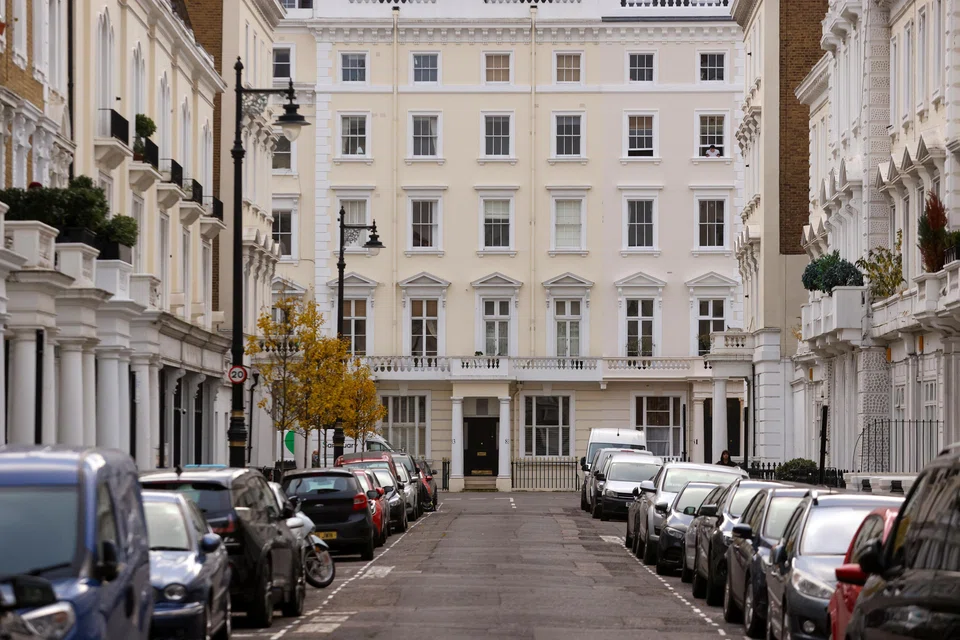
[LONDON] London property prices have fallen 15 per cent in real terms over the past decade, with apartments 22 per cent cheaper and one in seven selling at a loss.
This compares with a 5 per cent increase across the UK as a whole. With London more affordable than it’s been for at least 10 years, is now the time to snap up a bargain in Britain’s capital? Well, it depends. Spoiler alert: The odds are very much stacked against you.
The London market is quite different from the rest of the UK. The capital delivers higher wages and has international allure, which has driven the value of a typical London home to more than double the national average.
But market forces cut both ways; Brexit and the scrapping of non-domicile status for wealthy foreign nationals have undermined demand, hitting high-end dwellings especially hard.
Moreover, many taxes ostensibly aimed at Britain’s wealthy have effectively become a tax on living in London, where higher incomes frequently fail to compensate for an elevated cost of living. Property taxes, such as the recently announced council tax surcharges, in particular feel very much like a tax on Londoners, where the median home costs more than 11 times earnings compared with the national average of 7.7 times.
Further flight is likely as the new Renters’ Rights Act comes into force, with the bulk of the new measures effective from May. This will make removing tenants, for anything other than the most egregious behaviour, much harder.
London is especially vulnerable, as more than half of leasehold properties are privately rented; it threatens to bring the worst of all worlds, depressing valuations for property owners as some landlords exit the market and hurting tenants as scarcity pushes rental costs up.
To be fair, London is more affordable than it was in 2021, when house prices reached almost 13 times earnings. Apartments, which dominate the London market, have underperformed larger dwellings across the country in relative terms by as much as half over the past decade.
And because 38 per cent of homes in the capital – and almost all of the city’s apartments – are owned leasehold, compared with the national average of just 19 per cent, problems with that ownership system are also undermining values.


A leasehold confers the right to occupy a property for a fixed term, usually around 100 years. Moreover, a leaseholder must pay the ultimate owner of the land an annual ground rent. That owner will also levy a service charge for the upkeep and insurance of the building itself, over which an individual flat owner has very little control.
In London, that annual charge averages more than US$2,700 even for a modest one-bedroom flat. According to real-estate agents Hamptons, service-charge inflation hit 11 per cent in 2024; over the past five years, service charges have risen almost 50 per cent faster than overall inflation.
The increased cost of apartment ownership has a knock-on effect on price; the Hamptons index suggests there has been a 2 per cent value reduction since 2020, or more than £11,000 (S$19,045), due to these levies for a standard London apartment.
High-rise living is more prevalent in London than the rest of the country, which poses additional cost challenges for owners.
Fire safety and building standards regulations have been tightened in the wake of the Grenfell Tower fire in 2017, requiring mandatory and extremely expensive remediation work. An October 2025 government update indicates that 5,176 buildings of 11 metres or more in height have unsafe cladding; only 1,754 of these have the necessary fire-safety certification.
Owners have become trapped, unable to sell or refinance their mortgages. Even gaining the required certification is rarely the end because the cost and administrative complexity of validating the certification makes solicitors and estate agents either wary of participating in transactions at all, or prompting a hefty premium to act on behalf of sellers.
Property lenders are understandably nervous and often insist on certification even for smaller residential blocks not subject to the mandatory assessments. This exposes further problems with the leasehold system, because there’s no statutory duty on the ultimate building owners to ensure such expensive work is done on lower-rise buildings.
Unresolved legal issues with leases cause many sales to fail, while shorter leases with less than 80 years remaining are also problematic. Lenders also take account of the fact that new-build properties tend to be sold at a premium, which disappears upon the second sale, diminishing the value of their collateral.
Mortgage providers are especially sensitive about flood risk; Zurich Insurance Group last month reported that more than half a million properties in London are at medium or high risk.
Residential property in London typically outperforms the rest of the country in the latter years of price booms, but suffers more during corrections. The drop in London property prices, especially apartments with their complex and risky ownership structures, reflects the spiralling costs and risks associated with leasehold property ownership – offering a clear case of caveat emptor for wannabe buyers. BLOOMBERG
Marcus Ashworth is a Bloomberg Opinion columnist covering European markets. Previously, he was chief markets strategist for Haitong Securities in London.
Stuart Trow is co-host of “Money, Money, Money” on Switch Radio and author of “The Bluffer’s Guide to Economics”. Previously, he was a strategist at the European Bank for Reconstruction and Development.
Decoding Asia newsletter: your guide to navigating Asia in a new global order. Sign up here to get Decoding Asia newsletter. Delivered to your inbox. Free.
Share with us your feedback on BT's products and services
TRENDING NOW

Government to bring forward raising of retirement age, give employers more financial support to create flexi-load jobs

Indonesia stocks suffer worst plunge in nearly 30 years as MSCI proposes standalone status

If Europe goes to war, the fallout will be felt in East Asia

Natural gas to stay for the long haul beyond 2050: Singapore International Energy Week panellists

