A look at China's real estate changes, post Covid-19
There are several key trends to be aware of in 2020, from remote working to investment outlook.

THE Covid-19 outbreak is expected to impact China's real estate market on many levels. These are some of the key trends that investors, developers and occupiers should be aware of in 2020 and beyond.
Remote working
After the experience of remote working during the outbreak period, we expect landlords and occupiers to reconsider this way of working and to factor in its impact on office floor plans and workplace strategy.
Office landlords might consider incorporating more co-working spaces and communal areas into their buildings, while office occupiers may consider having more unassigned hot desks, team collaboration spaces and meeting rooms in the workspace.
Hardware aside, to successfully execute a remote working practice, companies need to consider several factors, including time management, task assignment management, team collaboration and having regular meetings.
Wellness and well-being
Office landlords that provide timely and effective health and safety protection measures for the tenants and users of their buildings will be in a better position to gain the trust of existing and potential occupiers.
By ensuring their buildings are properly equipped with thermal imaging, air-conditioning filtration, and sterilisation systems, wellness and well-being levels will be elevated.
This, in turn, will reassure the occupiers, improve tenant retention and attraction rates and strengthen the business viability of the buildings.
Online shopping
In the short term, the drop in footfall traffic will dent retail sales numbers in China. However, we expect retail sales volume growth rates to return to pre-outbreak levels in the medium to long term.
We will see an acceleration and a deeper integration of offline/online omnichannel retail services, given the impact of the outbreak and the recognised importance of these platforms by retailers for driving retail product and service sales.
Retail digitisation
Digitisation and data intelligence have become important tools in the retail sector, but the Covid-19 outbreak has proved to some retailers that these can be further optimised.
Through best-practice use of digitisation and data intelligence, we expect many retailers to place a greater emphasis on customer relationship management, in-depth data mining, product personalisation and intelligent supply chain management.
Together, these innovations will improve the customer shopping experience and, ultimately, retail sales performance.
Post Covid-19, we expect more retailers and shopping centres to change their existing marketing models and adapt them to utilise live online broadcast channels - not only to market their products and services, but also improve the overall shopping experience for customers.
Industry 4.0
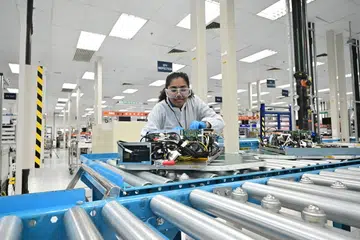
In the mid- to long-term, we expect many manufacturers operating to adopt Industry 4.0 operating procedures to mitigate production and distribution shortfalls should an event like Covid-19 happen again.
With Industry 4.0 fully integrated, manufacturers will then be able to operate within a smart factory environment.
They will also be connected to an association of manufacturing resources and services that support the whole life-cycle of manufacturing.
This alliance that is shared between companies across geographies will allow manufacturers to garner from the cloud, the components and parts they require for a particular product, enabling them to diversify their sources without relying on a single manufacturing base.
Logistics space demand
Due to Covid-19, more people have turned to online shopping and as a result, e-commerce will play a larger role in the growth of the country's economy.
Greater e-commerce business activity will create further demand for premium warehouse space.
In turn, we expect real estate investors and developers to focus not only on core cities and regions in China, but also to continually advance their presence in provincial capitals and transportation hub cities across the country.
Demand for rack space
Currently, there is continuous construction and development of data centres in China.
Spurred by the impact of Covid-19 on the internet activity rate, as well as the accelerated development of cloud computing, big data, the Internet of Things and artificial intelligence in the near future, there will be a greater need for data and information processing racks in data centres.
According to IDC China, the data centre market in China is expected to reach a value in excess of 200 billion yuan (S$40.2 billion) by the end of 2020.
Challenges for hospitality sector
The outbreak has presented complex and difficult challenges for the hotel industry in China.
As tourists begin to start travelling again and as the hotel industry begins to recover, hotels will have to step up their service quality and cleanliness levels in order to regain the trust of guests, and in turn, boost their occupancy rates.
Will work-from-home take off?
It is still unclear whether working from home will become a popular choice in China.
However, there will be many potential buyers of residential properties in the near future; and for those who have lived through the experience of working from home during the Covid-19 outbreak, they might consider purchasing a residential property which has a dedicated home office and study area over one that does not.
With this expected demand, many residential investors and developers may well have to consider adding a separate home office or study area into their design plans in the future.
Intelligent parcel drop boxes
Once the Covid-19 outbreak is over, the usefulness of intelligent parcel drop boxes for large scale residential communities will not be lost on residential investors, developers, residential property management companies and residents alike.
We expect more of these types of smart delivery systems to be installed in residential communities in the future.
Investment outlook
The downside risks from the Covid-19 outbreak are expected to fade in the middle to longer term.
In the short term, given some owners might be cash-strapped, there may well be some properties put on the block at bargain discounts, which will appeal to many real estate investors.
What is more, foreign ownership limits on fund management firms were lifted on April 1, which will boost real estate investment activity in China going forward.