

Macau property magnate Loi Keong Kuong and family sell five Pagoda Street shophouses for S$50.7 million
This is 13.5% lower than the purchase price a decade ago, partly because of the shortened balance in land tenure; the vendor may also be rebalancing its strategy

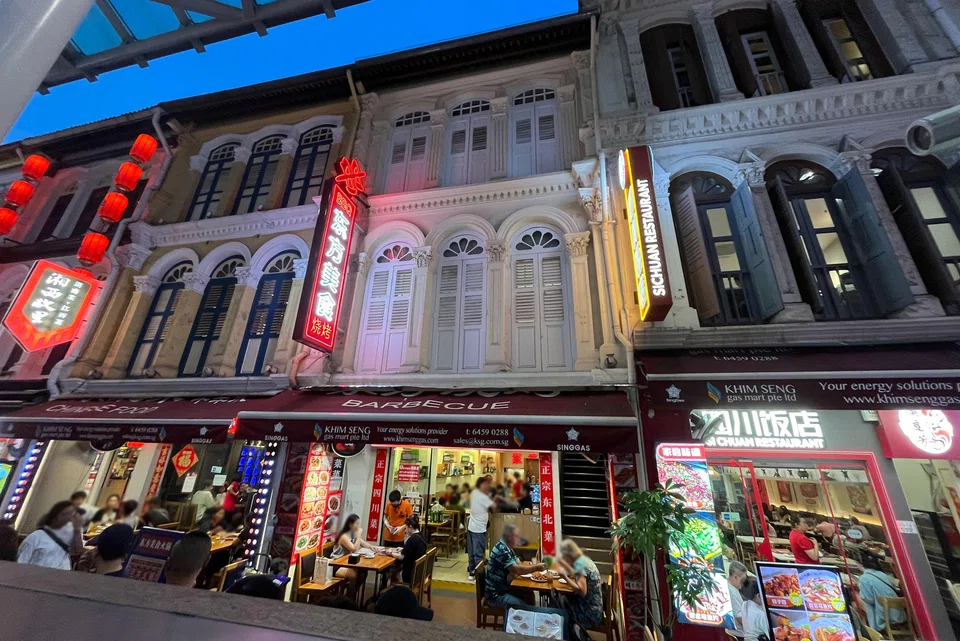
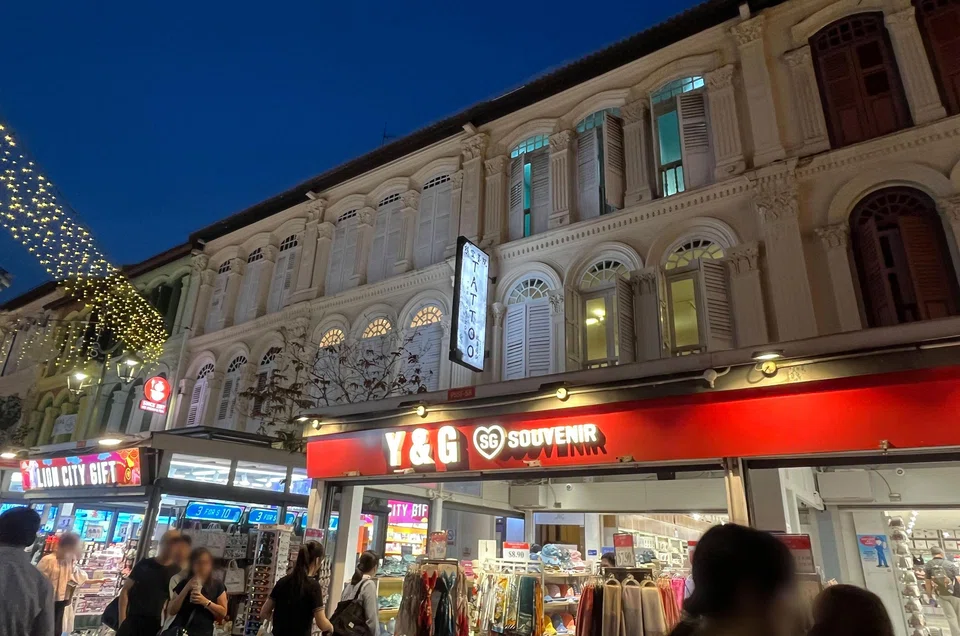
[SINGAPORE] Macau property magnate Loi Keong Kuong and his family have sold five shophouses in Pagoda Street in Chinatown at prices between 5 and 20 per cent lower than what they had paid for these units a decade ago.
The shophouses, Nos 58, 60, 62, 68 and 74, are on sites with about 69 years left on their leasehold tenures. All five properties have either three storeys or three storeys with a mezzanine level.
They fetched between S$9.2 million and S$10.88 million in separate transactions this year, against the Loi family’s purchase prices of S$10.8 million to S$12.38 million in 2015/2016.
Based on industry circles’ estimates of the floor areas of the properties, this year’s sale prices of the five shophouses work out to between S$2,540 per square foot (psf) and S$2,660 psf – down from the S$2,810 to S$3,210 psf based on the Lois’ purchase prices.
The total sale price of the shophouses is about S$50.7 million, also lower than the S$58.6 million the Lois spent to acquire them. Exacerbating the loss would be stamp duties, and interest expenses on the mortgages on the five shophouses that were in place for four-and-a-half years starting June 2018; the mortgages are understood to have been discharged in December 2022.
On the other hand, rental revenue and the slight appreciation of the Singapore dollar against Macau’s currency, the pataca, during the holding period would have mitigated or even offset the loss, noted analysts.
A seasoned property investment sales consultant said: “The lower sale prices of the Pagoda Street shophouses are a reflection of the vendors adjusting their price expectations to market conditions, as well as the shortening of the balance of the land lease.”
Holland Road Shopping Centre assets
The Loi family also owns seven retail units leased to a supermarket on the ground floor of the freehold Holland Road Shopping Centre; it paid slightly more than S$61 million, or S$4,976 psf on the total strata area of 12,260 sq ft, in 2016.
In addition, the family bought the basement car park in the same development for S$17.3 million in 2020.
In April last year, ERA launched an expression of interest (EOI) exercise for the seven retail units and the basement car park in that shopping centre, as well as the three adjoining shophouses at 58, 60 and 62 Pagoda Street. The portfolio’s estimated value was stated as “at least S$160 million”. The EOI closed in late May 2024.
Observers suggested that the Loi family could be rebalancing its real estate portfolio, in favour of Macau and other markets.
In June, the family scooped up The 13 Hotel in Macau for HK$600 million, as reported by Inside Asian Gaming. The family plans to redesign and renovate the property to create a new tourist landmark.
The gaming magazine described Loi Keong Kuong as a well-known real estate businessman in Macau and the founder of Rio Hotel. The publication reported that in 2006, he reached an agreement with Galaxy Entertainment to operate a satellite casino out of Rio. Gaming operations ceased in 2022, before Macau’s new gaming law took effect.
Loi was also involved in the construction of the luxury residential project One Grantai in Taipa, Macau; he also acquired the Soul Boardwalk shopping centre in Australia’s Gold Coast for around US$12 million in 2018.
In Singapore, his family sold 60, 62, 68 and 74 Pagoda Street in separate deals to Singapore-incorporated companies fully-owned by Randa Limited, which is incorporated in the British Virgin Islands. The sole director of the Singapore-incorporated vehicles is Lin Yen Fun, a Malaysian citizen and Singapore permanent resident.
No 58 Pagoda Street was sold to a Singapore-incorporated company Mixcity; the company’s sole shareholder, Singaporean Xue Dan, is engaged in various retail and F&B businesses.
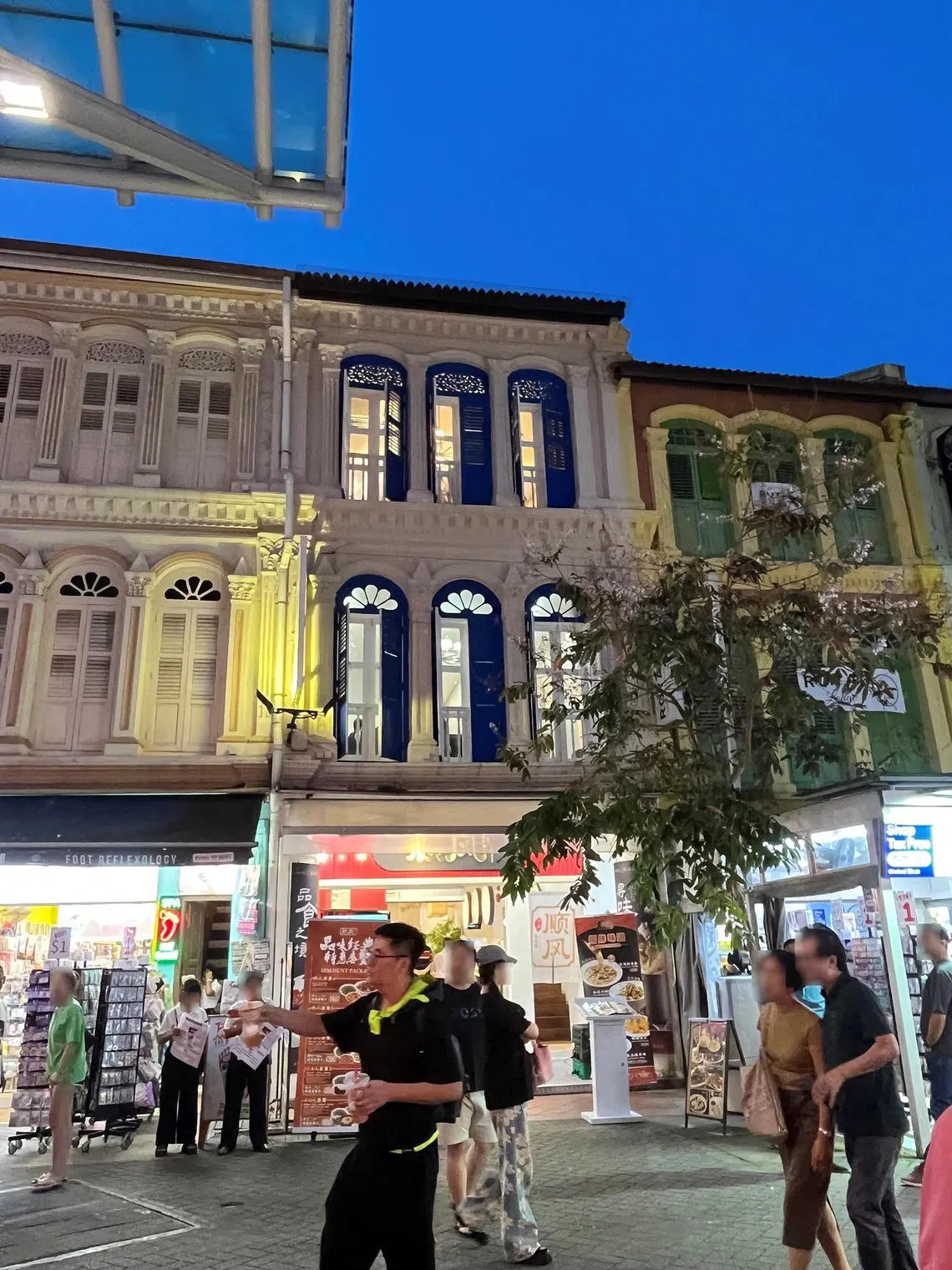
Of the five shophouses, Nos 68 and 74 are closest to the Pagoda Street entrance of the Chinatown MRT station, and have Chinese restaurants as tenants. Ice-cream, bubble tea and beverage chain Mixue is a tenant at No 62, and souvenir shops are among the tenants at Nos 58 and 60.
All five shophouses are on sites with 99-year leasehold tenures that began in October 1995; site areas range from 1,347 to 1,545 sq ft.
Of the five units, No 58 is furthest from the MRT station entrance, and has the biggest site area of 1,545 sq ft. It was transacted in February at S$10.88 million, which was S$1.5 million or 12.1 per cent below its 2016 purchase price of S$12.38 million.
The next-door property, No 60, was sold at S$10.6 million, or nearly 5.4 per cent lower than the Lois’ purchase price of S$11.2 million.
The family sold No. 62 for S$10.2 million – S$1.8 million or 15 per cent below their $12 million purchase price.
A few doors away, No 68 fetched S$9.8 million, which was S$2.4 million or 19.7 per cent lower than the family’s purchase price. The family sold No 74 at S$9.2 million, 14.8 per cent less than what they had paid for it.
TRENDING NOW

Once staunchly pro-China, Malaysian Chinese businesses are now distancing themselves from Beijing

Looking beyond looming CEO succession, should UOB potentially pursue a transformative merger?

Could stablecoins be the future of money?

Grab CEO’s wife Chloe Tong on life with Anthony Tan and finding her purpose

