

Mamdani’s plan aims to shore up housing authority and build affordable homes
The New York City mayor proposes spending US$22 billion on the sector over the next five years
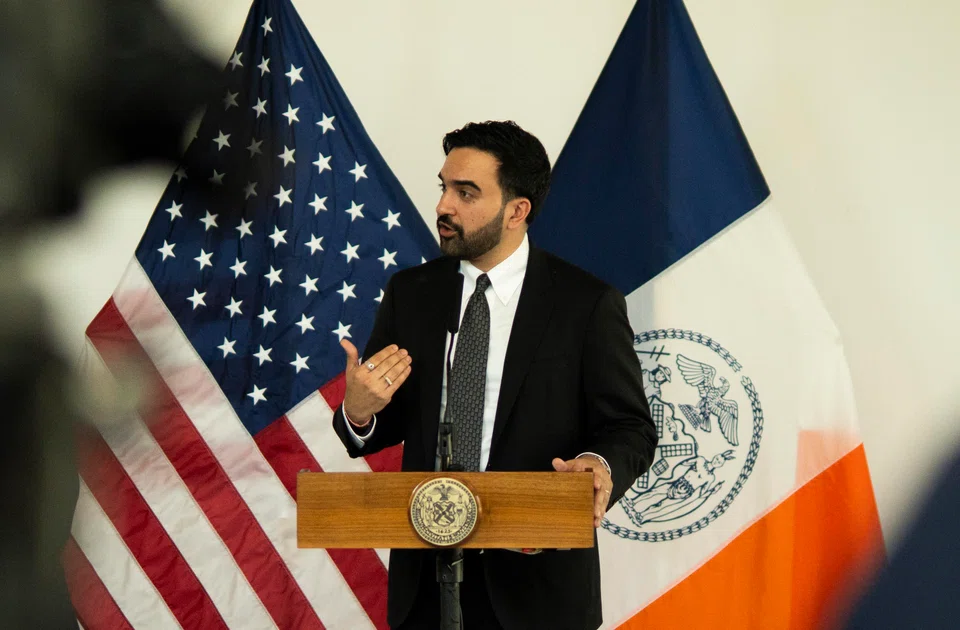
[NEW YORK] Mayor Zohran Mamdani of New York City unveiled a sweeping housing plan on Tuesday (May 26), pledging to build 200,000 affordable homes and stabilise the nation’s largest public housing system.
He proposed spending US$22 billion on housing over the next five years, including US$5.6 billion to improve public housing specifically. His lengthy plan calls for zoning changes in some neighbourhoods that are not building enough housing, working with private developers to shore up public housing and building more homes near transit hubs.
He centred his mayoral campaign on addressing the city’s affordability crisis, including high housing costs. At a rally in Brooklyn on Tuesday where he laid out his housing plan, he described his ambitions using his typical lofty rhetoric, though some of his goals will be difficult to implement.
“Let the largest city in the nation deliver the largest municipal housing transformation this country has ever seen,” Mamdani announced.
Housing advocates praised the plan, while some real estate and business leaders expressed concerns about the mayor’s calls for higher wages for construction workers, even as Mamdani appeared to backtrack from a campaign promise to use union labour on affordable housing projects.
Annemarie Gray, the executive director of Open New York, a nonprofit group that supports more development, called the plan an “all-of-the-above approach that centres on building more homes, especially in the neighbourhoods that have not done enough to be part of the solution”.
But Steven Fulop, the president and CEO of the Partnership for New York City, an influential business group, said that while the plan had the right goals, he worried that the mayor’s calls for construction workers to earn US$40 an hour in wages and benefits, even if they are not union workers, would add to building costs.
“New York needs 200,000 new affordable homes, and it is a moral imperative, but regulations won’t build housing – private investment does,” Fulop noted. “Right now, parts of this plan make that investment harder, not easier.”
Instead of committing to using union workers to build affordable housing, Mamdani told reporters that he would support the implementation of the local Construction Justice Act, which sets a minimum wage for workers. He also said that the city would consider new labour agreements through an “interagency working group”.

Mamdani said that his goal was to provide “safe and good paying jobs with strong labour standards”.
Mamdani, a democratic socialist, ran for mayor on a platform of freezing the rent for the city’s nearly one million rent-stabilised apartments and building 200,000 units of affordable housing. His plan provides details about how he wants to build those units and preserve or stabilise an additional 200,000 homes.
It also includes several measures aimed at stabilising the city’s crumbling public housing system, which is overseen by the New York City Housing Authority (NYCHA) and is home to roughly 300,000 New Yorkers. NYCHA residents regularly struggle with heat outages, broken elevators and mould, and the cost of backlogged repairs has soared to nearly US$80 billion.
Mamdani’s plan calls for using two existing financing tools to raise money for repairs, restoring thousands of vacant apartments and building new housing on land owned by the authority.
During his campaign, Mamdani pledged to double the city’s capital funding for NYCHA. Mamdani is now proposing to fund the housing authority with US$5.6 billion in capital spending over five years, a proposal that falls short of his campaign promise.
The city dedicated US$1.3 billion in capital dollars to the authority in 2025, under the administration of former Mayor Eric Adams, and it planned to spend US$700 million in 2026 and US$300 million in 2027.
Mamdani’s office said that he was proposing the largest capital investment in recent history.
Leila Bozorg, the city’s deputy mayor for housing and planning, said that the mayor still aimed to double NYCHA’s capital funding “over the course of the administration” and that the housing plan offered a path “to help us get there”.
Mamdani had until now focused more on advocating for a rent freeze and targeting bad landlords, and he had given comparatively less attention to the dire conditions faced by tenants in public housing.
“We think this is a holistic approach to really try to chip away at the issues facing NYCHA, including the backlog that residents deal with each day,” Bozorg explained.
The mayor’s housing plan makes use of two existing programmes to make upgrades to public housing. The Permanent Affordability Commitment Together, or PACT, partners with private developers; another, called the Public Housing Preservation Trust, leases NYCHA buildings to a public benefit corporation.
With the preservation trust, the Mamdani administration hopes to renovate 25,000 apartments, starting with the Nostrand Houses in Brooklyn and the Bronx River Addition, which will receive gut renovations and upgrades to elevators and heating and cooling systems.
Residents must vote to join the PACT and preservation trust programmes, and some have been worried about losing their rights under a new structure.
When Mamdani was asked on Tuesday about his opposition to the preservation trust as a state lawmaker, he said that he had been concerned that residents did not have enough of a voice in the programme.
His plan calls for a series of meetings at PACT developments after conversions to elevate residents’ concerns. “Now that I stand here as the mayor, I’m incredibly excited about putting forward a plan where those residents. Their input is a critical part of how we move forward,” he added.
The plan calls for renovating at least 4,500 vacant apartments and aims to “reboot NYCHA’s role as a public developer” to build housing on the land the authority owns. It also commits to expanding career training for residents.
Rachel Fee, the executive director of the New York Housing Conference, a nonprofit group that represents the affordable housing industry, said that the Mamdani administration appeared to be “on the right track by putting residents at the centre of the process while expanding proven financing strategies”.
But Ramona Ferreyra, the founder of Save Section 9, a group dedicated to preserving traditional public housing, said that the mayor’s plan was not enough and that some ideas, such as adding an ombudsman for critical repairs, seemed like another layer of bureaucracy.
“I don’t need another hotline to call,” Ferreyra added. “I need taxpayer money to be used to invest in, rehabilitate and expand public housing.” NYTIMES
Decoding Asia newsletter: your guide to navigating Asia in a new global order. Sign up here to get Decoding Asia newsletter. Delivered to your inbox. Free.
Share with us your feedback on BT's products and services
TRENDING NOW

Once staunchly pro-China, Malaysian Chinese businesses are now distancing themselves from Beijing

Looking beyond looming CEO succession, should UOB potentially pursue a transformative merger?

Could stablecoins be the future of money?

Grab CEO’s wife Chloe Tong on life with Anthony Tan and finding her purpose

