Manchester’s booming property market sets sights on a Burnham boost
Homeowners and property investors are hoping for further price rises in what is already one of the UK’s in-demand spots
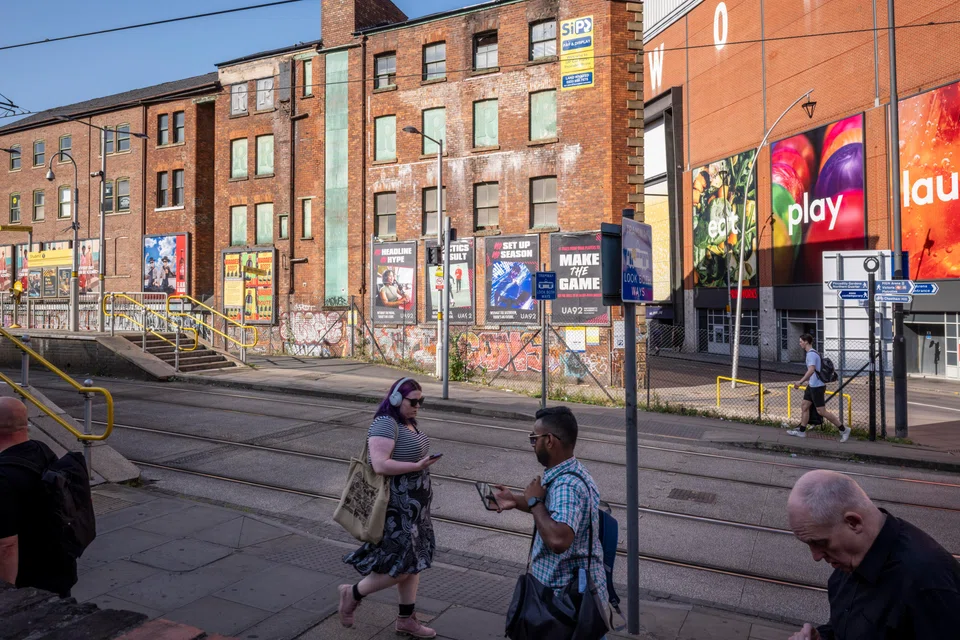
[MANCHESTER] Manchester is one of Britain’s economic bright spots. Now, UK Prime Minister Andy Burnham wants to boost wealth outside of London by replicating the northern city’s success in other parts of the country. His plans to shift power beyond the capital include turning Manchester, where he was mayor for much of the past decade, into an administrative centre for national government.
“No 10 North” will probably account for only a small number of jobs. Still, bringing more national operations to the city is likely to have some knock-on effect for its economy. Homeowners and property investors are hoping for further price rises in what is already one of the UK’s hottest housing markets. But Manchester’s growth is not without its challenges.
“It’s already changing,” says 32-year-old Barney Parsons, a senior creative at agency NewGen, who moved to Manchester from London this year. He and his partner recently bought a three-bedroom home in the leafy suburb of Whalley Range for £450,000 (US$602,000), roughly the amount they would have paid for a small flat in many parts of London.
Parsons was glad to get more for his money, but says he was already getting priced out of other Manchester neighbourhoods.
Reversing a longstanding trend, Manchester registered a net inflow of Londoners in 2024, internal migration data from the Office for National Statistics show. A total of 13,000 people moved to the northern city, exceeding the 11,800 people who moved in the other direction. And while house prices in Manchester are lower than London overall, they have been growing much faster, up 1.3 per cent to April from a year earlier, compared with a 2.1 per cent drop in the capital.
“Infrastructure investment and an increasing concentration of public- and private-sector employment outside London are just reinforcing confidence in Manchester,” says Daniel Hayhurst of property firm Knight Frank, who sees the area’s recent growth as part of a longer-term trajectory.
In 2006, the BBC decided to relocate several major departments and thousands of jobs to Greater Manchester. The region’s 10 district councils formed a Combined Authority in 2011, pooling power in areas including transport and business support. And a directly elected mayor followed six years later – one Andy Burnham, who went on to win another two elections to the post and has built a national profile off the city’s regeneration.
Since 2017, private-sector employers ranging from JP Morgan Private Bank to International Business Machines have opened offices in the city, and a skyscraper boom has reshaped the central business district. Real estate agents and analysts say these trends are likely to push prices upwards and development outwards.
“The hottest housing markets are actually outside of Manchester,” says Richard Donnell, executive director of research at Zoopla. “They’re on those transport connections in the hinterland around the city.” The city’s Metrolink tram network is now the largest of its kind in the UK, with nearly 100 stops.

Lizzy Maginness is looking to move a little further out to get more space. The 40-year-old commercial manager at Gaydio, an LGBTQ+ radio station, bought a one-bedroom flat in Didsbury, an affluent suburb in the south of Manchester, about a decade ago. She and her wife recently agreed to sell for £200,000 and have a budget of about £350,000 to spend on a larger home in Poynton, a few miles further from the city centre but still with solid transportation links.
“It gives us everything that we’ve got in Didsbury in terms of a bit of nightlife,” says Maginness. “But just being that little bit further out means you can get a bit more for your money.”
Regional transport upgrades are also one reason Iwona Cox is bullish about her local property portfolio. The investor and director at Moneta Property Finance highlights Wigan, a town in Greater Manchester some 25 kilometres from the city centre. A few years ago she bought a rental unit there for £190,000 and invested about £100,000 on renovating it. A recent valuation after the refurbishment reached £340,000.
Rents in Wigan may be lower than in the middle of town, but property is also much cheaper. Cox previously owned property in a more upmarket town southwest of London, but says her cash flow is better in the north.
Burnham is not the first prime minister in recent years to promote English devolution, which could end up as more of a slogan than a concrete solution. And at the national level, Britain’s economy remains weak. Interest rates remain high, mortgage approvals dropped to the lowest level in over two years in May and a landmark law that came into force that month shifts the balance of power away from landlords and toward tenants, discouraging some would-be buy-to-let investors.
“It would be wrong of me to suggest that Manchester has been in some way immune,” says Jamie Adam, who heads the residential development sales team across the north of England for Savills. He notes that a more limited supply of potential landlords makes things tougher for developers of new-build projects. Those investors are often the ones willing to buy flats that are still under construction, which is critical for securing development loans.
Zoopla’s Donnell also says that Manchester’s recent economic rise – and higher housing costs – may turn the city into a victim of its own success. Part of its appeal for both residents and businesses has been the affordability of housing relative to London. Workers don’t need to live quite as far from their offices and employers feel less upward pressure on wages to compensate for housing costs.
“There’s a risk in housing markets where property gets too expensive, things run ahead of the population and then that has a big impact on whether developers want to keep going there and investing,” says Donnell, adding that Manchester could become a “mini London”.
Policymakers will need to keep an eye on the supply-demand balance, notes Anupam Nanda, a professor of urban economics and real estate at the University of Manchester.
“One of the things we’ve seen with London having become so important is worsening housing affordability over the years, due to a huge increase in demand for housing compared to supply,” says Nanda. “Devolution could be good, in that it would shift some jobs away from London to other cities like Manchester.”
Parsons, the 32-year-old who recently moved to Manchester, estimates that 90 per cent of his London friend group have now left the capital, and about 80 per cent of those now live in Manchester.
“It’s quite a good middle ground,” he adds. Parsons notes that he likes the city’s size, cultural scene and the fact that he can still get to London easily if he needs to for work. He’s originally from the north, around Leeds, so likes the buzz about his new city.
“There’s a spotlight on Manchester right now,” he points out. BLOOMBERG
Decoding Asia newsletter: your guide to navigating Asia in a new global order. Sign up here to get Decoding Asia newsletter. Delivered to your inbox. Free.
Share with us your feedback on BT's products and services