

Many new houses cost too much for UK’s ‘Your First Home’ plan
Price caps are in force – but are often bust, especially near London; developers struggle with building costs
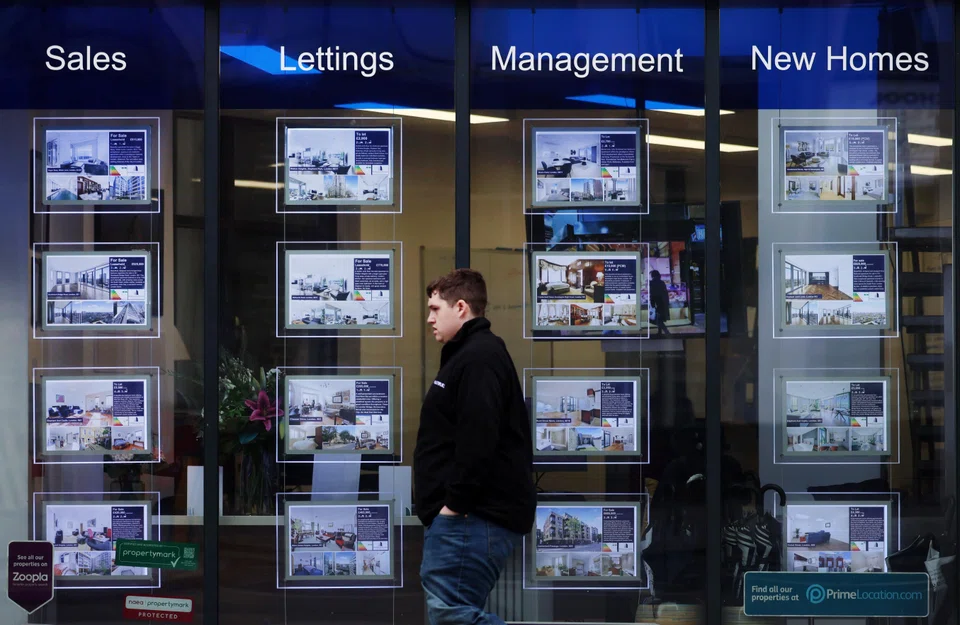
[LONDON] Price caps under “Your First Home”, the UK government’s new support programme for first-time property buyers, have put the cost of an average new-build house off limits in many parts of England, research shows.
Newly built apartments on average fall under the price ceilings in large parts of the country – but remain out of reach in many areas of London and some parts of the surrounding south-east, said real estate firm CBRE Group Inc.
The programme is meant to tackle a housing affordability crisis by helping prospective homeowners onto the property ladder. Under Your First Home, buyers of new-build homes can access 20 per cent equity loans if they supply a deposit of at least 2.5 per cent.
Chancellor of the Exchequer John Healey laid out funding plans last month, in his first Budget as finance chief for Prime Minister Andy Burnham.
Home prices above the caps
In CBRE’s analysis of average prices for new-build apartments and houses in 296 local authorities in England, house prices were above the caps in 265 areas; among apartments, prices were above the caps in 47 areas.
The remainder were either below the caps, or the data was not available.

Caps vary to reflect property prices across the country, and they range from £215,000 (US$287,000) in North Lincolnshire to £650,000 in inner London. The same limits apply to both apartment and house prices.
Sharief Ibrahim, CBRE’s head of residential agency, said Your First Home is very helpful but “could do with a bit more work around the edges” to adjust the price caps.
As an example, he cited the west London borough of Ealing, where the ceiling is set at £500,000, but the average new-build house costs nearly twice as much.



In his October Budget, Healey pledged a lower-than-expected £4.7 billion to Your First Home. Participating developers must also contribute up to 4 per cent of their revenues into the programme, depending on the number of houses sold.
An earlier equivalent programme, Help to Buy, ran from 2013 to 2023, costing £24.7 billion over its lifetime.
Shares in UK house builders jumped in late September after Burnham first unveiled the programme, then sold off on disappointment at the details in his Budget.
They have since recovered. As of late morning on Tuesday, shares in Taylor Wimpey and Persimmon, two major winners under the earlier Help to Buy initiative, were up about 5 per cent and 14 per cent, respectively. Barratt Redrow has added 10 per cent.
While apartment sales appear to be favoured under the programme, regulation and demand both pose challenges.
Developers squeezed by costs
House builders are increasingly questioning the financial viability of constructing apartment blocks, because a myriad of regulations has led to higher costs.
These developers have also sometimes struggled to find buyers to live in the new blocks. In London, British Land Co recently halted a 4,000-home development in Canada Water over viability concerns; an already-finished block in the project remains largely unsold.
While apartments are more affordable than houses under the cap, that does not solve the issue of financial viability for developers, Ibrahim of CBRE said, given increases in costs caused by issues such as building safety.
Rising prices also mean that first-time buyers are older than ever, with an average age of 34. As a result, they may be ready to have children and require larger properties.
Jennet Siebrits, who runs an eponymous real estate consulting firm, said: “They’re almost missing out this one- and two-bedroom flat state, which we always think of as the first step on the housing ladder.”
Others are more optimistic about Your First Home’s prospects. Aneisha Beveridge, group research director at Connells Group, said nearly half of new-build homes and more than two-thirds of new-build flats sold in England in 2025 would have qualified for the programme.
The price ceilings “should give would-be first-time buyers access to a choice of both flats and smaller houses in most areas, ensuring healthy take-up,” she said.
“While larger houses mostly sit above the price caps, this isn’t unreasonable for a scheme designed to support first-time buyers.”
Beveridge said the programme could also shape what house builders decide to deliver in future, and potentially revive the market for apartments.
The government wants 1.5 million homes to be built during the term of the current Parliament, which is set to end in mid-2029. That would entail building homes all over the country, not just in the urban areas where apartment blocks are usually built. BLOOMBERG
Decoding Asia newsletter: your guide to navigating Asia in a new global order. Sign up here to get Decoding Asia newsletter. Delivered to your inbox. Free.
Share with us your feedback on BT's products and services
TRENDING NOW

Higher rates, weaker spending: Is the Philippines entering stagflation?

Cabin fever: Airlines are rushing to refurbish plane interiors, but will their bets pay off?

Sheng Siong has fallen from its highs. Can its defensive appeal endure?

Nvidia heads for US$470 billion two-day wipeout as CEO affair fallout deepens

