

Merger of Ascott Reit, Ascendas Hospitality Trust makes sense

Angela Tan
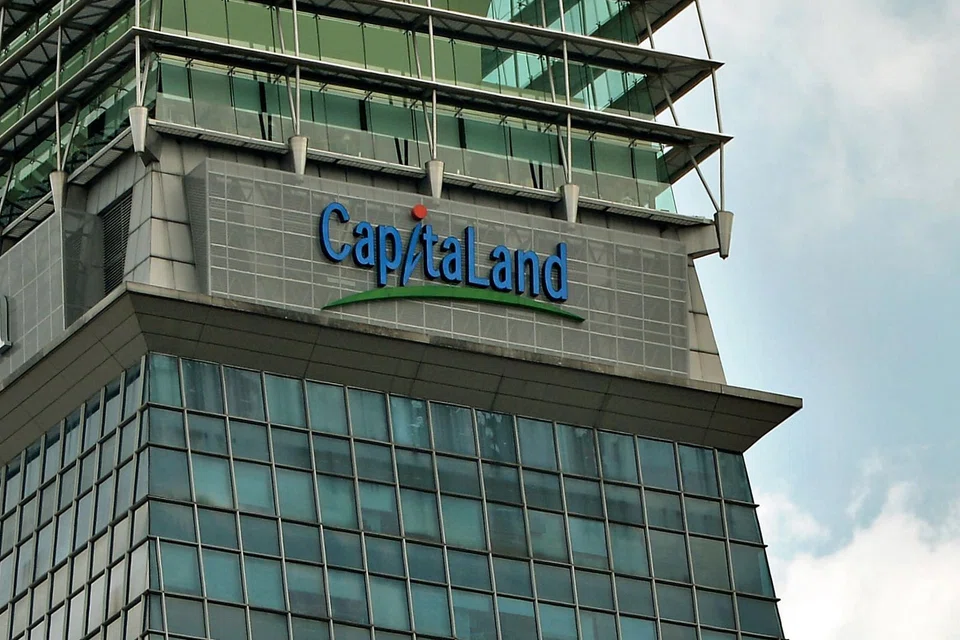
CAPITALAND's announcement on Wednesday that it would merge Ascott Residence Trust (ART) and Ascendas Hospitality Trust (A-HTrust) should not be a surprise to market watchers, following the merger of their respective parents.
The two Reits (real estate investment trusts) had been subject to much speculation since January after ART's parent, CapitaLand, announced its S$11 billion acquisition of Ascendas-Singbridge, A-HTrust's parent.
The merger of the parents to become one of Asia's largest diversified real estate players, with over S$123 billion of assets under management (AUM), has resulted in an overlap in investment mandates between their two trusts.
Regulation-wise, there is no reason for CapitaLand to retain two hospitality vehicles. Commercially, the merger makes a lot of sense. These days, operators of hotel and service apartment businesses must be big to compete - a trend that is witnessed globally with mergers and acquisitions heating up.
With a combined total asset value of S$7.6 billion, compared to ART's S$5.7 billion alone, the merged entity will be the eighth largest in the world. It will also be the seventh largest trust listed on the Singapore Exchange by asset value, leapfrogging the merger of OUE Commercial Reit and OUE Hospitality Trust. It will boasts of an enlarged portfolio of 88 properties, with more than 16,000 units in 39 cities and 15 countries across Asia-Pacific, Europe and the United States.
There is also the possibility of the merged entity being included into the FTSE EPRA Nareit Developed Index, a move analysts said would lead to higher trading liquidity, and could also see a potential positive re-rating.
The merged entity's pro forma gross revenue for FY2018 will increase by 37 per cent to about S$705 million, and pro forma FY2018 gross profit will climb by 36 per cent to about S$325 million. As the largest hospitality trust in Asia-Pacific, the enlarged scale would put the group within the radar of more fund managers and a wider investor base. It will also propel the merged entity onto a different playing field - one dominated by larger boys - and allow it to borrow more, and at more competitive terms.
The pro forma gearing of the combined entity will be 36.9 per cent, a level well below the regulatory gearing limit of 45 per cent. This means an available debt headroom of about S$1 billion, which will provide for greater financial flexibility to drive growth. This is crucial at a time when competition is keen, and rivals are searching for economies of scale to compete more effectively.
The quest for stronger liquidity and financing capacity has always been important for Reits, which require huge capital expenditure to grow. In fact, Reits are known to continue requiring such capex even after listing, and their fund appetite are typically quite huge. Secondary funds raised by Reits via placements or right issues rose from S$3.1 billion in 2017 to hit an eight-year high of S$4.3 billion - some 70 per cent of total secondary funds raised on SGX - in 2018.
Singapore's Reit industry has been lobbying the Monetary Authority of Singapore (MAS) to consider raising their current leverage limit of 45 per cent, even though the market has always tend to keep it at 30-35 per cent, with a few at 40 per cent.
On Tuesday, the MAS said it was seeking public feedback on the matter, signalling a willingness on the part of the regulator to listen to industry feedback at a time when players are confronting a changing business landscape that has brought fresh competition in the form of private capital. The latter is able to leverage up to 70 per cent, while Singapore Reits can only leverage up to 45 per cent currently.
Clearly, Reits in Singapore need greater bandwidth to compete with private funds when it comes to acquisitions in the global arena.
Price-wise, the trust scheme of arrangement will see ART buying AHTrust's units for S$1.0868 each, comprising S$0.0543 in cash and 0.7942 ART unit issued at S$1.30 per unit. This compares against AHTrust's last closing price of S$0.975 and net asset value (NAV) per unit of S$1.02 as well as ART's last closing price of S$1.31. The consideration is based on gross exchange ratio of 0.836x, based on A-HTrust's and ART's audited NAV per unit which stood at S$1.02 and S$1.22, respectively at the end of March 2019.
According to DBS Research, there could be some push back from investors on ART's acquisition of AHTrust at this point in time considering that close to half of AHTrust's earnings are derived from Sydney and Melbourne, Australia - which is facing supply pressures over the next few years - and ART will be increasing its exposure to a weak Aussie dollar. ART's exposure to Australia will increase to 18 per cent from 9 per cent post-merger.
With the merger of the two Reits now out in the open, any price gaps could present attractive arbitrage opportunity. Investors may want to take a position in A-HTrust for a cheaper entry to ART if the latter trades below S$1.30, DBS experts said.
READ MORE: CapitaLand eyes positive re-rating for enlarged Ascott Reit-BT
TRENDING NOW

Once staunchly pro-China, Malaysian Chinese businesses are now distancing themselves from Beijing

Looking beyond looming CEO succession, should UOB potentially pursue a transformative merger?

Could stablecoins be the future of money?

Grab CEO’s wife Chloe Tong on life with Anthony Tan and finding her purpose

