

Miami’s skyline is getting super tall
At least 10 new skyscrapers will be built in the next five years. The rush in development has some experts worried
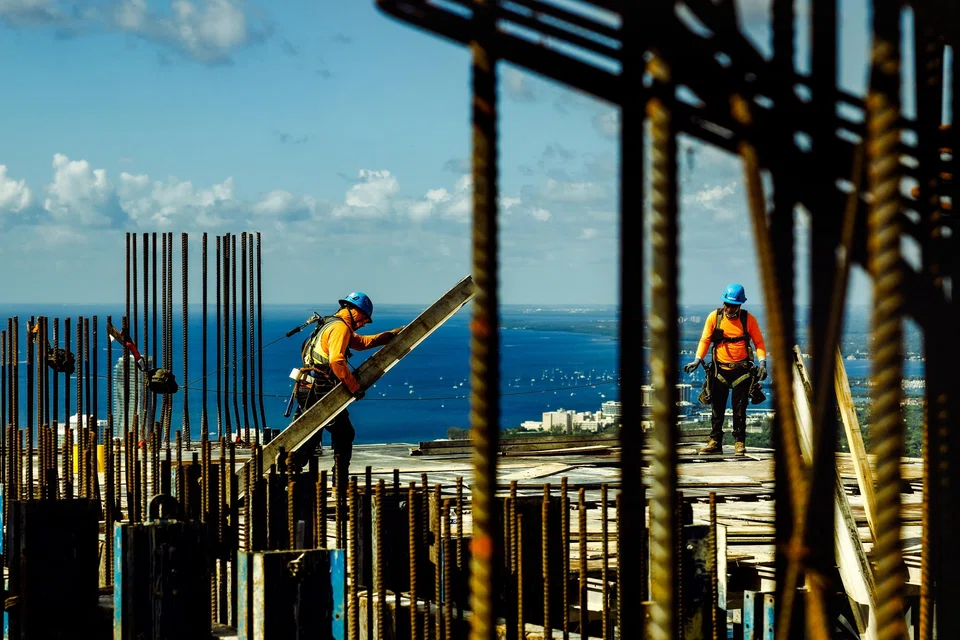
[MIAMI] In July, Cipriani Residences, in the Brickell neighbourhood, became the tallest building in Miami and the tallest residential building south of New York City. At 290 metres, it edged out the previous titleholder, the nine-year-old Panorama Tower, by 24 m.
The Cipriani will be surpassed by the Waldorf Astoria Residences in 2028. By 2030, the Waldorf will be matched by Miami Riverbridge, Dolce & Gabbana and One Bayfront, all expected to top out at around 320 m, the height limit set by the US Federal Aviation Administration to allow for safe flight paths in and out of Miami International Airport.
Supertalls (skyscrapers more than 300 m) and megatalls (buildings taller than 600 m) are still relatively rare engineering anomalies. Currently, megatalls exist only in Asia and the Middle East.
Having a revolution
Miami’s entry into this elite tier signals a new era for the city.
“I used to say that Miami was having a moment, but I don’t know that you can have a ‘moment’ for five years,” said Ryan Shear, a managing partner at the development firm PMG, which is building the Waldorf Astoria Residences, the city’s first supertall. “I think Miami is having a revolution.”
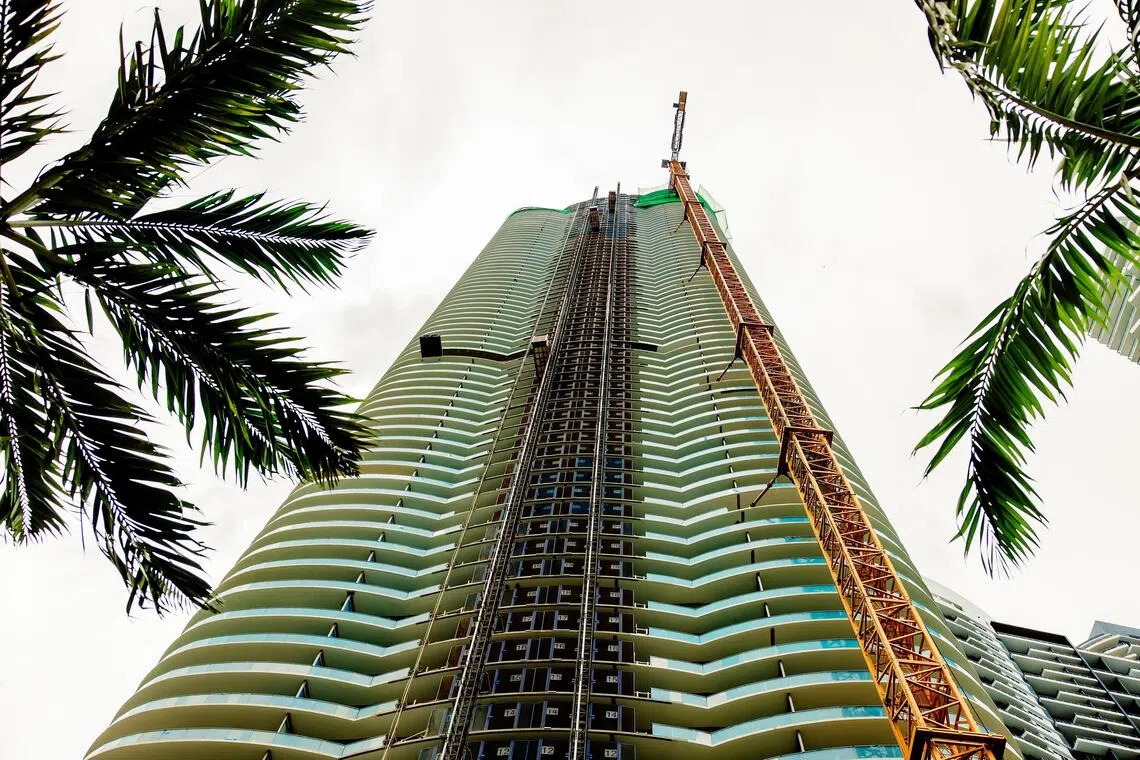
Other skyscrapers in the works include the Delano Residences (300 m), the new headquarters of the Citadel hedge fund firm (291 m), the Okan Tower (274 m), the Residences at 1428 Brickell (262 m), 619 Brickell (270 m), Baccarat Residences (258 m) and the Mercedes-Benz Residences (235 m). The Aston Martin Residences in Brickell was completed in 2024 and stands at 250 m.
A video rendering of President Donald Trump’s proposed presidential library in downtown Miami shows a building towering over the city’s skyline, but the exact height has not been revealed.
Miami’s rapid development can sometimes feel at odds with the geographic and geological realities of the area. Florida is a largely flat, low-lying subtropical land mass threatened by rising sea levels, warming waters and hurricanes that continue to get stronger.
But as demand for real estate in Miami has skyrocketed, available land has become harder to find. Luis Ramirez, a structural engineer and managing principal at DeSimone Consulting Engineering, the structural engineering firm behind the Aston Martin Residences, explained that 20 years ago developers could easily find full blocks to build on, but today, he said, “project sites have gotten a whole lot smaller”.

To make a profit and maximise space, he added, developers have no choice but to build vertically.
Ramirez also pointed out that South Florida was “developer friendly”, and that permitting could take months rather than the years it might in places like California.
Gil Dezer, the president of Dezer Development, and a partner in the upcoming Baccarat Residences in downtown Miami, noted that going taller allows his company to “squeeze the last piece of utility” out of a site and create premium units with unobstructed ocean views that clear neighbouring buildings.
There is also an aesthetic and ego-driven appeal to reshaping the city. “I love watching TV shows where they show Miami and they flash by my buildings,” said Dezer, who has also developed buildings in nearby Sunny Isles Beach.
Similarly, developer Camilo Miguel of Mast Capital views his Cipriani building as an opportunity to “make an impact on Miami’s skyline”.
Deeper, wider foundations
The rush in development has some experts worried. South Florida, like much of the state, sits on a bed of porous limestone and sand that requires a good deal of engineering to stabilise. The foundations for skyscrapers, especially very tall ones, must be much deeper and wider than usual.
“Constructing these foundations requires powerful, specialised equipment and is very expensive,” said Jean-Pierre Bardet, the former dean of the University of Miami College of Engineering. “The technology and engineering capability exist, but design assumptions must be verified and construction quality must be carefully controlled.”
In 2024, the University of Miami published a study about how high-rise towers on Miami’s barrier islands, specifically in Sunny Isles Beach, were settling, or sinking, more than expected, many years after construction had been finished.
The study hypothesised that one of the primary reasons for this excessive settlement was that the vibrations of nearby construction, combined with Florida’s unique geology of limestone and sand, could cause the sand to rearrange itself and get more compact.
Falk Amelung, a professor of geophysics at the University of Miami, and one of the main authors in the study, noted that in Europe routine monitoring of building settlement via satellite is common, but that’s not the case in the US, where “it’s difficult to get funding”.
He added: “Engineers monitor the ground to some extent during construction, but not so much in the years after – which is when we found this settlement is still occurring.”
Untested variable
Hurricane winds also represent an untested variable for Miami’s new wave of tall skyscrapers. Although these buildings are designed according to building codes, advanced structural analysis and wind-tunnel testing, many have never experienced a direct strike in real-world conditions.
“Maximum sustained winds in a major hurricane affecting South Florida could exceed 175 mph,” Bardet noted. “Wind effects become increasingly significant as buildings grow taller.” Miami has not been directly hit by a major hurricane since Hurricane Andrew in 1992.
But high-rise construction in Miami is showing no signs of slowing down, and developers continue to push forward.
“If you stand on a street corner in New York and close your eyes, it’s going to feel and look very similar in five years,” said Erik Rutter, one of the founders of the development firm Oak Row Equities, which has rights to develop several supertalls in Brickell. “In Miami, that’s not the case. It’s going to be radically different.” NYTIMES
Decoding Asia newsletter: your guide to navigating Asia in a new global order. Sign up here to get Decoding Asia newsletter. Delivered to your inbox. Free.
Share with us your feedback on BT's products and services






