

Mixed signals on UK's 'Freedom Day' hint at slow return to the office
Amid 40,000 new Covid cases and so-called 'pingdemic', workers' return is a trickle instead of expected stampede
 Add BT as a preferred source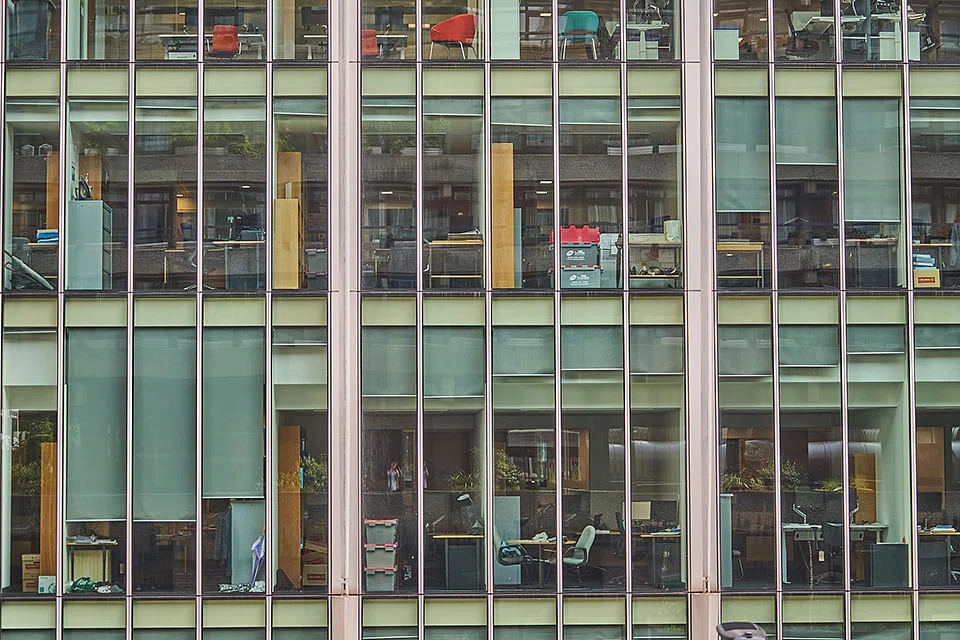
DeeperDive is a beta AI feature. Refer to full articles for the facts.
London
AFTER 16 long months, the British government lifted nearly all its pandemic restrictions across England on Monday, including its guidance to work from home.
But rather than a stampede of workers returning to their offices, employees of many large companies continued to trickle in as they have for weeks. By 10am on Monday, travel on the London Underground was 38 per cent of normal demand - no higher than the same period last week - and the vast majority of people were still wearing masks. By 3pm, foot traffic in central London was 10 per cent lower than last week, showed data from Springboard.
Many companies approached the reopening on so-called "Freedom Day" cautiously, as the nation reported 40,000 new coronavirus cases in a population that is about two-thirds fully vaccinated.
And businesses across industries suffered staff shortages because of a "pingdemic", in which hundreds of thousands of people are being pinged by the National Health Service's track-and-trace app and told to self-isolate because they were near someone who tested positive for Covid-19.
The City of London, the capital's main financial district, has been emerging slowly from its lockdown slumber. On Monday, coffee shops said there was no discernible increase in customers, and some lunch cafes were still closed. Opposite a central train station, Association Coffee's customer traffic reflected the local office occupancy - some 30 per cent of pre-pandemic levels. Across the street, a suit shop and sushi lunch spot have shut their doors for good.
Navigate Asia in
a new global order
Get the insights delivered to your inbox.
Freedom Day was also remarkably warm, further discouraging would-be office workers from a sweaty commute.
Robert Cane, an employee at a shoe repair shop in the city, said he was not sure business would pick up until next year, if ever. Last week, he had barely more than 100 customers. Noting that some businesses have reduced their office space over the past year, he said: "I don't think it's ever going back to normal here."
Most large employers are keeping voluntary return-to-office plans, and many require mask-wearing away from desks and are limiting office capacity to prevent crowding. The government has said there needs to be "personal and corporate responsibility" over some measures with a gradual return to the office.
For example, the Bank of England is asking staff to return only once a week starting in September. But there was some loosening of policies on Monday inside the central bank - restrictions on the use of elevators were eased, and extra spaces between desks will be removed.
At the London offices of JPMorgan Chase, where 12,000 employees usually work, mask-wearing was still required in communal spaces and meeting rooms, and social-distancing indicators were still marked around the buildings. Capacity is capped at
50 per cent, but recently not much more than 30 per cent of workers have been coming to the office.
The biggest change on Monday was that employees from any team were allowed to return to their office if they wished. Over the summer, the bank intends to gradually raise the capacity limit.
At Goldman Sachs, which has its 826,000-square-foot European headquarters in the City of London, health and safety measures stayed the same. Workers must wear a mask when not sitting at their desk and continue to take part in the on-site testing programme. Social distancing will reduce the office's normal capacity. Recently, an average of 30-40 per cent of the bank's 6,500 employees have been in the office.
Goldman Sachs is also monitoring vaccination rates from voluntary surveys of its staff, which has shown a "significant upward trajectory" since June, said an internal memo. "We will continue to monitor local case rates and public health safety guidance, and will update our in-office protocols as and when appropriate," read the memo, sent by Richard Gnodde, chief executive officer (CEO) of Goldman Sachs International.
In the central London offices of investment giant Blackstone, employees must still adhere to mask-wearing and social-distancing guidelines, though disclosing their vaccination status remained optional. But working from the office was voluntary, and the firm has not yet set a date for a mandatory return.
SoftBank Investment Advisers, the London arm of Japanese technology giant SoftBank that oversees its Vision Funds, has kept in-office attendance voluntary. Employees must reserve desks in advance and observe social-distancing guidelines; masks are optional but recommended.
Employees at the London headquarters of Unilever, the consumer products conglomerate, must wear masks while walking around the building, but not while at their desks. Social-distancing guidelines remain in place, effectively capping how many people can be at work.
McKinsey & Co is beginning to ease restrictions, and in parts of the London office, masks will be required only in busy areas, the one-way system will be removed and the seating in meeting rooms will not be reduced. Elsewhere, restrictions will stay the same, and there is still no requirement to return to the office.
Dentons, a large law firm in the city, recently introduced a flexible working policy so its employees can choose whether to work in the office. For those in the office, little has changed: Staff members are restricted to the floor they are working from; masks do not need to be worn on that floor but are still needed in and out of the building and in the elevators; and social distancing is still encouraged.
Even Prime Minister Boris Johnson worked from home on Freedom Day, as he, too, has been pinged by the National Health Service to self-isolate for 10 days. From his isolation, he announced on Monday that by the end of September, it will be mandatory to show proof of vaccination to enter nightclubs and other places with large crowds. NYTIMES
Decoding Asia newsletter: your guide to navigating Asia in a new global order. Sign up here to get Decoding Asia newsletter. Delivered to your inbox. Free.
Share with us your feedback on BT's products and services
TRENDING NOW
From 1MDB to ‘corporate mafia’: Is Malaysia facing a new governance test?
Higher costs, lower returns: Why are Singaporeans still betting on real estate?
South-east Asian markets account for 8.8% of global capital inflows from 2021 to 2024: report

Richard Eu on how core values, customers keep Singapore’s TCM chain Eu Yan Sang relevant

