

More Chinese buyers snapping up Bangkok luxury condos post-pandemic: analysts
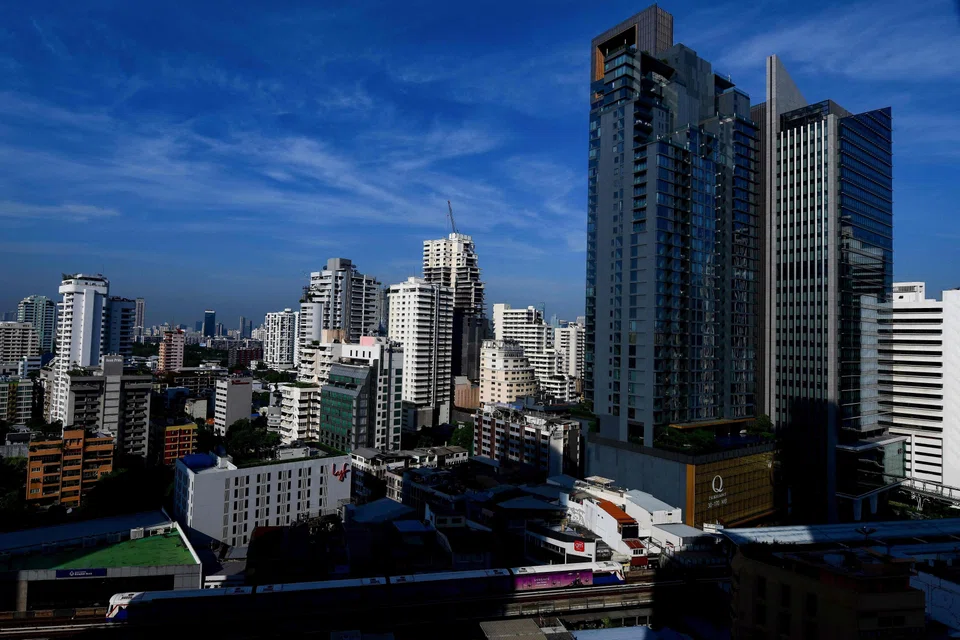
[BANGKOK] As more Chinese tourists return to Thailand this year after a pandemic-enforced hiatus, property purchases by foreigners have likewise seen an uptick, led by Chinese buyers who are on the hunt for pricier condominiums in the capital, Bangkok.
“Chinese buyers are still tops,” said Vichai Viratkapan, the acting director-general of Thailand’s Real Estate Information Center. “According to our data on condominium transfers, we found that in the first three months of 2023, the percentage of Chinese buyers, in terms of units, was about 46 per cent of the total transfers to foreigners.”
In the first quarter of this year, 1,747 condominium units were sold to Chinese buyers out of a total of 3,773 units sold to foreigners. This was nearly double the 940 units sold to Chinese, out of a total of 2,017 foreign transfers, in the same period last year.
For the whole of 2022, the total sales to foreigners stood at 11,561 units, of which 5,707 units were sold to Chinese, or 49 per cent of the total. These numbers are still below the pre-pandemic levels, said property consultants.
Back in 2018, some 7,626 condominiums worth 29.5 billion baht (S$1.1 billion) found Chinese buyers. Last year, 5,707 units went to Chinese buyers, who forked out a total of 29 billion baht. This, said analysts, shows that the value per unit is on the rise.
“Chinese buyers have changed their behaviour somewhat,” said Vichai. “Before Covid-19, most of them saw condominiums primarily as investments. As such, they went for smaller units, as they could buy several of these.”
Previously, buyers from China also faced limitations on how much currency they could withdraw from the mainland, with a ceiling of about US$50,000 per person a year.
These days, as more Chinese entrepreneurs and businessmen shift their operations abroad, the domestic currency restrictions seem less of an obstacle, industry sources said.
“One of the changes is that many Chinese property buyers have businesses outside of China, so they have foreign bank accounts,” said Aliwassa Pathnadabutr, chairman of CBRE (Thailand), an international property consultant that specialises in luxury properties.
“These days, the budgets of Chinese buyers who are enquiring with us is between 15 million baht and 20 million baht,” she said.
She noted that these higher-end properties are usually located in Bangkok’s prime locations, such as Silom, Sukhumvit, Sathorn or around Lumpini Park. Previously, the majority of Chinese buyers would view units in lower-priced districts such as Ratchadapisek and Huay Kwang in the northern part of the capital.
While luxury condos in Bangkok are not cheap by Thailand’s standards, they still cost far less than those in Singapore, the main rival market in South-east Asia for Chinese property purchases. Based on CBRE estimates, similar units in Singapore cost twice or even thrice as much.
The price difference in part reflects the different attractions of the two cities. While Singapore is a financial centre and regional hub for multinational offices, Bangkok has its appeal among foreigners because of the type of lifestyle the city provides.
“Most Chinese buyers are business owners who are attracted to Thailand because of the lifestyle,” said Aliwassa. “They like the country and think Bangkok is a modern city that’s convenient with good food (and) friendly people, and has a low cost of living.”
Bangkok also offers modern medical facilities and dozens of international schools for Chinese families – at considerably lower prices than in Singapore, Europe and the US.
Property consultants say that a growing number of Chinese are also buying houses in Thailand, although the exact figures remain unknown since such purchases are made under the guise of Thai companies set up to skirt around the restrictions on foreigners owning land.
At one housing development in Bangkok, nearly 50 per cent of the properties were reportedly owned by Chinese, using Thai shell companies to make the purchases.
Under the law, foreigners can buy condominiums under freehold or leasehold agreements as long as the total foreign ownership in the building does not exceed 49 per cent.
Despite Thailand’s restrictions on foreign ownership of property, sales are likely to remain high as more developers turn to the foreign market.
There were about 69,000 unsold condominium units in Thailand last year, when foreigners accounted for about 10 per cent of total sales and 20 per cent of the total sales value.
Domestic demand for condominiums has been impacted by the Covid-related economic slump, the collapse of cryptocurrency trading (which fuelled property sales for a while), rising household debt (about 90 per cent of gross domestic product in 2022), and a higher rate of mortgage loan rejections at Thai banks.
“From now on, the foreign buyers will be more important to the condo market because of the weakness of Thai buyers,” said Vichai.
TRENDING NOW
Singapore updates renewable energy certificate standard to tackle greenwashing; unveils new solar efforts

Director of PR firm sacked for secretly recording internal meeting loses wrongful dismissal claim
Indonesia says gas export cuts to Singapore remain within contract terms

Time for MAS, SGX to scrutinise issue managers

