

New, smaller landed homes draw upgraders as landed property supply stays broadly flat for 25 years
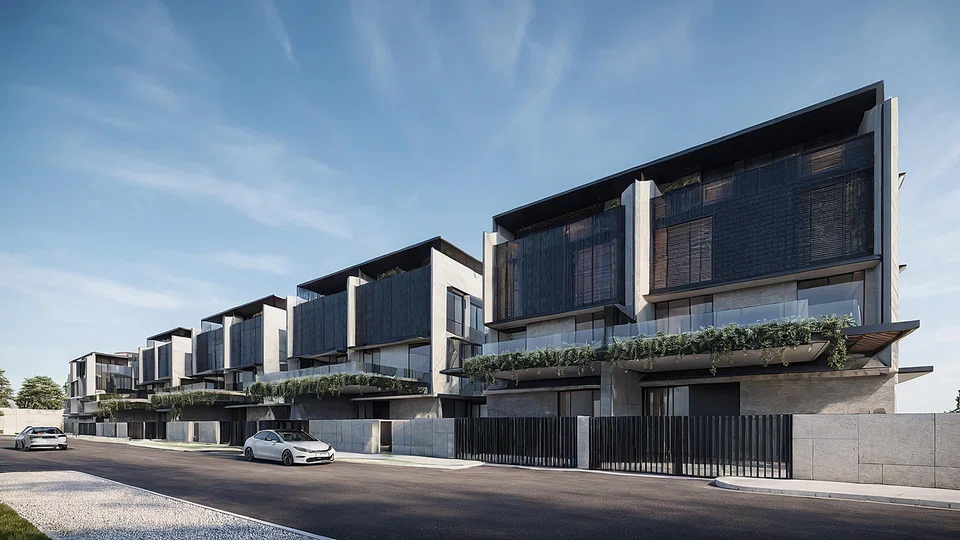
[SINGAPORE] Smaller, newly built landed homes are drawing more HDB and condominium upgraders, even as the supply of landed homes has stayed broadly flat for 25 years.
This comes as the number of flats and condominiums has more than tripled over the same period.
Figures from the Singapore Department of Statistics showed landed home supply rose 12 per cent from 67,229 units in 2000 to 75,338 units in 2025.
In contrast, the number of private flats and condos grew by 228 per cent, up from 114,532 units to 375,612 units over the same period.
In Singapore, such “smaller-lot” landed homes are generally houses built on land parcels close to the Urban Redevelopment Authority’s (URA) minimum plot sizes of about 1,615 sq ft for an intermediate terrace and around 2,150 sq ft for a semi-detached home.
Many recent projects fall within the 1,600 sq ft to 3,000 sq ft range, which developers and property agents commonly describe as compact landed units.
The shift towards smaller landed units is driven by changing needs, higher land prices, construction costs and tighter regulations, rather than stagnating supply of landed homes, said property experts.
Younger families prioritise efficient layouts and more manageable overall pricing, while rising land and construction costs have made larger homes harder to sell at accessible price points, they said.
Real estate agency ERA Singapore’s key executive officer Eugene Lim said smaller landed homes offer a more attainable entry point for condominium owners as their overall pricing is easier to manage.
SEE ALSO



Buyers generally fall into three groups, he said.
The first are condominium owners who have benefited from strong price growth in recent years and can now cash out to upgrade; the second are households that need more space; and the third are aspirational buyers who have long wanted a landed home and are unwilling to forgo the opportunity even if the units are more compact.
ERA Research and Market Intelligence research found that demand for new smaller-lot landed homes was boosted as condominium prices rose between 2020 and 2025.
In 2020, there were 17 new sales of landed homes built on land parcels between 1,600 sq ft and 3,000 sq ft. This rose to 74 units in 2024 while 30 units were sold in the first 11 months of 2025.
Property agents on the ground are also seeing this shift.
Mr Geryl Lim, deputy branch associate director with property firm OrangeTee, said demand for landed properties surged after the Covid-19 period in 2020 and 2021.
He noted that many new buyers were in their late 30s and early 40s with one or two children at school. A number of them were HDB and condominium upgraders from estates such as Dawson and Bishan.
These buyers typically look for properties priced at around S$6 million, said Mr Lim.
Launches of smaller landed homes have been warmly received in recent years.
Springleaf Collection, a 999-year cluster landed development in Meng Suan Road comprising 10 five- and six-bedroom landed units, was launched in August. Prices started from just over S$5 million and, according to ERA’s data, 80 per cent of units were sold within three months of the launch.
Other projects like Parkwood Collection, a 99-year leasehold project launched in 2020 with 53 units, and freehold strata landed Belgravia Ace, launched in 2022 with 107 units, were fully sold.
The strong take-up of Springleaf Collection properties highlighted the appeal of compact landed homes, said property analysts.
Separately, private real estate equity investment firm Aurum Gravis is preparing to launch its Natura Collection in March 2026.
The freehold project – subject to URA approval – will comprise 10 semi-detached homes sitting on land parcels ranging from 2,200 sq ft to 2,500 sq ft, with prices starting from S$7 million, and one 5,400 sq ft detached home is priced at around S$11 million.
Aurum Gravis director and co-founder Kieran Wee said the price performance of recent compact landed projects suggests a clear benchmark. Springleaf Collection’s price bracket has proven a sweet spot, with buyers responding quickly to well-located homes that remain within the reach of upgraders.
In addition, young families prefer efficient layouts and lower maintenance costs, he said.
Smaller landed homes also make more financial sense for developers like him.
“Land prices remain elevated, build costs have risen and regulatory requirements have tightened. This makes it increasingly challenging to launch larger homes at price points buyers are comfortable with,” said Mr Wee.
While demand for compact landed homes is supported by broader changes in buyer behaviour, landed supply remains limited because of strict land zoning and land-use controls, said property analysts.
“The URA has not been selling 99-year landed sites for quite a while,” said Mr Alan Cheong, executive director of research and consultancy at real estate firm Savills Singapore, adding that the minimum lot-size rules would also restrict how existing landed home plots can be subdivided.
ERA’s Mr Lim said: “URA has control plans and rules for each landed housing area. Therefore, not all land parcels can be redeveloped into multiple smaller landed homes. For example, homes in an area zoned as ‘bungalow’ are generally not allowed to be subdivided into ‘semi-detached’ homes.”
Such structural constraints have made the availability of new landed homes even more appealing to buyers.
He added that many new buyers are drawn to new developments that meet their needs for space, tenure and location. THE STRAITS TIMES
Decoding Asia newsletter: your guide to navigating Asia in a new global order. Sign up here to get Decoding Asia newsletter. Delivered to your inbox. Free.
Share with us your feedback on BT's products and services






