

New York City will close schools and non-essential businesses in 9 hard-hit areas
 Add BT as a preferred source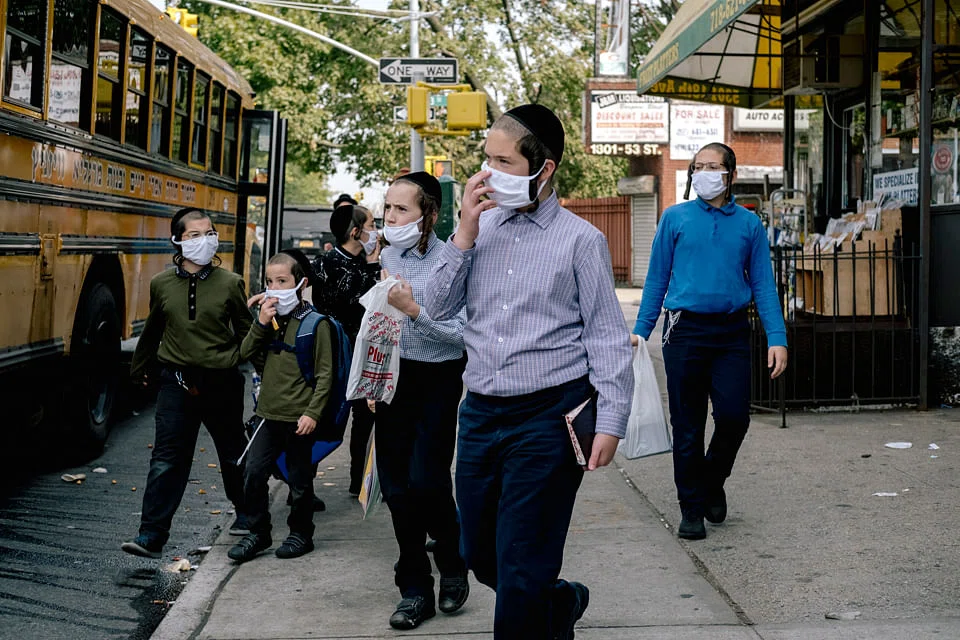
DeeperDive is a beta AI feature. Refer to full articles for the facts.
New York
MAYOR Bill de Blasio announced on Sunday that he intended to "rewind" the reopening of nine neighbourhoods in New York City that have had a testing positivity rate of more than 3 per cent over the last seven days.
That means the closure of non-essential businesses, public and private schools and day care centres in those neighbourhoods, which are in Brooklyn and Queens.
Many of them have large populations of Orthodox Jews, and the virus has been spreading rapidly in those communities in recent weeks. The mayor said he would also put lesser restrictions on 11 other neighbourhoods where the rates are rising. In total, the mayor's plan would affect only 20 of the 146 ZIP codes in the city.
Still, the move reflects the growing fear of a second wave of the virus and marks the first major reversal in the city's reopening since it was hit hard by the outbreak in March. If approved by Governor Andrew Cuomo, the plan would go into effect on Wednesday.
"Today, unfortunately, is not a day for celebration," Mr de Blasio said. "Today is a more difficult day."
Navigate Asia in
a new global order
Get the insights delivered to your inbox.
The nine ZIP codes subject to the most severe restrictions include portions of Far Rockaway and Kew Gardens in Queens and Borough Park, Midwood, Gravesend, Bensonhurst and Sheepshead Bay in Brooklyn.
The restrictions would be in place in these neighbourhoods for two to four weeks, if not longer, depending on the success of efforts to curb the virus, the mayor said.
The city is also closely watching the 11 additional ZIP codes, which Mr de Blasio described as a "real concern." They include parts of Williamsburg, Bedford-Stuyvesant, Fort Greene, Clinton Hill, Manhattan Beach, Bergen Beach, Kensington and Crown Heights in Brooklyn.
The Queens neighbourhoods include Rego Park, Fresh Meadows, Hillcrest and Jamaica Estates. In those neighbourhoods, the city will curtail indoor dining, which has only just begun, and close gyms and pools. Most of the schools set to close are non-public schools, largely yeshivas in Orthodox Jewish neighbourhoods that have been open for weeks.
About 200 private schools will close, and 100 public schools, officials said. There are about 1,800 public schools in New York City.
The new restrictions come just three days after the city's school system fully reopened. Children returned to elementary school classrooms on Tuesday and to middle and high schools on Thursday.
Principals and teachers have been working for months to prepare for in-person learning. The mayor emphasised that the school closures were not prompted by outbreaks in schools but came "out of an abundance of caution."
"We have seen very little coronavirus activity in our schools," he said. Houses of worship will remain open throughout the city, even in the nine ZIP codes where the new restrictions will be adopted.
Mr De Blasio said he planned to work with the state on enforcement measures. He said he was not certain about the details but that "we want the maximum education, maximum mask distribution, maximum enforcement".
"We've had 1,000 city personnel out in the key ZIP codes over the last few days in a very, very intensive enforcement effort," he said. "We are finding some places where enforcement is needed, but really not that many in the scheme of things. But we will keep pounding away with that, and we will certainly work with the state in every way possible."
Mr Cuomo offered no immediate comment on whether he would approve Mr de Blasio's plan. The two have often feuded and have been at odds over how to handle the outbreak. But as Mr de Blasio was making his announcement, Mr Cuomo did issue a statement that criticised local officials across the state for their failure to curb the virus in hot spots. "Local governments have not done an effective job of enforcement in these hot spot ZIP codes," Mr Cuomo said.
In his statement, he made no mention of whether a similar lockdown would be adopted in portions of Rockland and Orange counties, north of the city. Both have large populations of Orthodox Jews and have seen sharply increasing infection rates in recent days. NYTIMES
Decoding Asia newsletter: your guide to navigating Asia in a new global order. Sign up here to get Decoding Asia newsletter. Delivered to your inbox. Free.
Share with us your feedback on BT's products and services
TRENDING NOW

Shelving S$5 billion office redevelopment plan proved ‘wise’ as geopolitical risks mount: OCBC chairman
Why where you park your joint venture matters: Lessons from a US$689 million shareholder dispute

China pips the US if Asean is forced to choose, but analysts warn against reading it like a sports result
Singaporeans can now buy record amount of yen per Singdollar

