New York lawmakers embrace new funding plan to rescue public housing
 Add BT as a preferred source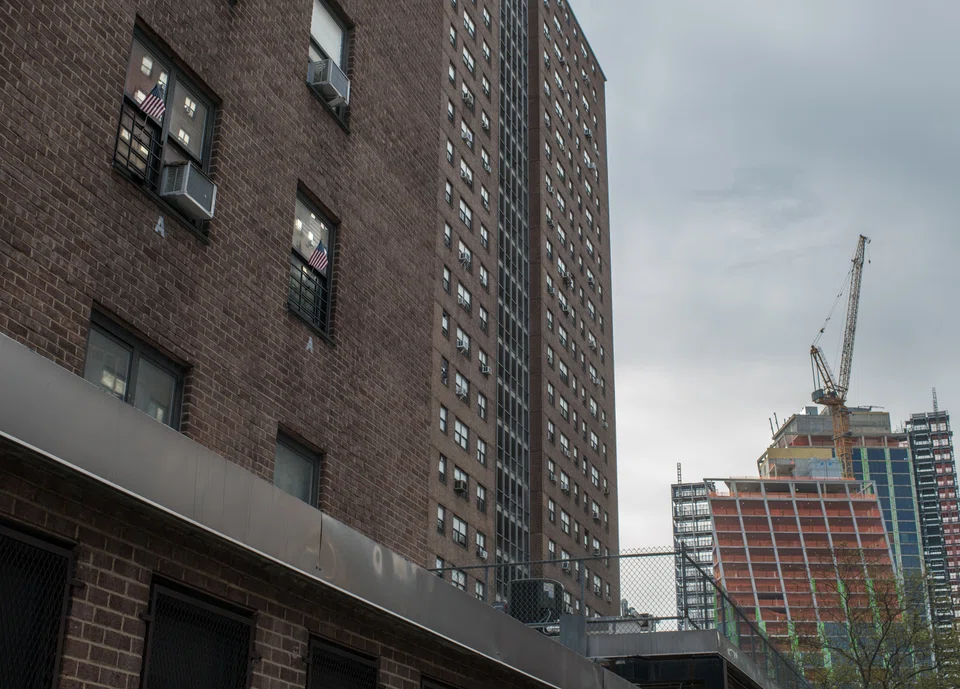
DeeperDive is a beta AI feature. Refer to full articles for the facts.
EVERY year, the plight of New York City’s hundreds of thousands of public housing residents astonishes: walls and ceilings crumble and leak, mould grows in kitchens and bathrooms, elevators cease to function, the heat goes out in the dead of winter.
The problems, officials have maintained, are the result of decades of underfunding. But state legislators passed a Bill on Thursday that could unlock several billion dollars for the New York City Housing Authority (NYCHA), which oversees the city’s public housing, by leasing up to 25,000 apartments to a newly created public benefit corporation, which could then borrow money for needed repairs.
The passage of the Bill, which Governor Kathy Hochul is expected to sign, is part of a desperately needed financial rescue for the largest public housing system in the nation, which has become an emblem of the deterioration of America’s aging public housing stock.
It was also a victory for Mayor Eric Adams, who has pledged to address the housing authority’s long-standing problems in his first term and has otherwise struggled to push his housing agenda in Albany.
NYCHA first proposed involving the corporation, which would be known as the Public Housing Preservation Trust, two years ago.
The plan would move some housing developments from the traditional public housing programme, funded by the federal government, to another program that would attach federal subsidies under the Section 8 programme to specific apartments. The corporation could then borrow money against that revenue stream to pay for repairs.
Navigate Asia in
a new global order
Get the insights delivered to your inbox.
NYCHA would retain ownership of the land and buildings, and residents would continue to have the same protections they do under the current program, officials said, including a cap on rent payments set at 30 per cent of a household’s income.
“This is a momentous event in the history of public housing,” said Greg Russ, the housing authority’s CEO. “The passage of the Public Housing Preservation Trust gives NYCHA the ability to raise billions of dollars in capital funds to invest in its properties, and residents a true voice in the future of their homes.”
For decades, public officials have failed to maintain the more than 170,000 homes that make up NYCHA’s network of aging buildings, most of which were built in the 1950s, leaving residents with low incomes living in apartments plagued with lead, mold and crumbling infrastructure.

In more than 40 per cent of NYCHA apartments, or about 73,400 homes, residents reported three or more maintenance problems, compared with 8 per cent of residents in private apartments, according to a recent city housing survey.
The agency estimates it needs a staggering US$40 billion for repairs and renovations.
As New York grows more expensive, and decent, affordable housing becomes harder to come by, NYCHA residents are often trapped in these conditions, said Susan Popkin, a fellow at the Urban Institute, a nonprofit research organisation based in Washington, who has studied public housing.
“There really is nowhere else for low-income people to rent in this city at this point,” she said.
The median monthly rent for NYCHA apartments is about US$500, and the median household income is around US$18,500 per year, compared with US$1,500 and US$50,000 citywide. More than 43 per cent of NYCHA households have at least one person employed, according to city estimates.
There are more than 250,000 families on a waitlist for a NYCHA apartment, according to the agency.
The issues mirror those in public housing systems across the nation. But with an official population of some 360,000 people living in more than 330 developments — more than the entire populations of Pittsburgh, Orlando or St. Louis — the scale of NYCHA’s problems dwarfs those in other cities.
The newly formed corporation would be run by a nine-member board, whose members would include NYCHA’s CEO, its chief financial officer, a deputy mayor, four NYCHA residents, a member appointed by the housing authority’s chief executive and a member appointed by the mayor to represent NYCHA employees.
The Bill calls for up to 25,000 units to be leased to the corporation, and for that number to be reviewed annually, with the possibility of the Legislature authorizing an increase.
Popkin said few, if any, housing authorities had attempted a similar plan.
The effort has had a rocky path to passage. A similar Bill died in Albany last year, after detractors argued it would erode public control over housing developments and that issuing large amounts of debt could present a new risk should the agency not be able to repay it in the future.
The agency managed to win over several skeptics, in part by adding a provision that would allow residents of each development to vote on whether they wanted it to be part of the scheme. (They would not be able to then vote to return a development to the traditional public housing programme.)
Residents would also be able to help select the companies tapped to do repair work, according to the Bill.
Karen Blondel, a community organiser who has lived in public housing for some 40 years, including more than 30 in her apartment in the Red Hook West development in Brooklyn, said she initially viewed the trust as yet another flawed plan to fix public housing that would be thrust on residents without their input.
But Blondel, a co-founder of the Public Housing Civic Association, a nonprofit resident group, said she was now in favor of it, as long as the voting process included a requirement that a high number of residents turn out.
She said that while she wanted residents to gain additional seats on the board of the corporation, the needs in public housing were too great to oppose the new plan.
“I’m not so afraid of change that I’m frozen,” she said.
Passage of the bill became more urgent after Congress left public housing out of an enormous infrastructure bill last year, and President Joe Biden’s spending bill known as Build Back Better, which would have included billions of dollars in funding for NYCHA, stalled.
Other major housing proposals — including a lucrative tax break for developers and a measure to limit evictions and restrict rent increases in private apartments — have all but failed in Albany, New York, because of intraparty divisions. But the trust proposal united many moderate and progressive Democrats, given the dire situation in public housing.
Without adequate federal funding, local officials have grasped at ways to address the needs. They have floated proposals calling for the housing authority to build new, mixed-income buildings on NYCHA property and to sell “air rights” — essentially unused development capacity — over some of developments.
Some progressives came to view the trust as a more palatable option than another solution NYCHA is pursuing, in which the agency has moved some developments out of the traditional public housing program and allowed private companies to manage them.
But among some residents, skepticism about the deal remains.
Ramona Ferreyra, 41, has lived in the Mitchel Houses in the Bronx for four years, and her grandmother lived there for some 30 years before that.
While she has a crack in the ceiling of her apartment and is missing tiles on her floor, she opposes the idea of a preservation trust because she does not believe that tenants would retain their protections under it.
Instead, she would like to see Congress allocate more money under the traditional housing programme.
“You’re opening up the floodgates for an organization that has proven time and time again that it is failing and that it needs to be reinvented completely,” she said.
Ferreyra helps lead an advocacy group called Save Section 9, a reference to the section of federal law that governs public housing. The group plans to go to Washington later this month to lobby for more funding for NYCHA — something she said the housing authority itself should have done more of.
She also said her group was preparing to file a lawsuit to stop the trust plan.
“The fight is not going to end,” she said. NYTimes
Decoding Asia newsletter: your guide to navigating Asia in a new global order. Sign up here to get Decoding Asia newsletter. Delivered to your inbox. Free.
Share with us your feedback on BT's products and services