

New York’s smallest businesses face big rental hikes
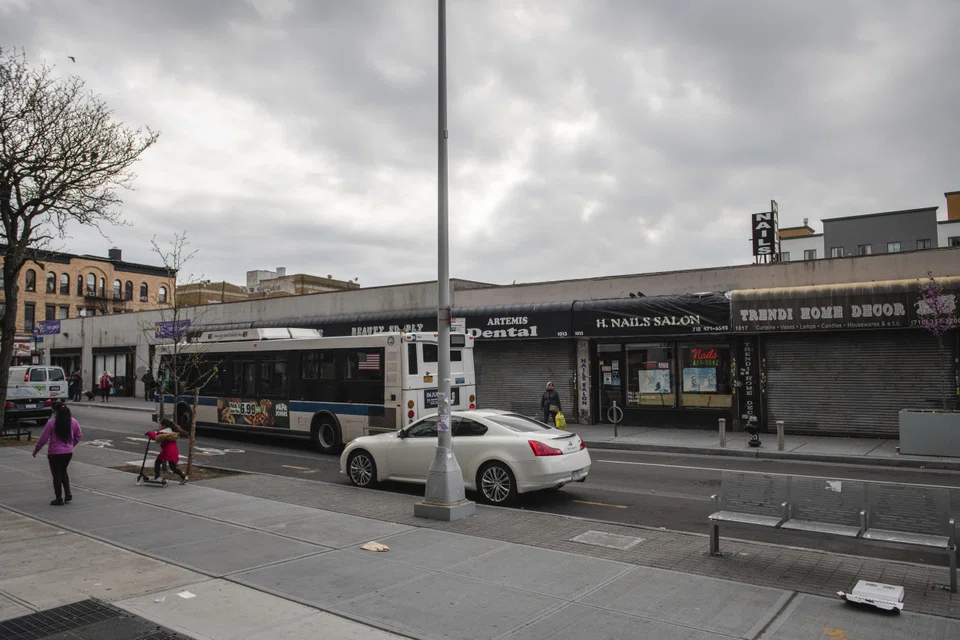
THREE years after the pandemic flattened the Manhattan office market and the commercial ecosystem that depended on it, small businesses in the other boroughs are facing the biggest rent increases in the city. The burden is landing mostly on store owners in predominantly Black, Latino and Asian neighbourhoods, according to a new analysis of Department of Finance data.
Now, the owners of many of those small businesses, many of whom did not qualify for pandemic-era public loans and grants, worry that sharp rent increases and a lack of protections for commercial tenants could shut down their stores, just as the economy is gaining momentum. These businesses helped fuel the city’s recovery while the rest of the economy faltered, and many store owners say they fear they will be left out of the resurgence.
At risk, they say, is the soul of the city: the minority- and immigrant-owned businesses that create a path to the middle class and provide hard-to-find goods and services in ethnic enclaves.
“For the first time in New York City history, their existence is being threatened,” said Annetta Seecharran, the executive director of Chhaya, a non-profit community development group. “Their No 1 problem is rent.”
From 2019 to 2021, the latest year for which data is available, the median storefront rent per square foot jumped 23 per cent in Brooklyn, 14 per cent in the Bronx and 9 per cent in Queens. Rent was flat on Staten Island and down 11 per cent in Manhattan, according to an analysis of Department of Finance data by the Association for Neighborhood and Housing Development, a non-profit housing coalition.
The analysis showed that in districts where rents rose, people of colour made up 72 per cent of the population, raising concerns about displacement and gentrification.
“As these businesses get drowned out by this tide of rising rent, culture disappears,” said Paula Segal, a lawyer with TakeRoot Justice, a non-profit legal services group.
A spokesperson for the mayor’s office said that the city is “doing everything we can to make sure small business owners are able to keep the storefronts they worked so hard to build”. This includes the Commercial Lease Assistance Program, which provides free legal services to small businesses. The programme has helped nearly 2,000 businesses with their leases, the spokesperson said.
An analysis of US Chamber of Commerce data by public policy think tank Center for an Urban Future showed that the rise in rents coincided with a surge in the creation of new businesses. This was especially so outside Manhattan, where commercial corridors were reviving faster than districts reliant on office workers.

Applications for new businesses jumped 30 per cent between 2019 and 2021, said Jonathan Bowles, the group’s executive director. The largest increase was in the Bronx, which experienced a 66 per cent jump.
The trend continued last year, according to the city’s Economic Development Corporation (EDC). There were 279,488 businesses in the third quarter of 2022, a 4 per cent increase from the same period in 2021, with the fastest growth seen outside Manhattan. Collectively, small businesses provide 26 per cent of New York City’s jobs, the EDC said.
Bowles said the pandemic “really unleashed this wave of entrepreneurship”, in part because so many workers in industries such as retail and hospitality lost their jobs and saw an opportunity to be their own bosses.
“But it’s far from a given that most of these new businesses will be able to survive and grow,” he added.
Rolando Gonzalez, a lawyer with the Legal Aid Society, said that unlike some residential tenants, store owners who rent their spaces have no right to renew their leases and are not protected from large rent increases when they expire.
Many store owners, especially in immigrant communities, operate on monthly lease agreements, he added.
Christian Ramos, 43, the owner of Blue Chus Shoe Repair in the Kingsbridge section of the Bronx, said that he and most of his neighbours had month-to-month leases.
He has been in the same spot for 19 years and said he was current on his US$3,500-a-month rent. But he recently had to pay back US$12,000 in arrears that accumulated when sales slowed because of the pandemic. He did not qualify for a public grant, he said, because his business did not make enough revenue.
Instead, he paid back the debt by setting up tables outside his store, selling shampoo and other household products. “I basically had to start a second business,” he said.
He added that he is worried about new developments, which could spur landlords to seek out higher-paying tenants, at the expense of long-time merchants.
“We’re fine for now,” he said, “but I don’t know what will happen later.” NYTIMES
Decoding Asia newsletter: your guide to navigating Asia in a new global order. Sign up here to get Decoding Asia newsletter. Delivered to your inbox. Free.
Share with us your feedback on BT's products and services
TRENDING NOW

OCBC customers face difficulties accessing online, mobile banking services

SGX CEO Loh Boon Chye to step down; succession planning under way

Waymo founder predicts ‘landslide’ robotaxi adoption in Singapore, driven by high car costs

Vietnam’s northern provinces, not Hanoi or Ho Chi Minh City, are powering near 10% GDP growth

