

New Zealand house prices near three-year low on Iran war worries
Renewed price weakness threatens to further erode consumer sentiment
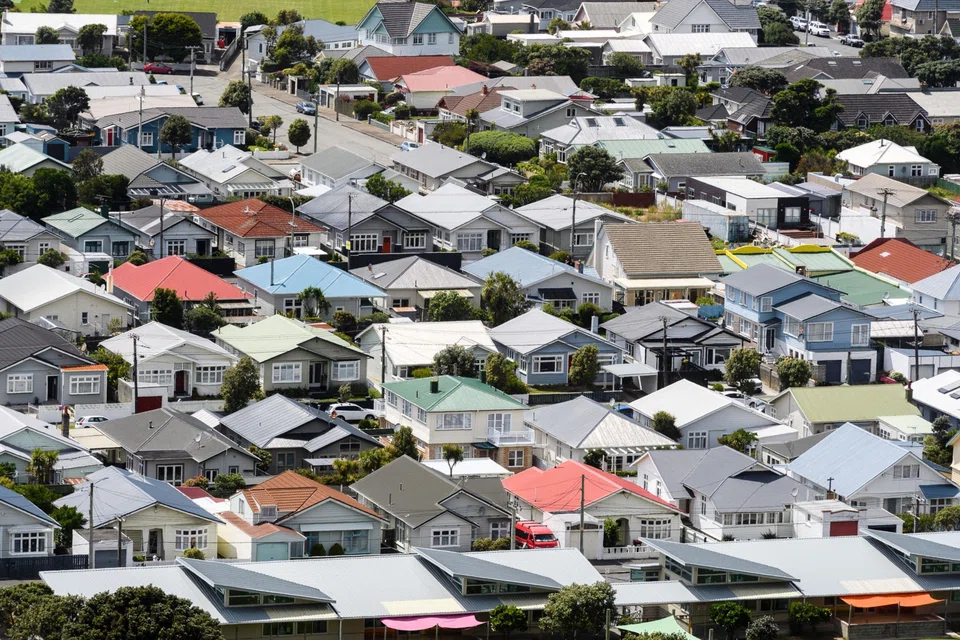
[WELLINGTON] New Zealand house prices fell for the third straight month in June, nearing a three-year low and adding to signs of an economic slowdown as the global oil shock hits household incomes and consumer confidence.
Prices fell 0.2 per cent from May when they declined a revised 0.3 per cent, property consultancy Cotality said on Thursday (Jul 2) in Wellington, citing its home value index. Prices have dropped 0.8 per cent in just three months and are the lowest since July 2023.
Renewed price weakness threatens to further erode consumer sentiment, which has already been pushed to a near three-year low by surging fuel prices, and adds to signs that gross domestic product contracted in the second quarter.
The prospect that the Reserve Bank of New Zealand (RBNZ) may raise its Official Cash Rate to counter emerging inflation pressures is a further indication that house prices may remain relatively flat throughout 2026.
“The supply of available listings on the market and buyers’ choice remain high,” said Kelvin Davidson, chief property economist at Cotality. “That in itself will tend to restrain property values, but on top of this we’ve also had the Iran conflict rumbling on since early March, with associated adverse effects on economic activity, sentiment, inflation and mortgage rates.”
Tentative steps towards a US-Iran peace deal have improved the economic outlook “but the lagged effects of previous uncertainty are pretty clear to see in June’s property value figures,” he said.
The RBNZ reviews interest rates on Jul 8 and investors see a 75 per cent chance of a 25 basis point hike, which could be the start of a steady tightening cycle over the next six-to-nine months. Some economists however argue it is too soon to be removing stimulus when the economy is slowing and the labour market remains soft.
Wholesale borrowing costs have already risen due to global uncertainty and that has been passed on to mortgages with the average two-year interest rate around 5.2 per cent compared to 4.5 per cent in late 2025. That is why economists expect house prices will be little changed or even weaker this year.
Davidson said mortgage rates have stabilised recently, and there may not necessarily be much additional upward pressure on borrowing costs in the near term.


“Sellers aren’t generally under much duress, and buyers aren’t really rushing either,” he said. “Listings remain elevated and these conditions suggest a continuation of recent, subdued price patterns in the coming months. If we get a quick and certain end to the Iran conflict, that would tend to bring out some more property sales and possibly push up prices a bit, but this is still a reasonably large ‘if’.”
Suppressed house prices have also forced developers and individuals to step back from plans to build new homes, which saw residential construction fall to a 10-year low in the first quarter.
However, there was brighter news on Thursday with home-building approvals surging 19 per cent in the 12 months through May, the highest annual total since October 2023.
The Statistics New Zealand data showed consents for standalone houses rose 17 per cent compared to the year-earlier period, while permits to construct townhouses, units and flats jumped 22 per cent. BLOOMBERG
Decoding Asia newsletter: your guide to navigating Asia in a new global order. Sign up here to get Decoding Asia newsletter. Delivered to your inbox. Free.
Share with us your feedback on BT's products and services
TRENDING NOW

Once staunchly pro-China, Malaysian Chinese businesses are now distancing themselves from Beijing

Looking beyond looming CEO succession, should UOB potentially pursue a transformative merger?

Could stablecoins be the future of money?

Grab CEO’s wife Chloe Tong on life with Anthony Tan and finding her purpose

