Number of Singapore residents living in private condos doubles over last 15 years
Data on ownership also points to jump in resident households buying private property between 2009 and 2024

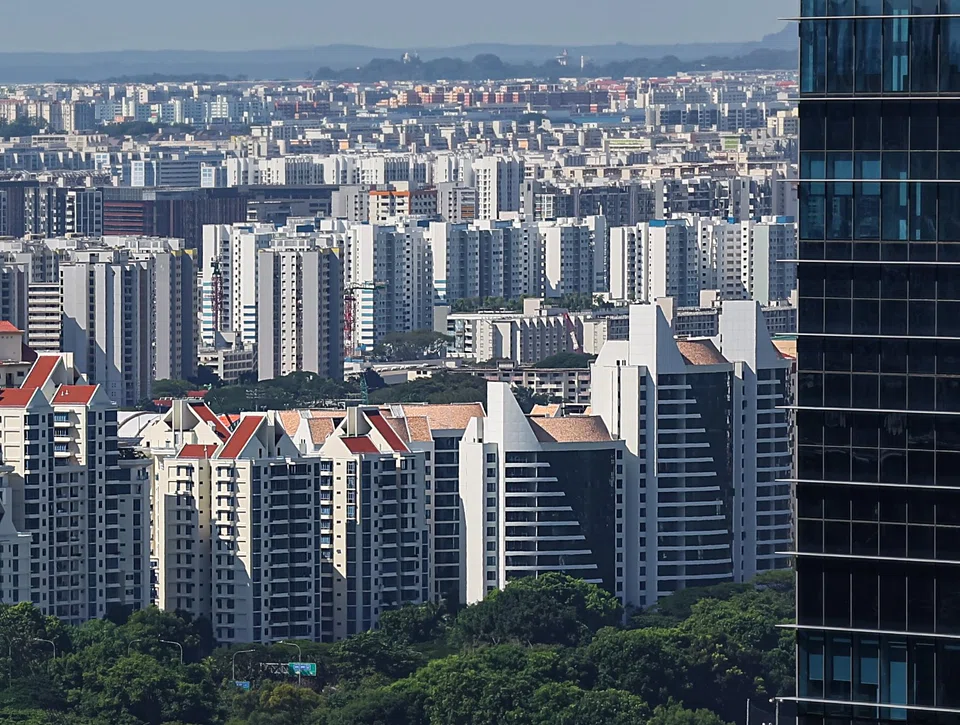
[SINGAPORE] The number of Singapore residents – including both citizens and permanent residents – living in condominiums and other private apartments doubled in the last 15 years, driven by upgrader buying, higher incomes, and shifting preferences.
Data on ownership reflects the same trend – the number of resident households owning the condos and apartments they live in grew from 90,942 in 2009, to 220,756 in 2024, an increase of almost 2.5 times or 129,814 households.
Much of condo buying in the past has been fuelled by upgraders cashing out on their Housing and Development Board (HDB) flats into a booming resale market.
But with private property prices also hitting new highs in recent years and job prospects possibly turning less rosy as Singapore’s cost competitiveness deteriorates, buying power could be impacted in the future, say observers.
Data from the Singapore Department of Statistics (SingStat) indicated that the number of Singapore citizens and permanent residents living in private non-landed homes rose by 348,986 or 98 per cent, from 357,532 in 2009 to 706,518 in 2024. The numbers include those renting their dwellings.
The number of residents living in public housing also rose but by far less – by 3 per cent or 97,992 – from 3.1 million to 3.2 million over the same period.
As a result, the proportion of residents living in private non-landed homes rose to 16.9 per cent of all residents in 2024, from 9.6 per cent in 2009.
The share of those living in HDB flats slipped to 76.3 per cent over the same 15-year period, down from 82.8 per cent in 2009.
The proportion of those living in landed homes, meanwhile, dipped from 6.6 per cent to 5.9 per cent in that time.
A closer look at ownership data also throws light on buying of both private and public housing. Ownership of housing overall rose about 34 per cent to some 1.3 million households in 2024, from 994,500 households in 2009.
About 124,000 households rented their dwellings in 2024, up by roughly 10 per cent from the 2009 total.
In percentage terms, ownership of private condos and apartments rose more than ownership of HDB flats.
Ownership of HDB flats rose by about 24 per cent over the 15-year period, while ownership of private condos and apartments rose by about 143 per cent. In terms of absolute numbers, however, 197,742 more households owned HDB flats in 2024 compared with 2009; a greater number than the 129,814 more households that owned private condos and apartments over that time.
SingStat data shows that in 2024, some 85 per cent of Singapore resident households living in condos and other apartments in 2024 owned the properties they lived in, equivalent to around 220,756 households. This compares with 90,942 households or 77 per cent in 2009.
The numbers include properties owned by both citizens and PRs. Every year, Singapore takes in about 22,000 new citizens, and there are 30,000 citizen babies born. PRs, meanwhile, are allowed to buy non-landed private homes without restrictions, but with additional stamp duties. There are restrictions on PR buying of HDB flats and executive condos.
According to property consultancy List Sotheby’s International Realty, PRs accounted for 19 to 21 per cent of non-landed resale volume from 2018 to 2023, and around 12 to 13 per cent of new sales volume.
Of landed homes, 90.2 per cent of households owned the houses they lived in, a percentage unchanged from 2009.
For the public housing sector, 92.2 per cent of households living in HDB flats owned the unit they were living in – a notch higher than the 90.4 per cent in 2009.
Apart from owner-occupied homes, there were 174,000 non-owner-occupied residential properties in 2024, according to a statement given in response to a parliamentary question in February. The number, a proxy for properties held as investments, is up by 4.8 per cent from 166,000 in 2020.
Rising trend
Rising affluence has bolstered a natural aspiration for homeowners to “upgrade” to private housing, said Tricia Song, CBRE head of research for South-east Asia.
The ability to upgrade was also supported by steadily increasing HDB resale prices, still-low unemployment rates and strong household balance sheets, said Wong Xian Yang, Cushman & Wakefield research head.
HDB resale prices rose 81.6 per cent between 2009 and 2024, while that of non-landed residential properties rose 71.8 per cent.
Incomes in general have risen in tandem. Data from Singstat indicated that the median income for resident households was S$9,541 a month in 2024, up 78 per cent from 2009’s S$5,360 a month. This includes employer contributions to the Central Provident Fund.
One notable trend observed is that private property buyers are getting younger, said Huttons Asia senior director of data analytics Lee Sze Teck.
Around 30 per cent of buyers of new private homes are now 35 years or younger, versus 20 per cent five years ago, he said.
Those who are more investment-minded may also be more drawn to private properties over HDB flats, said Cushman’s Wong. HDB flats are subject to five or 10-year minimum occupancy periods (MOP) before they can be sold or fully rented out.
At the same time, Savills Singapore executive director of research and consultancy Alan Cheong pointed out that starting incomes are much higher today than they were 15 years ago.
That, coupled with the fact that more are getting married at a later age, means that more first-time buyers could find themselves “priced out” of HDB’s Build-To-Order (BTO) market – they are not eligible to buy a BTO since their combined incomes exceed the monthly income ceiling of S$14,000, said Cheong.
“Of course they could head towards the HDB resale market,” said Cheong. But given that those in the later cohort of Generation Y and early cohort of Generation X are “more educated and well-travelled”, their housing type preferences may skew towards private instead of public homes.
At the “entry level” suburban condo market, categorised as the Outside Central Region segment, home prices jumped by 113.5 per cent from Q4 2009 to Q4 2024, compared to the 81.6 per cent increase for HDB resale flats.
“Although they could (more easily afford) afford HDB resale flats, they may, together with parental equity downpayment support, head towards the private end of the housing spectrum,” said Cheong.
While demand for private property levelled up over the last 15 years, new supply has also surged.
Prof Sing Tien Foo, provost’s chair professor of real estate at the National University of Singapore Business School, noted that there were substantially more state land and collective sales in that time. En bloc activity peaked in 2017, with nearly 30 sites sold that year, before a round of cooling measures doused the market in 2018.
This could have propelled the supply of new private non-landed stock in the market, he said.
PropNex chief executive Ismail Gafoor pointed to falling household sizes as another possible reason for the trend showing more living in private properties.
The average household size among Singapore residents declined to 3.11 in 2023, from 3.7 in 2000*. The proportion of single-person resident households almost doubled in that time, to 15.6 per cent from 8.2 per cent.
Upgrading demand
Some analysts reckon that the shift towards living in private property will continue as incomes continue to rise with economic growth and HDB upgrader buying is fuelled by still-rising resale prices.
Christine Sun, OrangeTee Group chief researcher and strategist, said many homebuyers looking to buy condos may have the financial means to do.
Sun pointed out that the number of resale flats sold for S$800,000 or more rose significantly from 2,569 units in 2022 to 4,359 units in 2024. “This trend may continue in the years ahead,” she said.
Further, whereas in the past where rising HDB prices led to more upgraders moving to private housing, ageing individuals are now “downgrading” from private properties to HDB flats too, said Cheong. This, in turn, pushes HDB resale prices up.
“This algorithm will continue to ratchet up prices, fed by immigration, new family formation and ageing downgraders – all happily playing out in a fostered environment where supply is calibrated to not go into significant excesses,” he said.
As a result, lower-income families may struggle to afford a resale flat near their parents, Cheong said.
Still, PropNex’s Gafoor predicts that HDBs will continue to be Singapore’s bedrock of housing and the “choice of home” for most.
Wong expects the pace of upgrading to decelerate over time.
In 2024, caveats data showed that 6,022 units – or 30 per cent of all transactions – were bought by those with HDB addresses.
In comparison, a much larger number – some 11,954 units or 41.9 per cent of all transactions – had HDB address purchasers in 2009.
This proxy for upgrader buying peaked in 2012, as those with HDB addresses purchased 15,180 units, nearly half of all transactions.
The introduction of Prime and Plus BTO flats, which come with future sales restrictions, such as a 10-year MOP, would further sap future upgrading demand, Wong added.
*Amendment note: A previous version of the story incorrectly stated that the average household size was 3.7 in 2020, when it should be 2000.