

NY grapples with growing presence of homeless in midtown Manhattan
 Add BT as a preferred source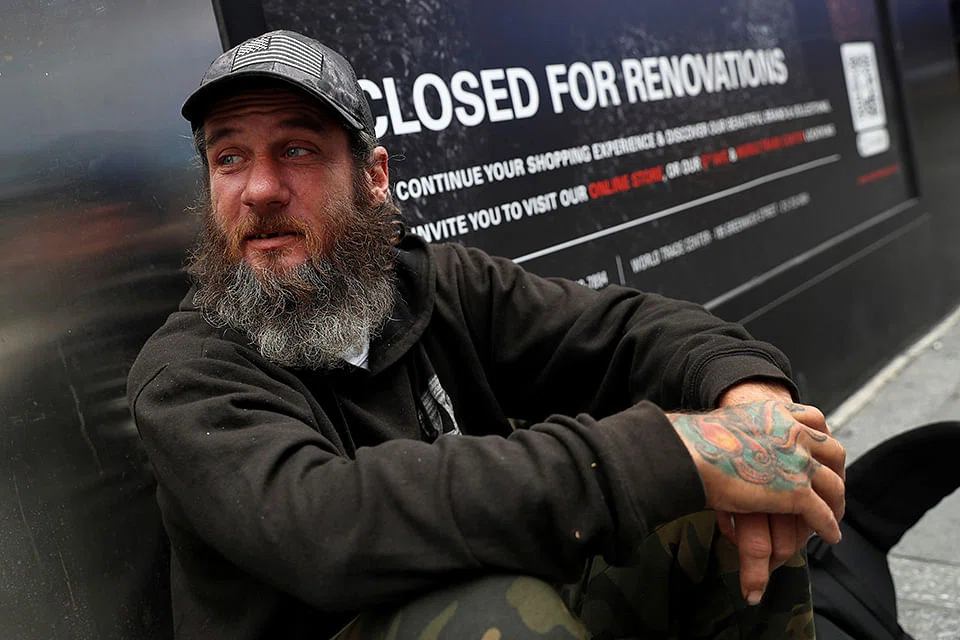
DeeperDive is a beta AI feature. Refer to full articles for the facts.
New York
AN influx of homeless people into midtown Manhattan after an emergency move by New York City to ease crowding in shelters has been a fact of pandemic life since last spring.
Many of the newcomers, living in nearby hotel rooms contracted by the city, have been largely inconspicuous. But others with mental health and drug problems have become a growing presence in the Hell's Kitchen neighborhood and adjacent Times Square.
As the city looks to welcome back tourists and office workers with the pandemic lifting, suburban commuters and residents say there is a palpable difference from the New York they knew before much of the country locked down in March 2020.
"They make me feel like I wish I could do something," said Rachel Goldstein, an IT director, as she emerged from Penn Station, a major rail hub, last week for her first on-site workday since the pandemic began.
Giselle Routhier, policy director for the Coalition for the Homeless advocacy group, faulted the state and city for not providing enough mental health services and for "shuffling people" between locations.
Navigate Asia in
a new global order
Get the insights delivered to your inbox.
"What we actually need for the city to do is to offer folks on the streets access to single occupancy rooms where they can come inside and feel that they're safe from the elements and from the spread of the coronavirus," she said.
Longer term, the city needs "more robust housing production for extremely low-income and homeless households, particularly for single adults," many of whom were pushed into homelessness by the economic fallout of the pandemic, Ms Routhier said.
Several of the more than a dozen Democrats running for mayor in next Tuesday's primary election also have called for converting hotels into housing for the homeless.
As the pandemic raged last spring, the Department of Homeless Services (DHS) relocated 10,000 people from crowded shelters to 67 hotels whose tourism, business and convention bookings had dried up.
Over 20 per cent were packed into hotels in the Chelsea and Hell's Kitchen neighborhoods west of Times Square and the Theater District, the New York Post reported, citing a letter from Manhattan Borough President Gale Brewer that it had obtained.
In a precinct that includes Times Square, reports of assaults and robberies have shot up 185 per cent and 173 per cent respectively so far this year, even as citywide assaults rose by only 8 per cent and robberies fell 5 per cent, according to New York Police Department (NYPD) statistics.
Scott Sobol, 44, a real estate agent who lives in Hell's Kitchen, believes only a few of the homeless residents are responsible for the additional complaints, and faulted officials for not vetting them for mental health issues, drug problems and criminal histories.
"What (neighbours) want is to stop getting harassed on the street," he said. "If a homeless rehabilitation center can coexist with a sense of polite life, we have no issues with it."
Eric Gourley, 42, a drifter who has been in the city for a week, sleeping on park benches and sidewalks, said he sympathises with business owners who have complained about the behaviour of some homeless people.
"Some of it, I understand," he said on a Midtown street last week. "Some of these homeless people are out here, they're getting high, they're getting drunk." REUTERS
Decoding Asia newsletter: your guide to navigating Asia in a new global order. Sign up here to get Decoding Asia newsletter. Delivered to your inbox. Free.
Share with us your feedback on BT's products and services
TRENDING NOW

Shelving S$5 billion office redevelopment plan proved ‘wise’ as geopolitical risks mount: OCBC chairman

China pips the US if Asean is forced to choose, but analysts warn against reading it like a sports result

Beijing’s calculated silence on the Iran war

Middle East-linked energy supply shocks put Asean Power Grid back in focus

