NY renters in Covid hot spots are 4 times more likely to face eviction
 Add BT as a preferred source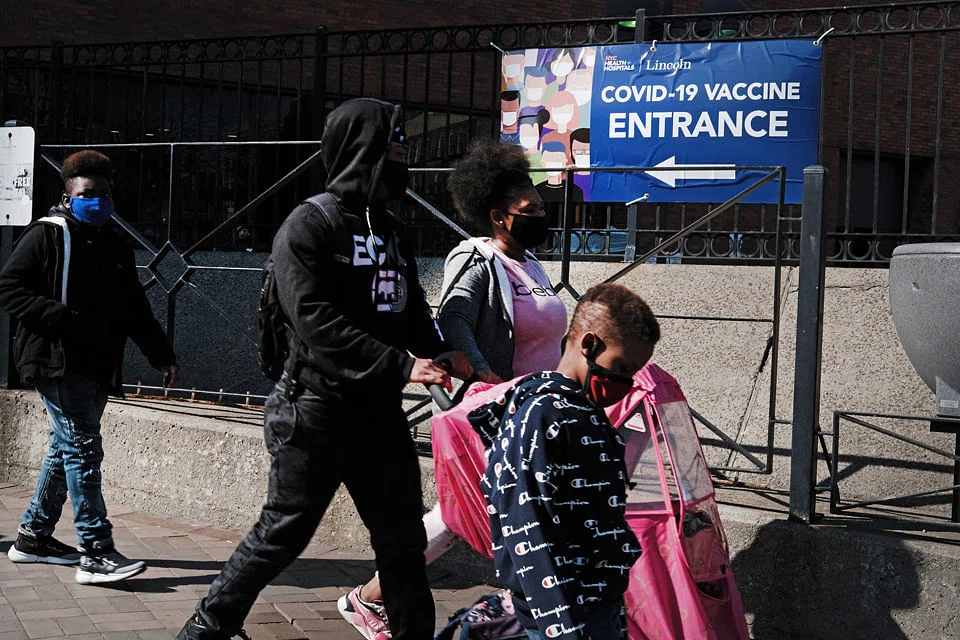
New York
NEW York City landlords are seeking evictions nearly four times more often in the neighbourhoods hit hardest by Covid-19 - predominantly Black and Latino communities that have borne the brunt of both health and housing crises since the coronavirus swept the city last year, according to a new report.
The findings are the latest indication that thousands of the city's most vulnerable residents could be forcibly removed from their homes as early as May, when a statewide pause on evictions is set to expire.
In New York City, about 40,000 residential tenants have been taken to court for eviction proceedings since late March 2020, with an average claim of US$8,150, according to an analysis of state records by the Association for Neighborhood and Housing Development, a coalition of housing nonprofits. (Despite a pause on many evictions, new cases continued to be filed.)
But the neighbourhoods with the highest Covid-19 death rates, the top 25 per cent, received 15,517 eviction filings, while areas with the lowest death rates, in the bottom 25 per cent, had only 4,224 cases, through late February. Roughly 68 per cent of residents in the hardest-hit ZIP codes were people of colour, more than twice the share in the least affected areas.
"When we talk about systemic racism, this is how it shows up," said Lucy Block, author of the report and a research and policy associate with the group.
"It's the scale to which landlords are still trying to evict people and how much those evictions are concentrated in the same communities being decimated by Covid-19."
Among the 10 ZIP codes with the highest rate of eviction filings, eight were in the Bronx, one was in Queens, and the other was on Staten Island.
The hardest-hit neighbourhoods were home to large numbers of essential workers, many of whom lost their jobs in the last year.
Marisol Morales, 55, moved to the United States from Panama in 1991 and has lived for 11 years in a two-bedroom apartment near the Concourse section of the Bronx.
She said she lost her part-time job as a cook in a Brooklyn restaurant last April and has been unable to pay her US$1,647 rent, which is subsidised by Section 8 housing vouchers, for several months.
She said she owes several thousands of dollars in back rent and that her landlord is suing her in civil court, which could result in garnishment of her wages when she finds a new job. Other tenants in the building already have eviction cases pending.
She does not qualify for unemployment benefits because she was paid in cash. Occasionally she has sold homemade tamales and empanadas to friends in other boroughs, but the orders are infrequent. Her adult daughter, who works in a hospital, has helped support her, but she has student loans to cover. She also has two sons serving in the military.
Problems in her six-storey prewar building predate the pandemic, she said, with tenants claiming that the landlord neglected long-needed repairs. Arun Perinbasekar, a lawyer for the landlord, said repairs are being made and are ongoing and that reduced rent settlements have been offered to several tenants.
In March, as several residents lost their jobs, Ms Morales and others stopped paying rent. But moving was out of the question.
Even though the coronavirus has sparked a year of record rent cuts, mostly on luxury apartments, 96 per cent of market-rate rental listings in New York City are still unaffordable to a wide group of essential workers, who made an average salary of about US$56,000 but often much less, according to the listing website StreetEasy.
"An affordable apartment does not exist in New York," Ms Morales said in Spanish, adding that she is hoping for government-led rent forgiveness because her debt far exceeds what she can repay.
The eviction filings are likely an undercount, Ms Block said. Across the state, there are more than 222,000 renters, including commercial tenants, with active eviction cases - more than the population of Rochester - and the data does not include filings for towns and villages, which report their numbers differently, she said. About 177,000 cases were filed before the pandemic, but a surge of new cases are possible when the moratorium ends.
Far more renters are teetering. As at December, as many as 1.2 million renters in New York state were at risk of eviction, meaning it was unlikely that they could pay the next month's rent, according to Stout, a financial consulting firm.
That calculus could change with the passage of the US$1.9 trillion federal stimulus package. For New York state, the plan could include US$2.3 billion in federal rental assistance and up to US$400 million in state support, said Malika Conner, director of organising for the Right to Counsel NYC Coalition, an anti-eviction group.
The aid is welcome, she said, but much remains unclear about how and when the funds will be disbursed. "If there isn't enough money put toward cancelling rent, a couple of months from now, we're going to be in the exact same position." NYTIMES
Decoding Asia newsletter: your guide to navigating Asia in a new global order. Sign up here to get Decoding Asia newsletter. Delivered to your inbox. Free.
Share with us your feedback on BT's products and services