

NZ central bank says it won't relax loan curbs
There remains a risk of a resurgence in house-price inflation, particularly in light of strong immigration flows, says governor
Wellington
NEW Zealand's central bank said it won't relax mortgage lending restrictions for now as surging immigration and low borrowing costs could re-ignite the housing market.
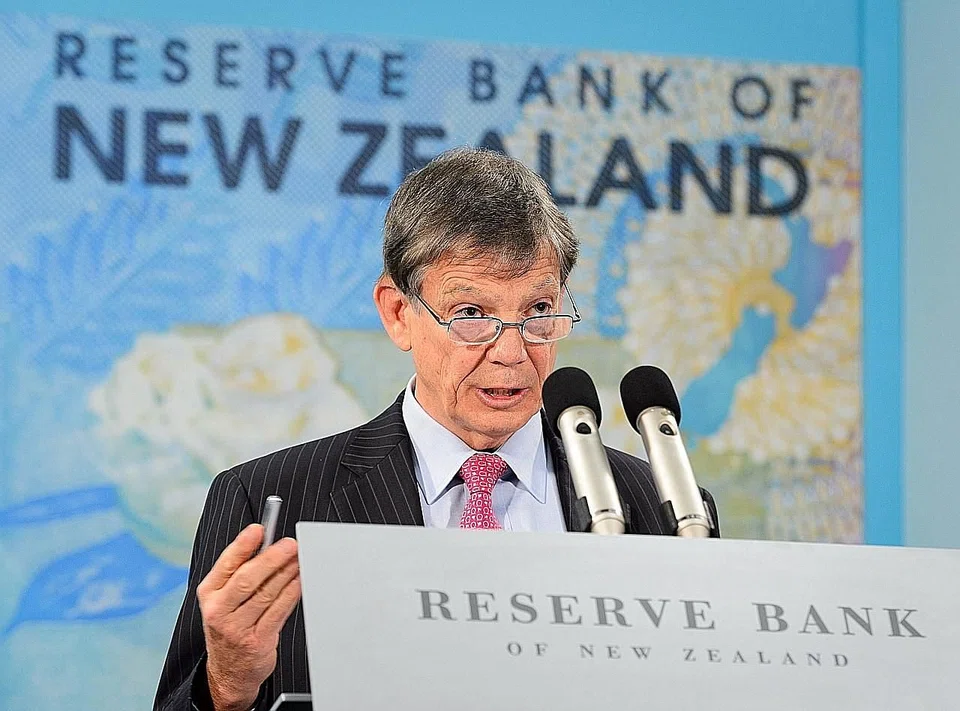
"There remains a risk of a resurgence in house-price inflation, particularly in light of strong immigration flows," Reserve Bank of New Zealand Governor Graeme Wheeler said in the bank's semi-annual Financial Stability Report released in Wellington on Wednesday. "We do not consider it appropriate to ease" the lending limits "at this time", he said.
Mr Wheeler previously said he would consider removing the limits on low-deposit home lending towards the end of this year. The central bank introduced them on Oct 1 last year to curb house-price inflation and delay raising interest rates, which it feared would drive up the New Zealand dollar.
"Everything is moving in the right direction for easing the restrictions but the criteria aren't met at present," said Nick Tuffley, chief economist at ASB Bank Ltd in Auckland. "A clear downturn in migration would be needed to give a high degree of confidence the housing market won't rebound."
While the central bank raised its benchmark rate four times between March and July this year, it has paused since then amid benign inflation. Mr Wheeler on Oct 30 signalled he may keep the official cash rate unchanged at 3.5 per cent for a prolonged period by dropping a previous comment that tightening would be necessary.
Without commenting directly on monetary policy in Wednesday's report, the RBNZ said that "further increases in short-term interest rates may be required in coming years". The New Zealand dollar "remains elevated" and could decline further if the US economy strengthens or China's expansion slows, the RBNZ said.
"We still believe the exchange rate is unjustified and unsustainable," said Mr Wheeler, who intervened in currency markets in August to weaken the kiwi. Recent declines haven't matched weaker export prices and the RBNZ "still thinks the exchange rate's got further to go", he said.
The RBNZ's restrictions on mortgages with so-called high loan-to-value ratios (LVR) forced banks to limit loans of more than 80 per cent of a property's value to no more than 10 per cent of new lending, down from as much as 30 per cent earlier in 2013.
The proportion of high-LVR loans fell to 8.4 per cent of new lending in September this year, central bank data show.
Mr Tuffley predicts house-price inflation and mortgage credit growth could slow to levels the RBNZ may be comfortable with by mid-2015, allowing for a relaxation in the lending restrictions by September next year.
The restrictions have had a "substantial impact" on housing demand, the RBNZ said.
House prices rose 5.9 per cent in October from a year earlier, Quotable Value, a government-owned property researcher, said in a Nov 6 report. House sales fell 12 per cent in September from a year earlier, according to Real Estate Institute data.
The softer housing market "is a welcome development" and eases one of the risks faced by the financial system, Mr Wheeler said on Wednesday. "The Reserve Bank will continue to closely monitor the housing market."
Mr Wheeler said immigration levels are a "surprise" and there is a correlation with house prices. There were a record 45,414 permanent arrivals in the year ended Sept 30.
While risks from a housing bubble have decreased, the financial system faces increased risk from falling incomes for dairy farmers, the RBNZ said.
Fonterra Cooperative Group has forecast it will pay its New Zealand farmers NZ$5.30 (S$5.38) for a kilogram of milk solids in the 2014-15 season, down from NZ$8.40 a year earlier, as global prices slide. The drop in farm income will put pressure on farmers' cash flows and may curb rural spending.
"Based on recent outcomes of international dairy auctions, the payout could be lower than currently forecast," the RBNZ said. "A sustained period of weakness could increase financial stress among indebted dairy farmers." BLOOMBERG






