

Oakland apartment rent growth highest in US
Businesses and residents, priced out of neighbouring San Francisco, are drawn to an increasingly vibrant scene
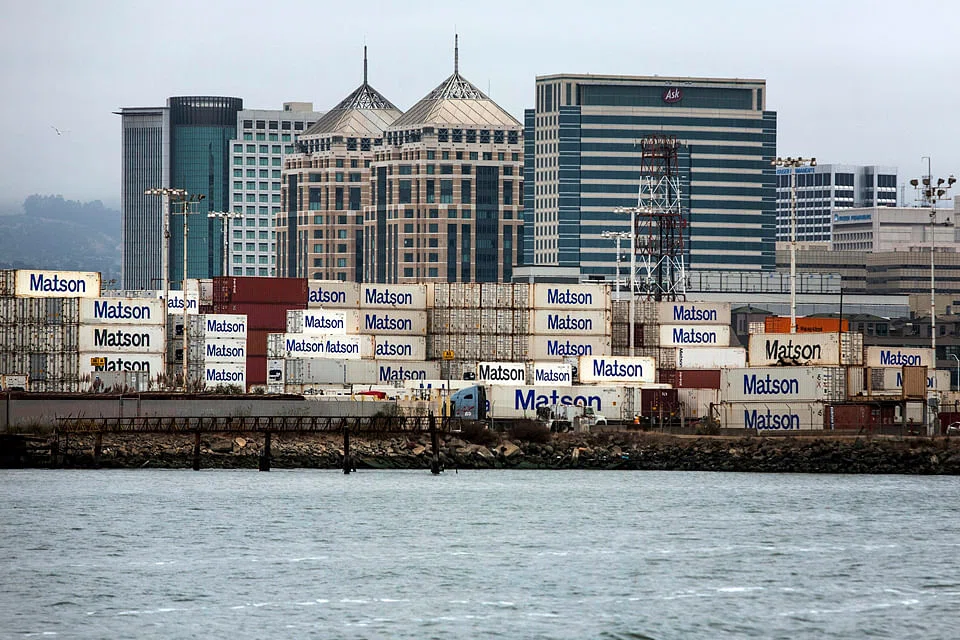
San Francisco
THE city by San Francisco Bay with the fastest-growing rents in the US isn't San Francisco.
Oakland, long synonymous with crime and blight, is attracting businesses and residents priced out of its more famous neighbour to the West and drawn to an increasingly vibrant scene.
"This is one of the few places I've ever been where on a daily basis you see changes," said Lucy Flood, a 35-year-old freelance writer who rents work space in a converted Mazda dealership. "San Francisco rents are so high. It's cheaper to be here. It's considered edgy and hip and cool. There are just more people moving here."
Oakland had the highest apartment rent growth in the US, at 9.1 per cent in the year ending Sept 30, outpacing San Francisco's 7.4 per cent, and tying with New York for the tightest occupancy, according to MPF Research, a Carrollton, Texas-based rental-housing market-analysis company.
With apartment construction "fairly modest", the city probably will remain at the top of the list for the next year or two, according to Greg Willett, MPF's vice-president of research and analysis. Even so, mean rents of US$1,787 are two-thirds San Francisco's US$2,690, based on the average a typical household pays for a new lease for all apartments, he said. For commercial space, the gap is more than half.
"Particularly for younger people, they take a look at those housing prices in San Francisco and it's just not feasible," Kelley Kahn, Oakland's special-projects director, said in an interview. "Oakland becomes the next place that offers that urban life that people want at a much more affordable, accessible price."
Jim Woods, 34, who owns two bars in San Francisco, chose Oakland to open a third. His Woods Bar & Brewery is on Telegraph Avenue, one block from the refurbished Fox Theater, which opened in 1928. "There's somewhat of a cultural renaissance taking place in Oakland," he said, sitting near a fire pit at the brewery's restored front patio. "It's a combination of people finally acknowledging all the talent and culture that's here, and a lot of people coming to Oakland, whether it's from San Francisco or other parts of the country."
Mr Woods moved with his wife in March from a one-bedroom rental in San Francisco's Russian Hill neighbourhood to a two-bedroom, two-bath condominium near his Oakland bar.
Tim Westergren, 48, founder of Pandora Media Inc, the largest Internet radio service, moved his company from San Francisco to Oakland in 2000, at the height of the dot-com boom, after running out of space. "We're two blocks from a BART station, with really easy access for people around the Bay, including San Francisco," Westergren said, referring to Bay Area Rapid Transit, a subway system connecting Oakland to San Francisco.
He said that he noticed the area beginning to revive around 2005. "It happened block by block. I remember a couple of extra restaurants opening up just down the street from us and people created a café area on the sidewalk because folks were staying after work, which had never happened before."
Oakland was shaped by World War II, when burgeoning shipbuilding and canning industries drew black and white workers from the South. While the city is home to Clorox Co, which sells consumer products ranging from bleach to trash bags, and Kaiser Permanente, a non-profit health insurer and hospital chain, the post-war years were marked by a loss in jobs. Crime began surging in the 1960s.
The Black Panther Party, a militant group, was founded in Oakland in 1966 at the height of the civil-rights movement with the goal of empowering black Americans. Members carried weapons as a show of force and called for the release of black Americans from prisons, an end to policy brutality, along with jobs, housing, education and land. Gangs and related violence surged in later years.
Oakland's 8.8 per cent unemployment rate, more than the state's 6.9 per cent and San Francisco's 4.4 per cent, is down from a post-recession peak of 17.6 per cent in July 2010, state figures show.
California Governor Jerry Brown, who served as Oakland mayor from 1999 to 2007 and still lives there, led development of the decaying downtown, promising to attract 10,000 new residents. He opposed efforts that would have required some units in new developments to be sold as affordable housing, saying he wanted to draw people with disposable income.
The moneyed influx is fuelling tensions. Protesters chanted "Stop displacement!" and heckled Ed Manasse, the city's strategic-planning manager, at a June meeting when he presented a proposal to develop West Oakland, a predominantly black area. Opponents say it will force out long-time residents, raise housing costs and gentrify the area.
"Gentrification is a bad thing," said Robbie Clark, an organiser at Causa Justa::Just Cause, a local housing and immigration-rights group that opposes the plan. "Economic development can happen without it leading to displacement."
Oakland's crime rate, second in the US among cities with population between 100,000 and 499,000, is beginning to decline. This year, murders fell 16 per cent, robberies slid 36 per cent and burglaries dropped 10 per cent, city data show.
Still, Oakland trailed only Flint, Michigan, in law-breaking among 252 cities of comparable size, according to 2014 rankings prepared by CQ Press based on 2012 FBI data. Oakland's own data showed aggravated assaults rising 2 per cent and rape increasing 7 per cent this year.
Median household income in Oakland is US$52,000, with 20 per cent of residents below the poverty level, according to US Census Bureau data. The city was 35 per cent white, 28 per cent black and 25 per cent Hispanic in 2010, Census figures show.
Bill Mitsakos said that he moved to Oakland from San Francisco in 2009 because he could afford to buy a house.
"Certainly, the not-being-able-to-afford San Francisco started the whole ball rolling in a big way, but now I feel like people are moving over here because they want to get in on the party," said Mr Mitsakos, 37, a senior software engineer at Rockbot Inc, an Oakland-based music app company.
Menlo Park-based real-estate company Lane Partners bought the Sears Holdings Corp building in Oakland in June with plans to convert the seven-storey space into retail and offices, with the goal of drawing technology-industry tenants.
"It requires a leap of faith for people," Mr Woods, the bar owner, said about enticing people to move to the city despite the city's crime and reputation. "Everybody is kind of in it together, and I see a collaborative effort." BLOOMBERG
TRENDING NOW
US dollar falters after Iran’s offer to reopen Hormuz sends oil lower

He built the Vingroup empire. Now South-east Asia’s richest man is handing some key roles to his sons

Floods compound Philippine growth woes from public-works scandal

Tokyo reverses baby bust with AI matchmaking and generous subsidies

