
Offshoring lures cost-conscious industrialists, but Singapore remains attractive: market watchers

Although other places might be cheaper for companies to operate in, the Republic offers advantages such as political stability, a skilled workforce and legal protections, say analysts

Samuel Oh
Published Thu, Dec 12, 2024 · 05:00 AM — Updated Fri, Dec 13, 2024 · 07:11 PM
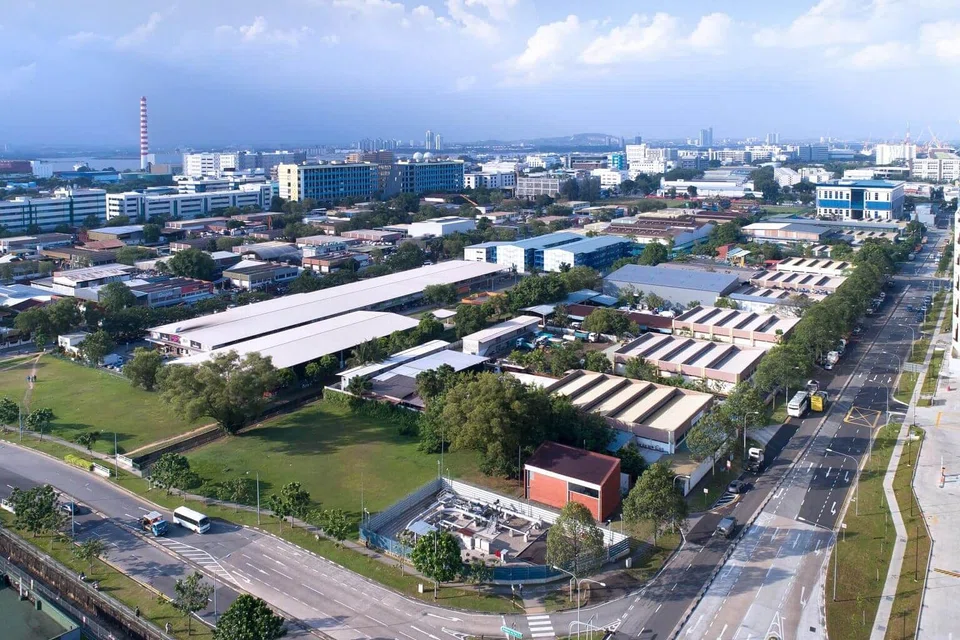
    • There are opportunities for the local market to redevelop and repurpose its industrial spaces, to cater to high-value sectors such as semiconductors, precision engineering and biomedical sciences, says CBRE's Tricia Song.
    • There are opportunities for the local market to redevelop and repurpose its industrial spaces, to cater to high-value sectors such as semiconductors, precision engineering and biomedical sciences, says CBRE's Tricia Song. PHOTO: BT FILE

    INDUSTRIALISTS and manufacturers in Singapore shutting down or relocating their business functions is not a new trend, and this will continue as the economy matures, market experts told The Business Times.

    Singapore’s high operating costs have made the country less competitive in low-cost manufacturing segments where cost reduction is a top priority, said Brenda Ong, head of logistics and industrial at Cushman & Wakefield (C&W).

    In recent times, various companies have optimised their manufacturing footprint and moved to lower-cost markets.


    Last December, Taiwanese display maker AUO closed its production facility in Singapore and moved its production business back to Taiwan amid declining demand for liquid-crystal display screens.

    In February 2024, Swedish multinational food packaging and processing company Tetra Pak closed its factory in Jurong as part of its plans to consolidate production into its other facilities in the region.

    Within the same month, home-appliances maker Electrolux shut its Singapore regional office in Rochester Road and relocated its leadership team to Bangkok, while still retaining its product servicing and sales office in the Republic.

    In November, Mercedes-Benz sold the balance lease of its property at Jurong back to JTC for S$46.1 million and relocated its operations to Johor.

    Chua Yang Liang, head of research and consultancy, South-east Asia, at JLL, noted that these relocations will have some impact on the local industrial property market in the short term.

    “However, as Singapore continues to draw investments from firms in growth sectors such as semiconductors, artificial intelligence and healthcare while repositioning itself as an advanced manufacturing hub, this should close the gap in occupier demand,” he said.

    Chua added that JTC’s data showed that overall factory net absorption was expansionary in the first nine months of 2024, indicating that physical move-ins more than compensated for the space vacated. The overall factory vacancy rate tightened to 11 per cent in the third quarter of 2024 from 11.2 per cent in the same period last year.

    “Must make strategic sense”

    C&W’s Ong noted that industrial markets in key emerging South-east Asian economies, such as Malaysia, Thailand, Vietnam and Indonesia, are growing more competitive with business-friendly policies, developing infrastructure and fast-rising levels of modern industrial stock.

    “This has attracted some industrial occupiers to streamline their manufacturing operations in the region, which may lead to a full relocation or right-sizing in Singapore,” observed Ong.

    CBRE’s head of research for Singapore and South-east Asia Tricia Song said that while cost savings are important, relocation or right-sizing must make strategic sense for industrialists.

    “Singapore’s political stability, world-class infrastructure, and highly skilled workforce remain significant draws for businesses,” she pointed out, adding: “For high-value industries and advanced manufacturing operations, factors such as innovation, legal framework, and intellectual property protection often take precedence over mere cost savings. Many industrialists are not prepared to navigate the uncertainties of other markets just to reduce costs.”

    Although locations such as Johor offer lower costs and proximity to Singapore, she viewed such moves as “specific to certain operational needs and do not signify a broad trend of companies exiting Singapore”.

    Rather, she sees opportunities for the local market to redevelop and repurpose its industrial spaces, to cater to emerging sectors and high-value industries such as semiconductors, precision engineering, biomedical sciences, aerospace as well as sustainable energy and chemicals.

    Catherine He, head of research at Colliers Singapore, said that Singapore offers a unique proposition as a stable and geopolitically neutral location for industrialists to diversify their risks or for them to set up operations with a skilled labour force and efficient infrastructure. “There is also a premium and reputation attached to goods manufactured here, especially in the biomedical and electronics space,” she noted.

    Singapore’s industrial sector should remain resilient, noted CBRE. For instance, Siltronic announced in June the launch of its new S$2.9 billion wafer fab manufacturing plant at Tampines Wafer Fab Park, doubling its manufacturing capacity.

    Song said that this investment underscores Singapore’s appeal for high-value and advanced manufacturing operations.

    Being green matters

    As industrialists streamline their operations in Singapore, some market watchers expect higher levels of vacancy in the market, particularly from older industrial stock or specialised built-to-suit factories.

    C&W’s Ong noted that some older industrial properties would be better off if they undergo asset enhancement and redevelopment.

    Graeme Bolin, CBRE’s head of occupier and leasing, industrial and logistics services, has noticed that there is a greater focus on sustainability due to higher energy costs, and the increasing need for temperature or humidity control by tenants these days.

    “While there is currently no significant price differential for greener buildings, this may change in the future,” he said.

    JLL’s Chua said that aside from improving the quality and competitiveness of older assets, fulfilling sustainability goals is likely to feature highly on landlords’ asset enhancement plans as these are likely to improve occupancy and rents.

    CBRE’s Song views the green focus as being driven by increasing regulatory pressure and corporate sustainability targets.

    Landlords who invest in green features might eventually realise financial benefits from energy savings and operational efficiency.

    “In the past, green building certification was seen as a ‘nice to have’ for occupiers. Today, while not mandatory, it has become an important criterion for many tenants. Although it remains to be seen if industrial assets with green features can command higher rents, landlords are keen to attract top tenants and avoid a ‘brown discount’,” she said.

    Given the continued flight to quality, C&W’s Ong noted that industrial spaces which have the right specifications and sustainability credentials are expected to outperform with low vacancies and higher rents. And older industrial stock would see stagnant performance, she added.


