

Oskar Schindler's factory to go on market
Town offering it for symbolic sum to investor to clean it up and create jobs
[PRAGUE] Oskar Schindler's factory is headed for the market, and Blahoslav Kaspar knows it will be a tough sell.
The mayor of Brnenec, a village of 1,300 in the eastern Czech Republic, insists the crumbling complex would be the perfect spot for any kind of light industry. He also suggests it could be a Holocaust museum.
The factory once belonged to Mr Schindler, a Czech-German industrialist, spy and a member of the Nazi party who sheltered about 1,200 Jews there in the final months of the Second World War. Their story was featured in Steven Spielberg's Academy award-winning 1993 film Schindler's List.
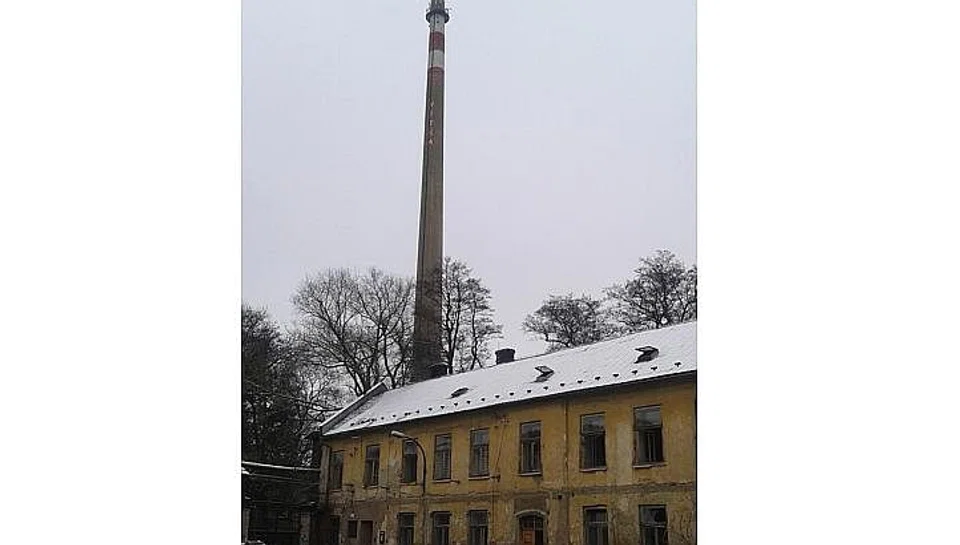
The complex "has real potential", Mr Kaspar said, looking at the cluster of abandoned buildings from the window of his second-floor office perched on a small hill above the factory. He does acknowledge that for now, "it looks like Dresden after the bombing". The complex has been the subject of almost 100 civil and criminal lawsuits since it went bankrupt 10 years ago. Mr Kaspar says that those disputes are close to being resolved, and says that the town would offer it for a symbolic sum to an investor with the resources to clean it up and create jobs in the town 190km east of Prague.
In November, a Prague court made a preliminary judgment that would allow the property to be sold, and Mr Kaspar expects a final ruling this spring. He says that he's in talks with an investment group with potential access to European Union funds for environmental remediation.
Mr Schindler, who ran a cookware factory in Krakow that had been converted to arms production, moved the plant and its Jewish workers to Brnenec in 1944 as the Soviet Red Army approached Poland. Originally a textile plant owned by a Jewish family, the Brnenec site was given to Schindler thanks to his ties to the Abwehr, or Nazi secret service. He managed to keep many of his employees out of Auschwitz by telling the German government that they were skilled labourers.
After the war, Mr Schindler fled Czechoslovakia, where he was wanted as a war criminal because of his membership in the Abwehr. He went first to Germany and then South America, where he ran a string of unsuccessful businesses and ended up being supported by Jewish groups. In 1962, a tree was planted in his honour at Yad Vashem, Israel's Holocaust memorial.
The Brnenec factory was nationalised after the Communists took over Czechoslovakia in 1948. The textile company, called Vitka, remained the region's main employer until the mid-1990s, when it stumbled on the Czech Republic's road to capitalism. The once-prosperous supplier of non-flammable seat covers to car maker Skoda and Czech Airlines changed owners several times in quick succession and went bankrupt in 2004.
Today, the machinery has been stolen, windows broken, and the WWII-era heavy bolted doors dismantled and carted away. The crumbling roof tiles let snow and water seep inside. And textile dyes and other poisons dumped on the factory grounds - next to the Brnenec railway station and elementary school - will require remediation that Mr Kaspar estimates will cost some 40 million koruna (S$2.5 million).
A sale of the property would open the door for Mr Kaspar's plan to create a memorial to Holocaust victims by turning some of the historical buildings into a museum. They include Schindler's house and the men's barracks that flank the Appell Platz, where workers lined up for daily roll calls.
Brnenec "is the right place to remember", said Monika Bednarek, curator of the Schindler Factory Museum in Krakow. "The most important part of the story happened there, not here in Krakow."
Tomas Kraus, the director of the Czech Federation of Jewish Communities, calls the museum a "fantastic idea". His group doesn't have enough money to fund the Brnenec project, but Mr Kraus says that he is confident he can find overseas backing for a museum if the property dispute is resolved. While the history of places such as Brnenec was largely ignored by the Czechoslovak Communist government, he says that it's important that Czechs not forget their country's Jewish heritage. "The memorial should have been made right after the movie was released," he said. "This is our last chance before it falls apart." - Bloomberg
TRENDING NOW

KKR founders among investors buying 42% of Peter Lim’s Valencia; club valued at US$1.4 billion

Singapore’s central gas buyer affirms Indonesia’s role as ‘important partner’ amid export review warning

Why the biggest business decision about AI isn’t which model to choose

NEA issues notices to 10 Singapore-based companies, including Wilmar and APP, over haze

