

Pivoting to promising segments an increasingly important growth driver for Reits


CAPITAMALL Trust (CMT) became Singapore's first listed real estate investment trust (Reit) in July 2002. In its first five full years as a listed entity, DPU rose 66 per cent between 2003 and 2007 or a compound annual growth rate of nearly 14 per cent. Acquisitions and asset enhancements were the two most important drivers of DPU growth for CMT in its early years.
In recent times, as digitalisation and the Covid-19 pandemic dim prospects of certain property types and create demand in other areas, pivoting a portfolio to a new asset class has become an increasingly vital growth driver for Reits.
Mapletree Industrial Trust (MIT) is a prime example of a Reit that has successfully pivoted by embracing a new class of assets in data centres.
When MIT listed in October 2010, its S$2.1 billion portfolio of Singapore assets comprised flatted factories, business park buildings, stack-up/ramp-up buildings, light industrial buildings, and warehouses.
Fast forward to Sep 30, 2021, MIT has grown its assets under management (AUM) to S$8.5 billion, with data centres contributing around 53 per cent of AUM. Flatted factories, which accounted for 53 per cent of portfolio valuation at the time of listing, contributed 17 per cent of AUM as at end-September.
For the three months ended-September, occupancy rate of MIT's data centres of around 95 per cent was slightly higher than that of its overall portfolio.
Data centres are a promising segment. The pandemic has accelerated digitalisation and cloud adoption from the growing use of remote working, video streaming and online gaming, which underpins demand for data centre space.
Investors have cheered MIT's pivot to data centres - the trust traded at a premium to book value of nearly 50 per cent as at Dec 3, 2021. MIT's premium to book exceeds that of Mapletree Commercial Trust, which shares the same sponsor and invests in commercial assets.
Amid the damage to the hospitality sector wrought by the pandemic, hospitality-focused property trusts are busy adding new property types to their portfolios to enhance stability.
Ascott Residence Trust (ART) added rental and student housing to a portfolio consisting largely of serviced residences and hotels.
In June, ART completed the purchase of three rental housing properties in Sapporo, Japan for a total acquisition price of 6.8 billion yen (S$83 million).
The trust has been buying student housing assets in the US. ART made its maiden purchase in Atlanta, Georgia earlier this year. Subsequently, ART co-invested in developing a student housing property with 678 beds near the University of South Carolina. In September, ART bought a 1,005-bed asset in Texas.
In November, ART completed the purchase of a 548-bed asset in Illinois for US$83 million. With this acquisition, ART increased its student and rental housing properties to about 12 per cent of total portfolio value, keeping it on track to grow longer-stay lodging assets to about 15-20 per cent in the medium term.
CDL Hospitality Trusts (CDLHT), which owns hotels and resorts, has had a torrid time. Net property income (NPI) in 2020 was 51 per cent below that of 2019. For the first 6 months of 2021, NPI improved but distribution per stapled security fell 19 per cent from a year ago.
A few months back, CDLHT revised its principal investment strategy to include rental housing, co-living, student accommodation and senior housing.
On Aug 31, CDLHT entered into a land purchase agreement and a development funding agreement to invest in a build-to-rent residential property in Manchester, UK, for a purchase consideration of £73 million (S$132 million).
Besides hospitality trusts, CapitaLand Retail China Trust expanded its investment mandate in 2020, added 5 business park properties in China to its portfolio of malls in China, and changed its name to CapitaLand China Trust (CLCT) with effect from Jan 26, 2021.
Recently, CLCT ventured into China's logistics sector, purchasing 4 logistics assets in Shanghai, Kunshan, Wuhan and Chengdu for an agreed property value of 1.7 billion yuan (S$366 million).
Investors will be watching how quickly and extensively ART, CDLHT, and CLCT pivot their portfolios to new property asset types.
Reit managers can look forward to earning acquisition and divestment fees from buying promising assets and selling assets with limited growth potential as they reconstitute their portfolios.
It's a lucrative business. ARA Asset Management, which manages funds that invest in real estate assets, real estate credit and infrastructure, achieved earnings before interest tax depreciation and amortisation margin on fee revenue of 62 per cent for the first half of 2021. ARA co-founder John Lim is on Forbes' list of Singapore's 50 richest for 2021.
Investors in Singapore-listed Reits pay their external managers a host of fees, including recurrent fees that are typically tied to asset size and/or net property income as well as fees for acquisitions, divestments and development management.
Whether managers should earn fees from transacting assets is debatable as optimising a Reit's portfolio composition ought to be part and parcel of the work of a Reit manager. Do this well and a manager will in any case be rewarded with higher recurrent fees tied to asset size and/or income of the said Reit.
MIT's manager has showed that changing portfolio composition can lead to a Reit fetching premium valuation. This in turn lowers cost of equity, which provides a competitive advantage in scaling up via acquisitions.
Investors buy Reits for stable income that will grow. They are probably agnostic as to whether growth comes via organic means, accretive acquisitions, asset enhancements or a pivot to promising segments.
Against a backdrop of economic disruption, managers need to actively pivot portfolios so investors can receive growing DPU on a sustainable basis.
When fortunes in one property asset type wane, managers must boldly seek a new pot of gold elsewhere. Expect more broadening of mandates and pivots. Where possible, count on sponsors to line up assets in a promising segment for injecting into a Reit.
By mastering the art of re-jigging a portfolio, a manager can turbocharge a Reit's growth and turn a dull investment story into one bursting with promise.
TRENDING NOW

South-east Asia has lost Nvidia’s best salesman

Higher rates, weaker spending: Is the Philippines entering stagflation?
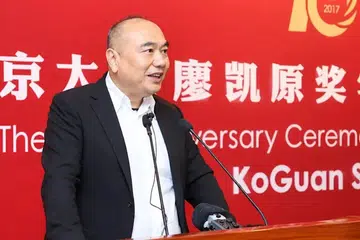
Who is Leo KoGuan, the Singapore-based billionaire backing Nvidia’s Jensen Huang?

Demand, tech capabilities position Apac and AI as Skyscanner’s next growth frontiers: CEO Bryan Batista

