

Power price hikes held at bay with Singapore landlords, hotel operators buffered by locked-in rates
Even as energy costs soar amid the Middle East war, real estate asset owners say the impact will be limited


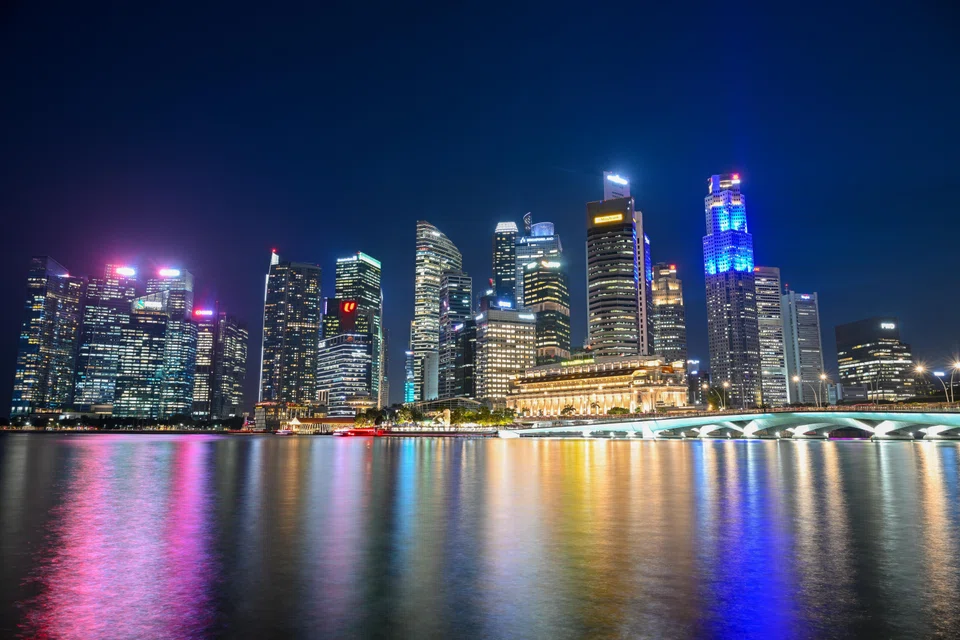
[SINGAPORE] Commercial landlords and hospitality operators in Singapore have largely been shielded from recent electricity tariff hikes, thanks to fixed-price contracts and hedging strategies put in place ahead of market volatility.
In March, the government announced that electricity tariffs will rise 2.1 per cent for the second quarter of 2026 and are likely to increase further, as global energy costs climbed with ongoing conflict in the Middle East.
The impact so far has been limited, with utilities forming a small share of overall costs for commercial landlords.
Energy costs make up around 2 per cent of UOL Group’s total operating costs, while CapitaLand Ascott Trust (Clas) puts the figure at about 4 per cent for financial year 2025. At CapitaLand Integrated Commercial Trust , utilities accounted for about 15 per cent of property operating expenses in FY2025, its annual report showed.
For Clas’ rental and student accommodation assets, utilities are typically borne by tenants and therefore do not directly affect its operating costs. For properties under master lease agreements, operating expenses, including utilities, are largely borne by lessees, providing further insulation against energy cost volatility.
“Clas’ predominantly long-stay portfolio has a leaner cost structure compared to full-service hospitality assets,” said Serena Teo, CEO of Clas’ managers.
For assets under management contracts, including those with minimum guaranteed income, Clas actively manages energy cost exposure through fixed-rate arrangements and long-term contracts where feasible, she added.
Energy prices in markets such as China, Vietnam and Indonesia are government-regulated, while renewable energy penetration in regions such as Europe and Australia also provides a partial hedge against electricity price spikes, she said.
“As a result of these mitigating measures, we do not expect higher electricity costs to have a material impact on Clas’ overall margins in the near term.”
For FY2025, Clas’ distribution per stapled security held steady at S$0.061. Distributable income rose 11 per cent on the year to S$256.7 million and revenue was up 3 per cent at S$837.6 million.
Portfolio-level procurement and hedging strategies also act as key buffers against electricity price volatility.
Ervin Yeo, CEO of commercial management at CapitaLand Investment (CLI), said the group’s electricity rates for 2026 were hedged ahead of recent geopolitical tensions.
“This proactive approach helps mitigate short-term market volatility,” he said. “We also leverage our scale to procure energy on a portfolio basis, enabling us to secure competitive electricity rates for both our retail and workspace tenants.”
The group does not expect an impact on electricity rates across all its retail and workspace properties in Singapore for the rest of 2026.
Likewise, City Developments Limited (CDL) said the impact of higher electricity tariffs is expected to be “contained and manageable”.
“For our Singapore commercial and hotel portfolio, most utility costs are already locked in under fixed contracts, with 2027 contracts already pre-committed,” a spokesperson said, adding that this provides “good visibility over the next few years”.
CDL’s Singapore operations – including corporate offices, managed buildings and construction sites – recorded a reduction in energy use in 2025, the spokesperson added.
Lendlease’s energy procurement strategy is similarly anchored on long-term contracts and bulk purchases to mitigate volatility and lock in cost certainty.
Jenny Khoo, retail and workspace management head at Lendlease , said the group has secured a new two-year energy contract for its Singapore portfolio at a lower rate, effective July 2026.
“This is expected to reduce electricity expenses by approximately 15 per cent per annum,” she said. “We do not anticipate an increase in utility costs over the next one to two years.”
Efficiency takes focus
While the immediate impact of rising energy prices has been muted, the focus has increasingly shifted towards reducing consumption through efficiency gains and longer-term sustainability investments.
Across portfolios, landlords and operators said they are stepping up efforts to manage consumption through operational upgrades and technology-driven systems.
CLI’s Yeo said the group optimises day-to-day operations through smart air-conditioning and lighting systems, demand-based controls and digital building management platforms that enable real-time monitoring.
CDL pointed to using building management system optimisation, LED retrofits and high-efficiency cooling systems as part of its energy-saving efforts.
Khoo of Lendlease said such energy-saving investments typically deliver returns within three to 10 years.
At CDL, these retrofits generate around S$3.5 million in electricity cost savings annually, and reduced cash outflows in FY2025. The savings are reflected in CDL’s operating expenses and cost of sales, supporting its profit before tax – which more than doubled to S$771.5 million in FY2025.
From 2012 to 2025, the cumulative energy cost savings from its locally managed investment properties totalled at about S$47.5 million.
Clas piloted an artificial intelligence-enabled chiller optimisation system at one of its properties, Ascott Orchard Singapore, in 2025, which was found to reduce energy use by around 5 per cent and cut costs by over S$10,000 annually.
UOL and Frasers Hospitality also cited green building certifications as part of broader efforts to manage the higher energy demands of hotel operations.
Six of the eight Singapore properties in UOL’s hotel portfolio, including ParkRoyal Collection Pickering and Pan Pacific Orchard, are Green Mark certified. Efforts are ongoing to certify UOL’s remaining assets.
A Frasers Hospitality spokesperson said: “Like many hospitality operators, we continue to monitor utility costs closely while mitigating impact through operational efficiencies and energy-saving initiatives across our properties.”
This includes pursuing green building certifications, conducting energy audits and upgrading building systems.
TRENDING NOW

Britain’s mansion tax shows the difficulty of targeting wealth

Once staunchly pro-China, Malaysian Chinese businesses are now distancing themselves from Beijing

The only common thing in S-E Asia is that we all eat rice: Cisco’s Asean president

Singapore data centre operator DayOne opts for US IPO at likely US$20 billion valuation

