Prices of US private residence clubs, fractional projects slow to recover
Their prices are still down 25-30 per cent from the peak years of 2004-07
New York
SEVEN years after prices for private residence clubs and other fractional developments collapsed, the value of a small slice of paradise is still far from recovered.
Sales last year began to pick up, hitting US$516 million, but that is just a quarter of what it was in 2007, according to a recent report from Ragatz Associates, which tracks this market. And the prices for those shares that did sell are still down 25-30 per cent from the peak.
Despite the bleak data, promoters of fractional ownership are restarting existing projects that have lain dormant and are contemplating new ones. They see new interest in the properties, driven by both solid economic news and low interest rates for both builders and buyers.
Who is right may only be known years from now. But if ever there was a time to ask what it was like to own - or be unable to sell - a partial share in a vacation home, it may be now. How did owners fare? And what caveats should a new buyer bear in mind?
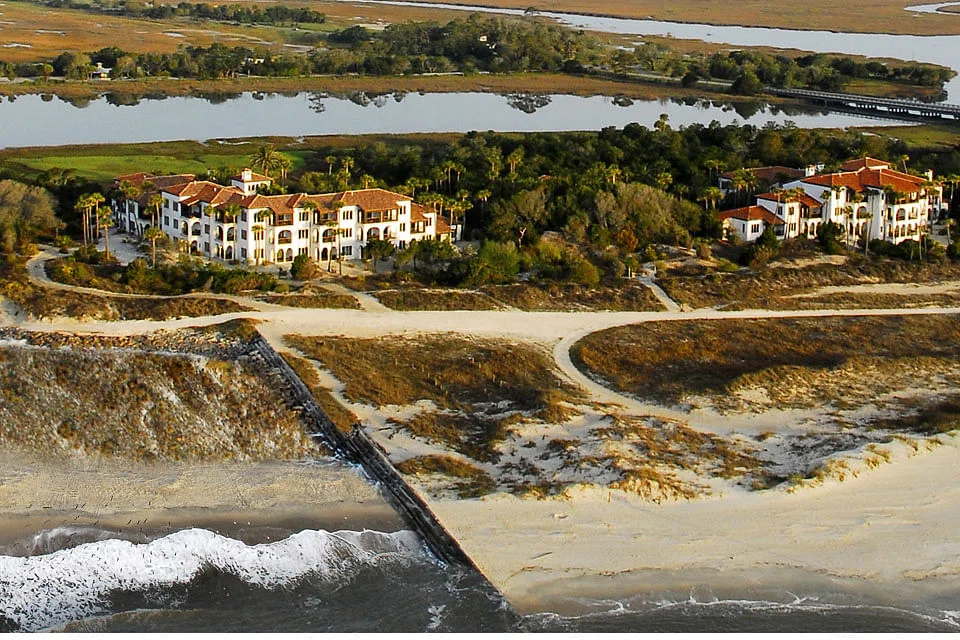
If you ask the promoters, fractional ownership is still a great vacation option, with a caveat. In 2007, 88 quarter-shares were being sold at the Cloister Ocean Residences at Sea Island, Georgia. At the time, there was more interest than available shares, but by the time the deals closed in 2008, only 36 buyers remained.
"They were originally sold as the least costly real estate investment required to acquire a Sea Island Club membership," said Randy Burgess, the project director. The memberships include golf, tennis and sport shooting at a resort constantly ranked among the top in the US. "Now, we're selling these as a lifestyle product," he said. "I wouldn't say sold as an investment because that implies some return on their investments." Sherman Potvin, who has been a consultant in the fractional residence industry for 28 years, said he was busier today than he was in the peak years of 2004-07. "There's a lot of pent-up buying desire in North America and other places," he said.
But the number-crunchers contend that these shares have made economic sense in only a few places. "The concept works the best where there is a scarcity of whole ownership or where the prices are really high," said Richard Ragatz, president of Ragatz Associates. "The places that will turn around fast are in Aspen, Vail, Carmel. If you can buy a fractional for US$250,000 or US$300,000, and not US$3 million for whole ownership, it's hassle-free." He said he expected sales this year to top US$1 billion. In 2007, sales were US$2.3 billion. Mr Ragatz said it could take another four or five years before prices returned to that level.
Yet the people who bought these properties thinking less about the property value may have had the right approach. John Rhodes, chief investment officer of AP Wealth Management in Augusta, Georgia, paid US$1.5 million in 2007 for his quarter-share in a three-bedroom, four-bathroom condo at the Cloister Ocean Residences. Some initial investors asked him why he didn't pull out as they did, even if it meant losing their US$250,000 deposit.
"We did not buy it as an investment," he said. "I wanted something that made sense over the long term." Sea Island is now selling quarter-shares like the one in his condo for US$1.1 million. He said the loss didn't bother him since he paid cash for his share, had no plans to sell it and was able to put the weeks he doesn't use into the rental programme and cover his common charges.
Was his share, or one sold today, ever worth the asking price? That depends. All the shares lumped together would exceed the value of the property itself. Mr Rhodes said he was never under any illusion that his quarter-share meant his place was worth US$6 million. "There are plenty of villas in Sea Island that are US$6 million, and they're much nicer than what we have," he said. But for Mr Rhodes and others, the selling point of these shares was often the ease of use, the amenities and the realisation that most people do not use a vacation home more than 13 weeks a year.
While promoters talk about the deeded ownership rights to the fractional shares, many owners do not think about their stakes the same way they would a wholly owned home. After all, to sell a quarter of something that costs more than a quarter of the value of the residence may not be easy. Rick Latini, who works in commercial real estate in Baltimore, said he never looked at his stake in a one-bedroom apartment in the Palazzo Tornabuoni in Florence, Italy, the way he looked at his home. "My attorney said, 'Don't look at this as a real estate investment - look at this as a club with all the amenities that go with it'," he said. "If for some reason I walk away with a profit, it's great. If I walk away whole, I'm ahead."
Still, promoters are trying to make the shares more attractive, with perks that seem almost out of the time-share playbook - the lowbrow cousin of fractional ownership, the very mention of which makes private residence club promoters bristle.
Clubs like the Calistoga Ranch in Napa Valley, California, and Sea Island have negotiated memberships for their fractional owners with 3rdHome, a company that works with people sharing vacation homes worth at least US$500,000 and going up to several million dollars. All the homes or fractional shares at residence clubs are assigned a rating, or keys, which allows owners to stay at someone else's home at other clubs while another person uses the weeks they didn't want at their place.
Not all fractional owners are sold on this service, even though it is being positioned as a way to increase the value of their depressed stakes. Charlie Feuss, an owner and a board member of the homeowners' association at the Cloister Ocean Residences, said that Sea Island "sees this as a big selling point". But, he said: "It doesn't strike me that way." When he can't use weeks, he said he preferred to put them into the rental programme, the fees from which help cover the carrying costs of his unit.
And despite his love of the resort, he warns potential buyers about the limitations of fractional ownership. "It's got to fit your lifestyle and for us it made sense and it continues to make sense," Mr Feuss said. NYT