

Q4 rebound underscores resilient housing demand, but market challenges remain: analysts
Private home prices seen rising 3 to 6% in 2025 after growth moderates to 3.9% in 2024

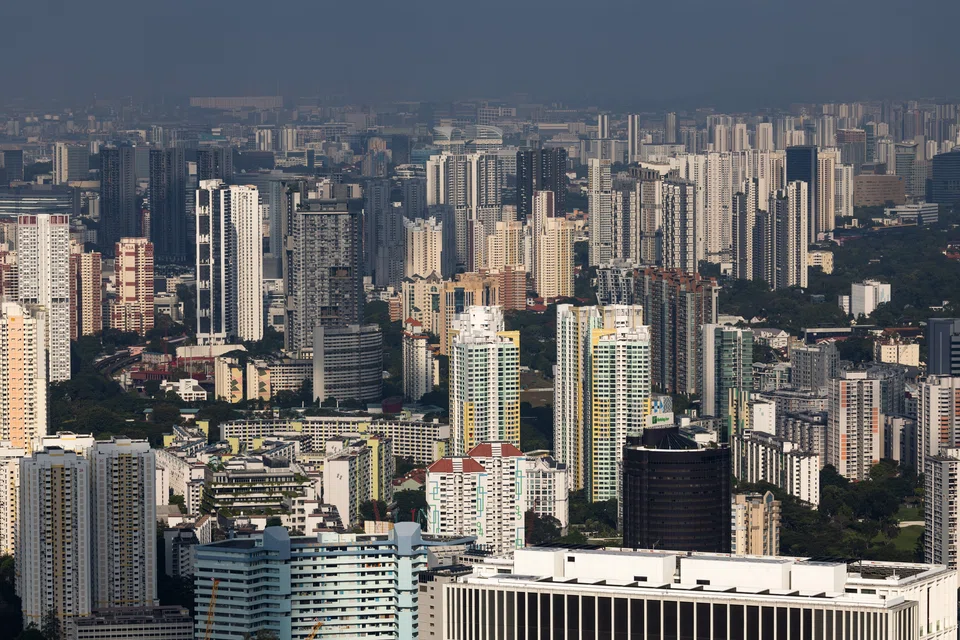
MOMENTUM from an unexpected rebound in private home prices and sales in the fourth quarter of 2024 could boost prices by 3 to 6 per cent in 2025, after a 3.9 per cent gain last year, analysts said.
But while household balance sheets remain strong, global uncertainties and ample fresh supply in new projects could lead to more “discerning” buying.
Despite a notable sales rebound and price uptick in the final quarter, full-year price growth for 2024 moderated to 3.9 per cent, continuing a progressive deceleration from 10.6 per cent in 2021, 8.6 per cent in 2022, and 6.8 per cent in 2023, Chia Siew Chuin, JLL’s head of residential research, research and consultancy, said.
“The year-end market recovery partially mitigated earlier weakness yet underscored broader complex market dynamics and challenges,” she explained.
Overall, buyers may turn more selective after private home sales jumped by 38 per cent in Q4 to 7,433 units, from 5,372 units in the third quarter, based on Urban Redevelopment Authority figures released on Friday (Jan 24).
Prices of private residential properties rose by 2.3 per cent in Q4, unchanged from the flash estimates issued earlier this month. A slew of new launches pulled overall prices up, reversing from their 0.7 per cent dip in the previous quarter.
Still, “buyer affordability remains constrained due to current cooling measures and loan curbs as well as more options in the market”, said Cushman & Wakefield research head Wong Xian Yang.
A strong project launch pipeline, low unsold inventory, and sustained demand from Housing and Development Board flat upgraders will support sales in 2025, noted Chia.
And prices will be held up by strong household balance sheets, lower interest rates, and potential benchmark pricing at new launches, said Tricia Song, CBRE’s head of research for Singapore and South-east Asia.
In total, 21,950 private residential units, excluding executive condominiums (ECs), were sold in 2024, 15.3 per cent higher than the 19,044 units sold in 2023.
In 2024, prices of non-landed homes in the Rest of Central Region (RCR) grew at the fastest pace at a cumulative 5.8 per cent. On an annual basis, prices grew 4.5 per cent in the Core Central Region (CCR) and 3.7 per cent in the Outside Central Region (OCR).
Wong Siew Ying, PropNex Realty’s head of research and content, said: “Notably, the price growth in the OCR has eased substantially from the 13.7 per cent increase in 2023, which is positive for the mass market, as it would not be sustainable for prices to keep rising at a double-digit percentage pace.”
In the rental market, private home rents fell 1.9 per cent in 2024, marking the first full-year decline since 2020. This was a sharp reversal from the 8.7 per cent increase in rents in 2023.
For the last quarter of the year, rents were flat, after climbing 0.8 per cent in Q3.
The fall in rents in 2024 could be attributed to a steep number of supply completions from 2023, increasing tenants’ resistance and moderating rental demand, noted Cushman’s Wong.
Rents are expected to recover in 2025, with a projected increase of 2 to 4 per cent, explained Christine Sun, OrangeTee Group’s chief researcher and strategist.
For the whole of 2024, rents of non-landed properties in the CCR fell by 2.4 per cent, reversing from the 5 per cent increase in 2023. Rents in the RCR were down 1.3 per cent, compared with the 9 per cent jump in the previous year. Rents in the OCR decreased by 1.3 per cent in 2024, from a 7.5 per cent increase previously.
Sun said: “In 2025, positive rental growth is expected across all market segments. This could be driven by demand outstripping supply as there will be a substantial reduction in projected completions compared to previous years.
“In particular, the suburban and city fringe areas are expected to witness more accelerated rent increases, as the decline in supply within these regions will be more significant.”
Some 8,460 private homes excluding condominiums were completed in 2024, down from more than 19,000 units in 2023. Projected completions are set to decline further to 5,846 units in 2025, said JLL’s Chia.
“Reducing supply pipeline, coupled with recovering leasing demand, creates favourable conditions for potential rental increases in 2025,” she added.
New sales volumes more than doubled to 3,420 units in Q4, from 1,160 units in Q3. For the whole of 2024, 6,469 new homes were sold, slightly higher than the 6,421 units sold in the previous year.
The number of private homes sold in the resale market fell slightly from 3,860 units in Q3 to 3,702 units in Q4. In total, there were 14,053 resale transactions in 2024, an increase from the 11,329 units sold in 2023.
Better buying sentiment
CBRE’s Song expects 7,000 to 8,000 new homes to be sold in 2025, on easing interest rates, better buying sentiment, and an attractive pipeline of launches.
The resale market could see about 14,000 to 15,000 units sold this year, said PropNex’s Wong. “We anticipate that the sizeable price gap between new and resale private homes will continue to be a key driver of the resale market.
“In 2024, the median transacted price of non-landed new private homes excluding ECs was S$2.1 million, compared with S$1.6 million for resale non-landed private homes, representing a price gap of about 31 per cent.”
Though recent interest rate cuts and a more positive economic outlook have breathed new life into the new launch market, challenges remain with the possibility of higher-for-longer interest rates, the second Donald Trump US presidency, as well as ongoing trade tensions that could impede Singapore’s economic growth, Marcus Chu, ERA Singapore’s chief executive officer, pointed out.
TRENDING NOW
Far East Organization’s The Serra Residences sells less than a quarter of units released at average S$3,460 psf

Singapore to use ‘every legal and regulatory lever’ against companies linked to haze: Shanmugam

Could stablecoins be the future of money?
The middle power moment arrives in South-east Asia – but not for Asean

