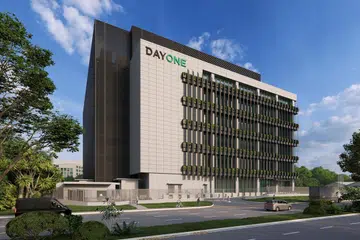
Real estate investors eye residential and industrial development sites in Johor-Singapore SEZ
Discussion panel says the special economic zone would give a fillip to the real estate, Mice, infrastructure and hospitality sectors in Johor

[SINGAPORE] Investors are currently focused on acquiring residential and industrial development sites in the Johor-Singapore Special Economic Zone (JS-SEZ), where opportunities for growth in the hospitality sector are expected to present themselves in the longer-term.
Govinda Singh, Colliers’ executive director for Asia-Pacific capital markets, hotels, hospitality and advisory, said: “Johor is still in its infancy when it comes to core real estate. There’s still a lot of runway to grow as its population grows and as industry develops. The sector is going to become more and more mature.
“There’s a lot of land there. There aren’t enough good-quality assets to invest in as yet, but that will change in time.”
He was speaking to an audience of mostly investors and developers at an event organised by Maybank and the Real Estate Developers’ Association of Singapore (Redas) on Tuesday (May 6).
Singh said: “There’s a big supply overhang at the moment in the high-end residential market. In the market for those buying second homes in Johor, a lot of the properties are being rented out, and even then, there’s not enough demand from visitors. If we want more people to live and work (in Johor), we have to make it affordable.”
He was a part of a panel discussion with Vinothan Tulisinathzan, minister counsellor of the Malaysian Investment Development Authority in Singapore and Chong Paul Wee, real estate director of corporate banking at Maybank. The event, held at Maybank Tower, was moderated by Yvonne Tan, UOL Group’s chief corporate and development officer.
In February, GuocoLand announced that it would partner Malaysia’s UEM Sunrise to develop selected freehold land parcels in Iskandar Puteri, within the JS-SEZ.
Responding to a question on the likelihood of success of the JS-SEZ, Chong said: “The JS-SEZ is the strongest attempt by both governments in making it happen. It’s not by invitation of one or the other, but really a joining of hands in making the arrangement formal.”
Tulisinathzan described the JS-SEZ as “inevitable”, and would have immense economic benefits for Malaysia and Singapore.
Both governments are enhancing the infrastructure needed to facilitate trade and investment between Johor and Singapore. The roll-out of QR code clearance at immigration checkpoints in Malaysia is expected to reduce clearance time by up to 75 per cent, Tulisinathzan said.
“There has been substantial discussion on a ferry service from Puteri Harbour to Tuas. There’s also desire to have a (second) Rapid Transit System Link from Tuas to Iskandar.”
There is strong demand for industrial and logistics assets as Johor seeks to develop its semiconductor and pharmaceutical sectors, Singh said.
The SEZ may also present opportunities for Johor to build a Meetings, Incentives, Conferences, and Exhibitions (Mice) industry.
“Johor has ample space and can differentiate itself from Singapore by offering larger capacity venues, especially to more price-sensitive organisers. Singapore’s largest Mice venue has a total of only 123,000 sq m of indoor space.”
The number of overnight visitors to the state of Johor is expected to double from four million in 2024 to eight million in 2030, as transport connectivity and entertainment options are enhanced.
Investors can seize the opportunity to target the mid-market hotel segment, which will deliver good returns; they can also home in on the upscale, internationally branded segment, which can lift average room rates in the area and create a more vibrant economic environment, Singh said.
Developers can also consider venturing into the build-to-rent segment in Johor Bahru and Iskandar Puteri, which are expected to attract talent from the manufacturing, digital economy and health sectors.
Singh said: “When people come to a new place, they would usually look to rent, given that they don’t know the market well, or can’t afford to buy in the first instance.”
The proposed JS-SEZ presents new opportunities for greater cross-border collaboration and investment between Singapore and Johor, a Redas spokesman said.
“While the initiative is still taking shape, there is growing interest in its potential for sectors such as real estate, trade, infrastructure and hospitality.”
TRENDING NOW
Grab CEO’s wife Chloe Tong on life with Anthony Tan and finding her purpose
Once staunchly pro-China, Malaysian Chinese businesses are now distancing themselves from Beijing

Crystal Jade Fine Dining faces charge for failing to file income tax return on time
UOB found ‘grossly negligent’ over Stamford Land rights issue advice, to pay S$1.9 million