Buying a GCB may be a no-brainer for the rich, but there are many other good uses of money

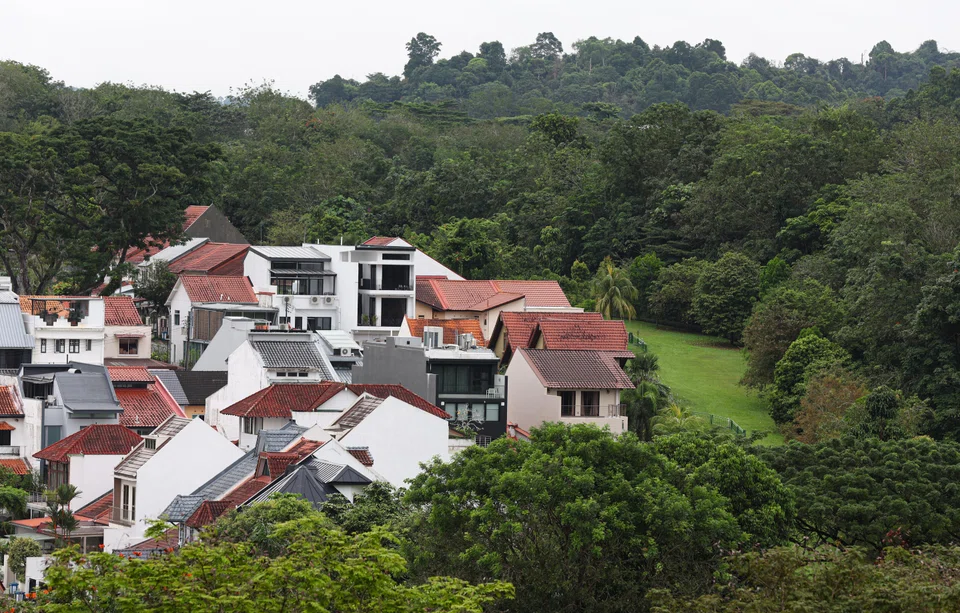
IN SINGAPORE’S pricey private housing market, detached homes in Good Class Bungalow (GCB) Areas sit at the pinnacle.
GCB Areas are leafy landed housing enclaves, where new detached homes have minimum plot sizes of around 15,070 square feet (sq ft).
There are 39 GCB Areas designated by the Urban Redevelopment Authority (URA), such as Caldecott Hill Estate, Dalvey Estate, Leedon Park, Nassim Road and Swiss Club Road.
Arguably, the top address is Nassim Road. Last year, Cuscaden Peak Investments sold three freehold Nassim Road bungalows for S$4,500 per square foot (psf) on land area, or a total of S$206.7 million.
With transacted prices averaging around S$2,000 psf on land area, buying a detached home in a GCB Area entails a budget of over S$30 million. Refurbishment or redevelopment works and transaction costs can add several million dollars or more in costs.
Strong drivers support GCB values
After a relatively quiet 2023, analysts expect the number of transactions for detached homes in GCB Areas to pick up in 2024. Analysts generally project prices to be firm, with room for upside, probably later in the year.
Strong drivers support house prices in GCB Areas over the long term.
The supply of detached houses in GCB Areas is scarce
There are around 2,700 such homes in Singapore and this number may hardly grow.
On the other hand, the stock of luxury condominium homes in prime Districts 9, 10 and 11 will grow as developers build new luxury apartments from sites acquired via state land tenders or collective sales. With successful collective sales, the new development that comes up on the site of the previous one often has many more homes.
GCB demand comes from diverse pools of wealth
When valuations of technology businesses are less frothy, tech titans may be less active buyers of top-end homes. However, any drop in demand from tech titans can be compensated by growing demand from other business moguls.
GCB Area homes are hard assets that are seen as good stores of value. Hence, people who build fortunes from risky or cyclical businesses may sensibly channel some of their gains into buying a GCB Area home.
The GCB buyer pool could grow with Singapore’s wealth hub stature
While the pool of buyers for houses in GCB Areas is more restricted compared to luxury apartments, the buyer pool could expand because of Singapore’s growing stature as a wealth management hub.
Generally, buying of landed homes in GCB Areas is restricted to Singapore citizens. Permanent residents (PRs) and foreigners are free to buy condominium units here.
Singapore is successful in wooing family offices. Under the Global Investor Programme, a family office principal with net investable assets of at least S$200 million can become a PR, subject to meeting other criteria.
If more ultra-wealthy PRs become newly minted citizens, the number of potential buyers of bungalows in GCB Areas will grow.
Singapore’s safe-haven premium could rise
The premium placed on Singapore assets because the country is a safe haven in a chaotic world could rise. More ultra-wealthy people may allocate a larger share of their capital into hard assets here, including homes in GCB Areas.
If more ultra-wealthy people set up base here, more services will in turn emerge to serve them, thereby enhancing Singapore’s appeal to the ultra-wealthy.
In perspective, a detached home in a GCB Area with all the bells and whistles costing S$50 million is less than 10 per cent of the net worth of an individual whose net worth exceeds S$500 million.
A GCB Area home costing S$30 million is an affordable three times the annual salary of a corporate bigwig who earns S$10 million annually.
Land values may continue to rise
In land-scarce Singapore, homes in GCB Areas will likely continue to command a pricing premium because these areas provide a respite from living in a densely populated city. The URA stipulates strict planning conditions for homes in GCB Areas to preserve their exclusivity and low-rise character.
Moreover, owners of GCB Area homes may gain from higher land values if some GCB Areas get zoned for more intensive use to meet future land use needs.
Use money productively
Buying a GCB Area home looks like a sure bet for an ultra-wealthy citizen. Still, owners of GCB Area homes should be aware of the risk of paying higher taxes in future.
As taxes get more progressive, might GCB Area owners be hit with higher or additional taxes in Budget 2024?
At current rates, an owner-occupier of a GCB Area home with Annual Value (AV) of S$240,000 pays property tax of S$56,780 in 2024. The AV of buildings is the estimated gross annual rent of the property if it were to be rented out, excluding furniture, furnishings and maintenance fees.
A detached home in a GCB Area here can provide one with a comfortable sanctuary to unwind, a bespoke place to build memories, a status symbol, and a great venue to host friends and business associates.
Certainly, the ultra-wealthy should largely be free to spend their money as they wish. Buy luxurious abodes, yachts, fancy cars, rare wines, precious jewellery, or art.
Nevertheless, some of the money that is used to buy and spruce up a GCB Area home should arguably be deployed to better support the economy and the community.
For example, the ultra-wealthy can fund new businesses, support entrepreneurs, turn around failing businesses or promote efforts to combat climate change. Such investments may in turn help create jobs and spur innovation.
Monies can also be used to fund social causes, sports, arts and the needs of vulnerable groups. Singapore’s social cohesion will benefit from the ultra-wealthy actively helping the community.
Kudos to the late Agnes Tan’s estate for bequeathing to charities the proceeds from selling three freehold houses at Chancery Hill Road and Dyson Road, which fetched S$61 million in total.
For sure, the super rich here support pockets of the economy by splurging on sound investments such as a GCB Area home. Perhaps they can be persuaded to spend more to build businesses, support the community and nurture the arts and sports scenes.
What will the Year of the Dragon hold for Singapore property? On the 15th day of the Chinese New Year, I will be discussing Singapore property with PropNex’s Ismail Gafoor, Savills’ Alan Cheong and you. Get tips to navigate the HDB, private homes and commercial property markets. Join me at the BT Property Outlook 2024 Seminar on Feb 24. Sign up at http://bt.sg/btproperty24