Don’t spare asset-rich, cash-poor private homeowners from paying higher property taxes
If needed, property tax rises for elderly owner-occupiers can accrue as an amount payable
IN BUDGET 2022, wealth taxes were hiked to generate revenue as well as recirculate a portion of the wealth stock into the economy and in so doing, mitigate social inequalities.
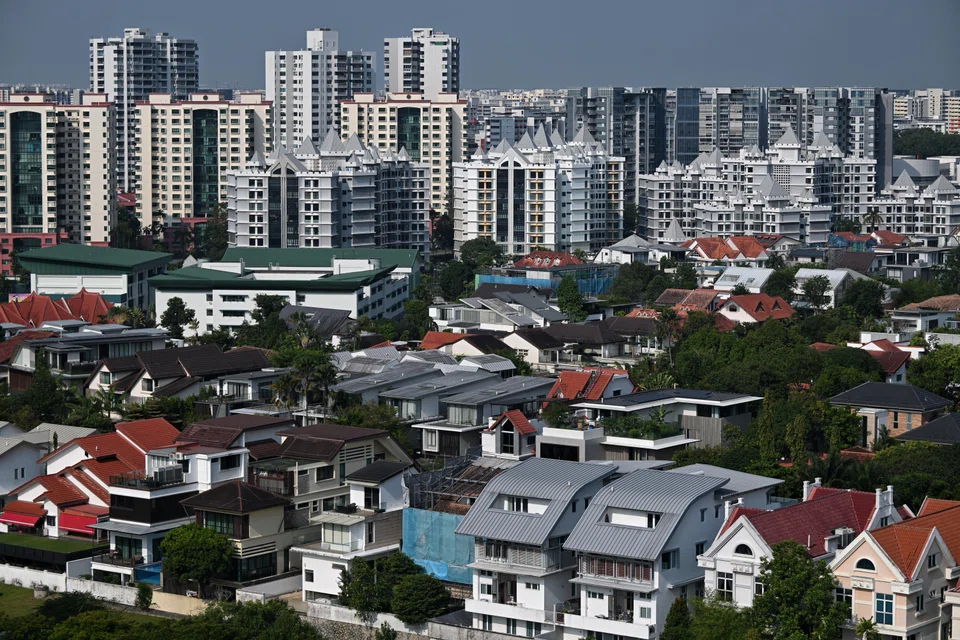
Among others, adjustments were made to property tax, which is the principal means of taxing wealth. The property tax rates for all non-owner-occupied residential properties were raised. And property tax was increased for higher-end owner-occupied homes.
Fast forward to today, and owner-occupiers of homes have received some relief but not non-owner-occupiers.
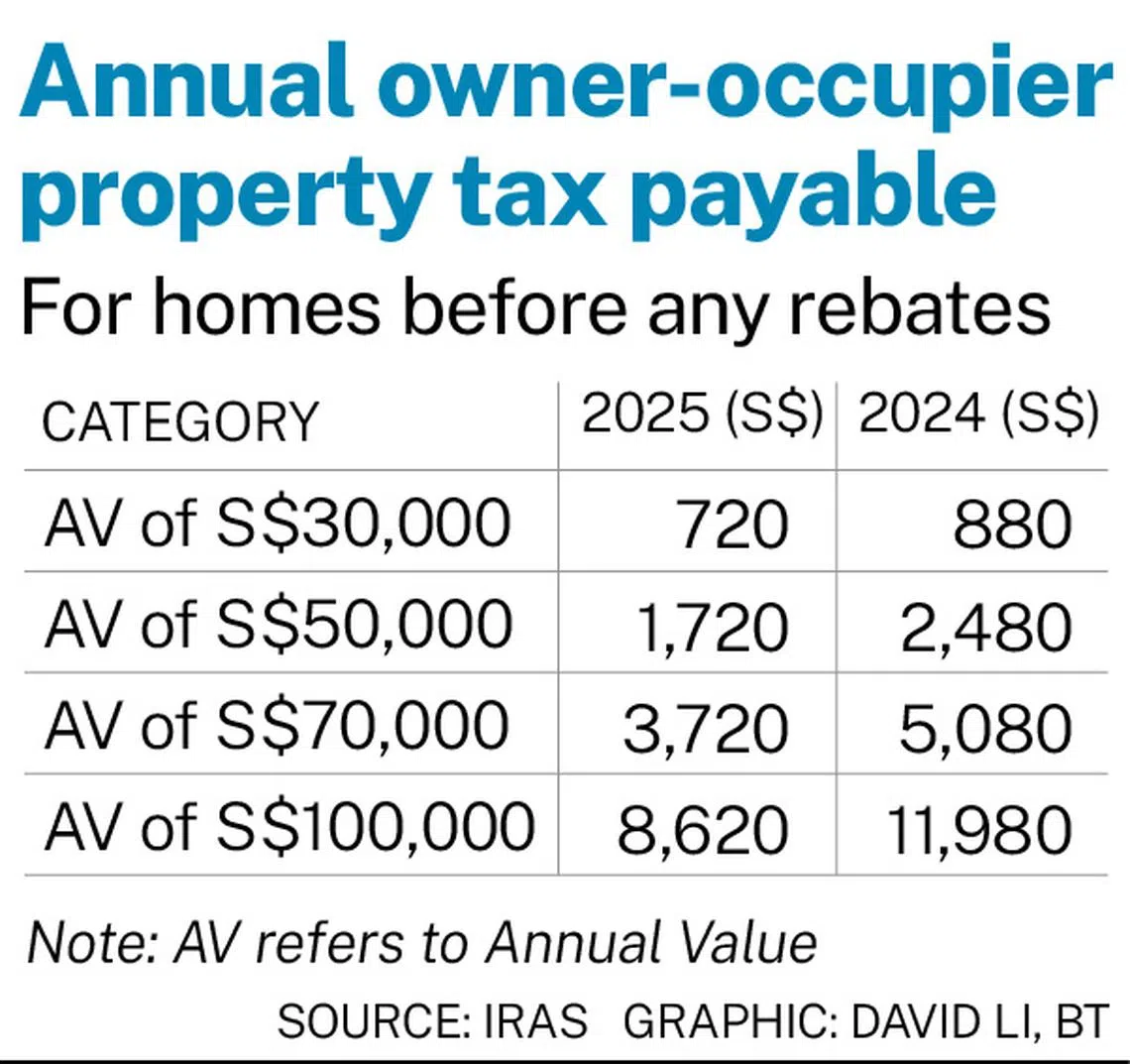
For example, the annual value (AV) bands for owner-occupied homes have been widened from Jan 1. Annual property tax is calculated by multiplying the AV of the property with applicable property tax rates. A property’s AV is the estimated gross annual rent of the property if it were to be rented out, excluding furniture, furnishings and maintenance fees.
Moreover, the government is providing a one-off property tax rebate of 20 per cent for owner-occupied Housing and Development Board (HDB) flats and 15 per cent for other owner-occupied homes, capped at S$1,000, for 2025.
In addition, eligible property owners aged 65 years and over can pay their property tax via a 24-month interest free instalment plan.
Asset-rich but cash-poor retirees who own private homes, including landed property, will heave a sigh of relief over the help extended to owner-occupiers of homes.
Consider the property tax payable on a landed home with AV of S$70,000. Excluding any rebates, with the wider AV bands in 2025, an owner-occupier’s annual property tax falls from S$5,080 to S$3,720. In contrast, the annual property tax for a non-owner-occupier of such a home is S$14,400.
For an owner-occupier of a high-end home with AV of S$100,000, the widening of AV bands trims annual property tax by 28 per cent to S$8,620.
Asset-rich, cash-poor
If property tax gets adjusted in Budget 2025 or future budgets, should much consideration be given to not burdening asset-rich, cash-poor elderly local private homeowners? Arguably not.
For one thing, many good quality housing options are available in Singapore. A local private homeowner sitting on large paper gains from a home, which was bought years ago, can sell such a home and buy a more affordably priced HDB home. In some cases, purchasing a new subsidised home directly from the HDB is a viable option.
Of course, moving house when one is, say, 80 years or older might be traumatic, especially if one is in poor health. Still, Singaporeans are generally pragmatic and have been trained to plan ahead.
What is key is for public education on retirement adequacy to address issues such as whether someone who is about to retire should consider boosting recurrent cash flow by freeing up capital that is tied up in an owner-occupied home.
In short, it can be prudent for someone who is in his 60s and still sprightly to consider moving house.
Besides exploring options such as selling one’s property or renting out a room in a home, a private home owner-occupier with no outstanding housing loan can look to raise cash by using the property as collateral.
With the DBS Home Equity Income Loan, eligible Singapore citizens and permanent residents aged 65 to 79 years, who own private homes, can get to enjoy higher monthly payouts for life through the national longevity insurance annuity plan CPF Life while continuing to own and enjoy their homes.
In terms of outcomes, it can be both fair and productive when costs associated with homeownership drive older retiree homeowners to sell their beloved homes thus creating churn in the private housing market, especially in the landed segment
In land-scarce Singapore, there is little room for the private landed housing inventory to grow. Elderly landed owners who sell their homes to young families can help the latter achieve their landed housing dreams, thereby improving housing mobility.
Indeed, when older houses transact, economic value is created if the new owner spends to rebuild or renovate. And the annual property tax payable on a rebuilt home can rise.
Given the difference in property tax payable for a high-end non-owner-occupied home versus an owner-occupied one with similar AV can be huge, there is scope to hike property taxes on pricier owner-occupied homes. Moreover, as a home’s AV rises due to inflation and other factors, the property tax payable on the said home will increase.
Importantly, too, many owners of higher-end homes have strong sources of income whether from work or investments, and should be able to comfortably pay more in property tax.
Accrual of property tax hikes
While owner-occupier property tax rates on homes should hardly be a sacred cow if higher taxes are needed to fund healthcare and other needs as well as combat wealth inequality, some relief can be extended to elderly owner-occupiers.
Possibly, allow eligible cash-strapped local home owner-occupiers aged 75 years or older to accrue any increase in annual property tax as an amount payable. This amount owing, which may increase over the years, can be paid when a homeowner passes away by the beneficiary who inherits the property.
Taking a step back, if property tax is a key means of taxing wealth, raising such rates over time is not unreasonable given pressing fiscal needs and the need to build a fairer society. Having a fairer society in turn strengthens social cohesion, which supports Singapore’s economic competitiveness in a world where many societies are fracturing.
Sure, asset-rich, cash-poor elderly retirees will feel hard done by if property taxes on beloved homes which have been lived in for decades are hiked. Nevertheless, such retirees are fortunate to benefit from a stable Singapore that is attractive to live, work and play in. All things being equal, a similar percentage rise in home prices leads to larger absolute dollar gains for pricier properties.
Ultimately, the predicament of asset-rich, cash-poor elderly retired home owner-occupiers likely amounts to minor inconveniences. Government efforts to build a fairer society can take precedence and help for the elderly should continue to focus on those who are really in need – namely the asset-poor and cash-poor.