NEWS ANALYSIS

Doomed to depreciate? Ageing 99-year properties and the question of value

Experts say that lease decay may not always mean a depreciation in prices and capital value

Ry-Anne Lim
Published Fri, Aug 9, 2024 · 05:00 AM
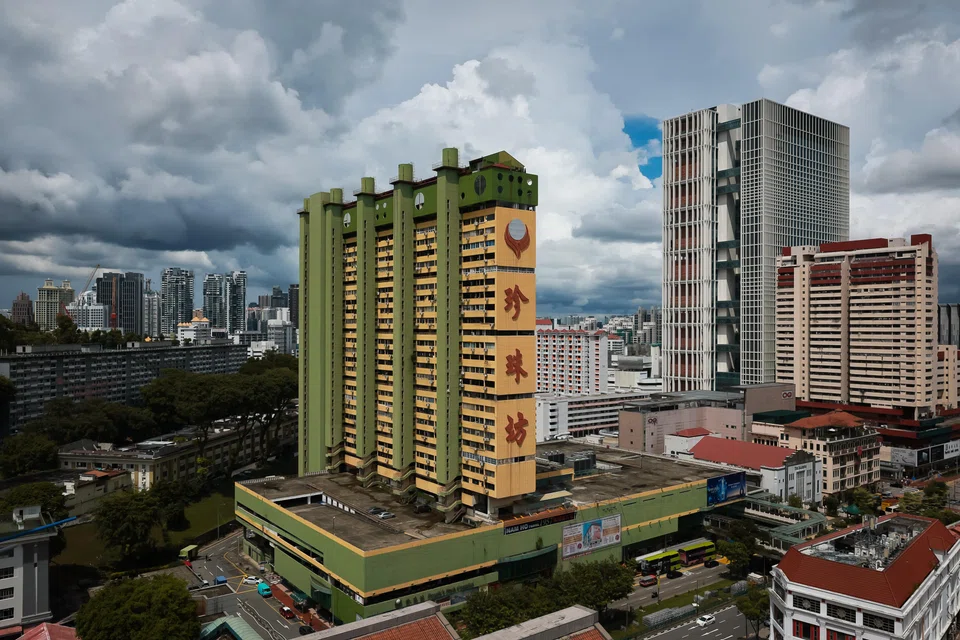
    • Some older 99-year leasehold private homes, such as People's Park Complex (pictured), have seen double-digit price growth in the past decade despite lease decay.
    • Some older 99-year leasehold private homes, such as People's Park Complex (pictured), have seen double-digit price growth in the past decade despite lease decay. PHOTO: BT FILE

    THERE is a common understanding that the value of one’s home is intrinsically tied to its remaining tenure. An older 99-year leasehold condominium, for instance, is likely to see its market price decline as the lease runs down.

    But experts said this is not necessarily the case in reality. Much depends on market conditions and the property’s locational attributes.

    And in a robust market, the “depreciation effects of a declining lease may be overlooked”, said Cushman & Wakefield research head Wong Xian Yang.

    “Mathematically, lease decay is not a straight line but a convex shaped curve that starts off falling slowly and then accelerating as we get closer to the 99th year,” said Alan Cheong, Savills Singapore executive director of research and consultancy. 

    This is computed in a leasehold table, which is informally known as Bala’s Curve in real estate circles. 

    Based on the table, lease decay only starts accelerating 70 years into a 99-year lease. “Therefore, from a purely theoretical perspective, the sweet spot for a collective sale is the period before the 70th year in the age of the lease,” said Cheong. 

    Between 1995 and 2006, median prices of older non-landed private homes across Singapore gradually decreased, in line with the leasehold table, said Nicholas Mak, chief research officer at Mogul.sg.

    Older flats, higher prices

    But from 2007, Mak noted that median prices of these homes started climbing, proving that external market forces – such as economic and population growth, and overall inflation – had a stronger impact on prices than the decaying lease.

    In an analysis of 15 ageing 99-year leasehold condominiums, OrangeTee research showed that prices rose across the board in the last decade. This was despite the developments being relatively older, with an average of around 50 years remaining on their leases, said Christine Sun, OrangeTee Group’s chief researcher and strategist. 

    Most of these properties saw a double-digit percentage increase in prices, particularly those in the eastern, north-eastern and western regions, Sun said. 

    The median price of Neptune Court in Bedok, for example, surged by nearly 50 per cent to S$1.6 million in 2024, when the condo had 49 years remaining on its lease, from S$1.1 million in 2014. The condominium was completed in 1975. 

    At People’s Park Complex in Outram – where units have just 43 years left – the median price rose 17.4 per cent to S$1.1 million this year, from S$920,000 a decade ago. 

    Even so, Sun pointed out that older private residential properties tend to exhibit a slower price growth than newer ones. 

    According to government data, the median price per square foot (psf) of non-landed leasehold resale homes that are less than 20 years old rose 43.1 per cent to S$1,697 psf in 2024, from S$1,186 psf in 2018. 

    Meanwhile, non-landed resale homes aged 20 and up experienced a slightly smaller price increase of 42.7 per cent – from S$S915 psf to S$1,306 psf – in the same period. 

    Cheong of Savills noted that between 2014 and 2024, the price performance of the 15 condos that The Business Times studied underperformed the Urban Redevelopment Authority’s (URA) overall non-landed property price index. 

    “We cannot conclusively say that it shows that ageing leasehold properties do not hold up well to the overall market’s performance,” he said.

    For one, URA’s index is influenced by new launches, which are sold at a premium to secondary sales, said Cheong. 

    The average age of the 15 projects also ranged from 38 to 41 years, which he said is “well below the 70-year age limit that the leasehold table shows a rapid decline in values thereafter”. 

    One key reason why demand – and prices – of older leasehold properties may fall is the financing restrictions for properties with a shorter lease left. Such limits may shrink the pool of potential buyers for these homes, said Wong Siew Ying, PropNex’s head of research and content. 

    Not only are there restrictions on the use of an individual’s Central Provident Fund, banks are also less willing to give out a home loan for properties with less than 30 years on the lease, she said. 

    Market watchers speculate that it may not make commercial sense for banks, due to the potential risks of older properties – for instance, in retaining its capital value or the ease of selling it at a specific price as the lease runs down. And, in the event of a loan default, banks would have to sell the property as a mortgagee sale to recover the funds.

    Lee Sze Teck, Huttons Asia senior director of data analytics, noted that the effects of lease decay is more pronounced for 99-year leasehold properties older than 45.

    This is because the price growth for these properties tend to stagnate, with property values appearing to be around S$1,100 psf, said Lee. 

    Newer properties less than five years old tend to have the highest property values, with average prices growing S$624 psf in the past five years. Six to 20-year-old properties’ property values are about S$1,600 psf, and they had a price growth of S$343 to S$609 psf. For those aged 21 to 45, property values were around S$1,300 psf and price growth was S$56 to S$492 psf.

    Still, some older leasehold properties may also have a greater possibility of capital appreciation and long-term value, especially if there is en bloc potential. 

    For instance, the 99-year leasehold Chuan Park condominium at Lorong Chuan was sold to Kingsford Group and MCC Land for S$890 million in July 2022. The property had a 99-year lease that commenced in 1980.

    Another option for owners is to apply to the Singapore Land Authority (SLA) to renew the development’s lease, said PropNex’s Wong.

    In general, the government’s policy is to allow leases to expire without renewals – to reallocate land for “evolving socioeconomic needs” – though SLA said lease renewals are sometimes granted on a case-by-case basis. 

    Approvals will be weighed against long-term planning intentions, said the agency. 

    Since 2008, SLA has granted renewals to just 28 residential developments, topping the leases up to 99 years. This was done to “facilitate the redevelopment of the land parcels”, it said. 

    The land premium for a lease renewal can be hefty, too, said PropNex’s Wong. “Owners also need to consider the condition of the development, as maintenance costs may be substantial as the building gets older,” she said. 

    A good deal?

    So is an ageing 99-year leasehold property a “good deal”? It depends, industry experts said.

    “Some individuals acquire older condominiums for expansive living spaces, which are often scarce in today’s market and can be pricey if the buyer purchases a new property of a similar size,” said OrangeTee’s Sun. 

    For investors, Cheong of Savills pointed out that as capital values decline over time, the yield should start to increase to compensate for the potential loss of all capital once the property’s lease expires. 

    “For a property with many years of lease life remaining, the return of capital is masked by the noise in the imperfect transaction market,” he said. “But as we get closer to the end of lease life, it starts to make its presence felt.”

    The saleability of ageing leasehold properties is heavily dependent on market conditions, said Wong from Cushman & Wakefield. “In a soft market with low demand, it could be challenging to find buyers for a shorter lease term property.”

    Capital appreciation of 99-year properties will vary based on its attributes and locational advantages, said OrangeTee’s Sun. An older project that is well-placed and popular with renters can offer a favourable yield, and still see firm demand. 

    Mak from Mogul.sg highlighted International Plaza in Tanjong Pagar as an example. The project was completed in 1976, and has 45 years remaining on its lease.

    Between 2018 and the first half of 2024, there were 38 resale transactions at the project – about 18 per cent of its 210 units. 

    “Younger comparable condos” in International Plaza’s vicinity saw similar levels of resale transactions, said Mak. The 280-unit Altez, which completed in 2014, saw 42 units sold – 15 per cent of the total units – in the same period while V On Shenton, completed in 2017, had 81 units or 16 per cent of its 510 units sold.