
Four Seasons Park unit almost doubles in price in under 4 years; S$3.8m profit leads Q3 resale winners

Share of loss-making resale transactions continues to inch down, thanks to resilient prices and demand

Ry-Anne Lim
Published Wed, Oct 23, 2024 · 02:46 PM
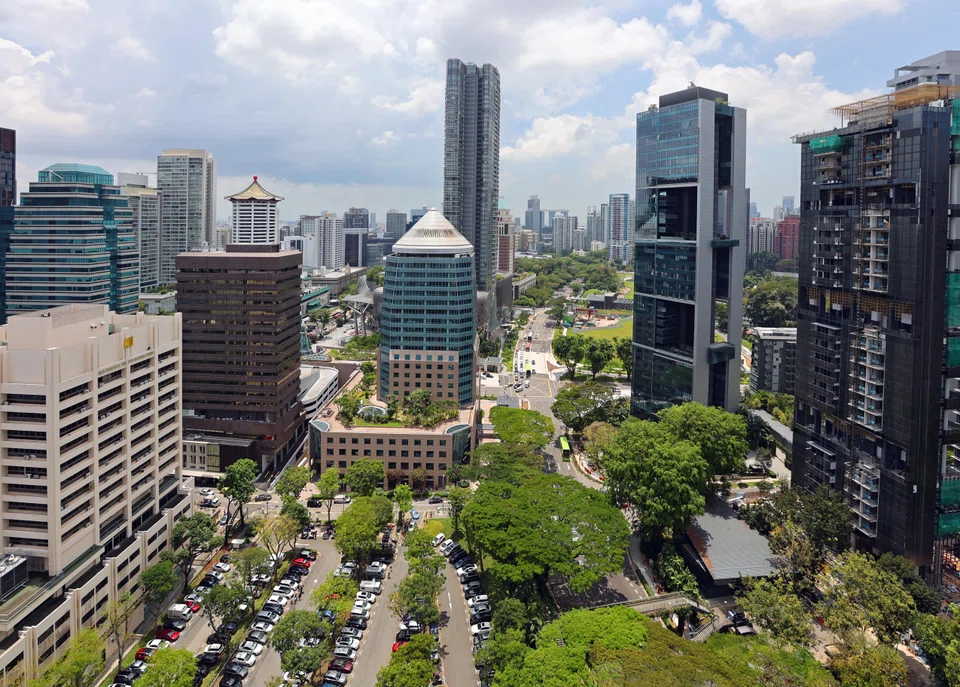
    • A unit at the freehold luxury condo Four Seasons Park in prime District 10, minutes from the Orchard Road shopping belt, was sold for S$7.8 million in August.
    • A unit at the freehold luxury condo Four Seasons Park in prime District 10, minutes from the Orchard Road shopping belt, was sold for S$7.8 million in August. PHOTO: BT FILE

    A 2,260-SQUARE-FOOT (sq ft) unit at Four Seasons Park was sold for S$7.8 million in August, earning the seller a cool S$3.8 million in profit – making it the most profitable transaction by quantum in the third quarter of 2024. 

    The 20th-floor unit at the freehold luxury condo in the prime District 10 – a stone’s throw from the Orchard Road shopping belt – was bought for nearly half that, at S$4 million or S$1,770 per square foot (psf), back in September 2020. This is based on data crunched for The Business Times by real estate consultancy Cushman & Wakefield. 

    On a psf basis, the unit was sold at S$3,451 psf in August, making for the highest-achieved psf benchmark at the Four Seasons Park project, noted Cushman & Wakefield research head Wong Xian Yang. 

    With a holding period of just under four years, the annualised profit works out to 18.5 per cent. The seller’s gross gain amounted to about 95 per cent, far outpacing the 34 per cent rise in the overall private residential price index in the same period.

    Four of the five biggest money-making transactions by quantum in Q3 were freehold properties from a mix of regions – three from the prime Core Central Region (CCR), one from the city fringe or Rest of Central Region (RCR), and one from the suburban Outside Central Region (OCR). 

    Freehold properties, in general, command a premium, noted Wong. 

    In terms of percentage gains, executive condominium (EC) transactions proved again to be the most profitable in Q3, continuing a trend that emerged in Q1 2023. 

    Profits ranged between 105 and 110 per cent, with the top gainers being held for an average of around nine years before being sold for an “attractively high profit” by percentage, said Wong. 

    Topping the list was a 915 sq ft unit at the 99-year leasehold Twin Waterfalls EC in Punggol in District 19, which was sold for S$1.3 million or S$1,454 psf in August. This was 110 per cent more than the unit’s original price of S$632,100 (S$691 psf) in July 2012. Given the holding period of over 12 years, the annualised profit worked out to 6.3 per cent.

    Excluding ECs, three of the five top-percentage gainers were for units in the OCR; there was one each from the RCR and CCR. The most profitable deal by percentage was the freehold Four Seasons Park unit in the CCR. 

    Meanwhile, the deal that spilled the most red ink in Q3, in terms of quantum and percentage, was a 2,067 sq ft unit at the 99-year-leasehold condo Marina Bay Suites in District 1. It changed hands for S$3.5 million or S$1,694 psf in July. This was 34 per cent lower than its original price of S$5.3 million (S$2,553 psf) in October 2012. 

    Based on a holding period of 11.8 years, this translates to annualised losses of 3.4 per cent. 

    All the biggest losers in Q3 were located in the CCR and purchased during varying periods of the market cycle, Wong pointed out. Almost all, save one, were 99-year leasehold properties.

    For its study, Cushman & Wakefield examined caveats for non-landed private homes that were transacted in Q3 2024 with a prior purchase history between January 2012 and September 2024. The analysis excluded transaction costs and taxes, such as buyer stamp duty and seller stamp duty.

    Overall, prime CCR properties accounted for 54 per cent of loss-making deals in the third quarter of this year, caveat data of landed and non-landed private homes showed. The RCR accounted for 24 per cent of such deals, and the OCR 23 per cent.

    Wong noted that even though the CCR accounted for the majority of loss-making deals, most of the sales – at 86 per cent – were profitable. 

    The proportion of loss-making deals in the landed and non-landed sectors also inched down to 2.5 per cent in Q3, from 2.6 per cent in Q2 and 2.7 per cent in Q1. 

    Wong attributed the continued decrease to firm overall private residential prices, which are expected to grow by 1 to 4 per cent for the whole of 2024. This is due to resilient upgrading demand for private housing, still-low unemployment rates and strong household balance sheets, he said. 

    He predicts that buyer affordability may improve slightly as interest rates gradually ease over time, while sellers’ holding power will remain strong on account of higher replacement costs. 

    “Barring new cooling measures and unforeseen economic shocks, the overall levels of loss-making deals are expected to remain low,” said Wong.



