THE LEVEL GROUND

Give developers more time – up to 7 years – to complete and sell homes in large projects

En bloc redevelopment of large old housing developments optimises land use and produces high quality homes

Leslie Yee
Published Mon, Jul 29, 2024 · 04:31 PM
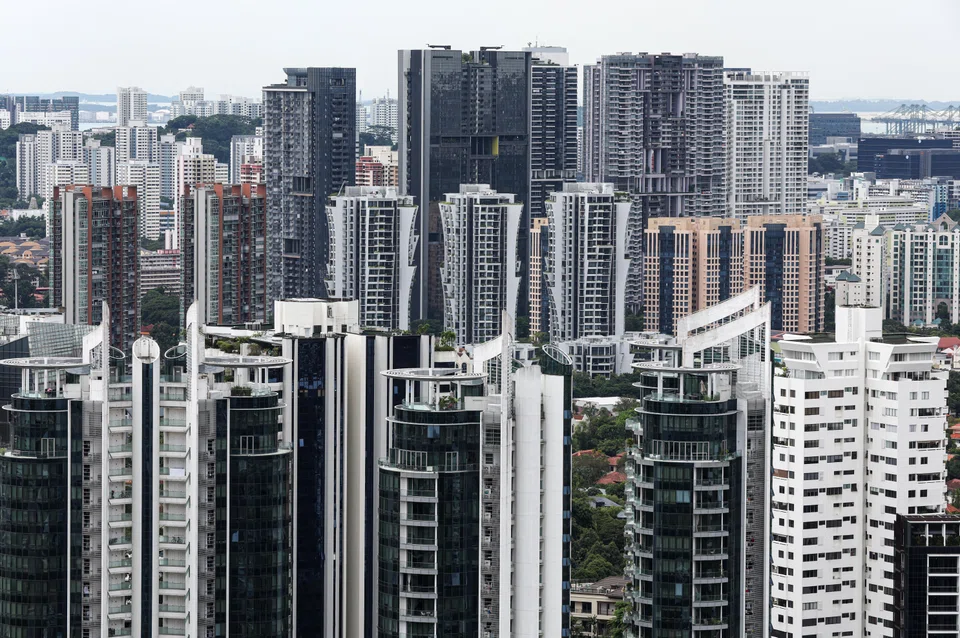
    • Give the residential en bloc market a boost by encouraging developers to take on collective sales of old developments occupying large sites.
    • Give the residential en bloc market a boost by encouraging developers to take on collective sales of old developments occupying large sites. PHOTO: BT FILE

    TO MEET private housing demand, the government sells residential sites. The confirmed list of the H2 2024 Government Land Sales (GLS) programme comprises nine private housing sites, including one executive condominium site, as well as one commercial and residential site, which can collectively yield about 5,050 homes and 14,300 square metres gross floor area (GFA) of commercial space. 

    Should supply be further boosted by reviving activity in the residential en bloc market? In particular, could developers be encouraged to take on large en bloc housing sites such as that of Pine Grove, whose latest collective sale attempt closed in May with no bids.

    Located off Ulu Pandan Road, Pine Grove is a residential development with about 59 years of land lease outstanding, which sits on a 893,218 square feet site.

    Arguably, the launch price of S$1.95 billion for Pine Grove’s sale was aggressive. This reflected a land rate of around S$1,440 per square foot per plot ratio after factoring in bonus GFA and estimated land betterment charge for intensification and lease upgrade to a fresh 99-year lease.

    Gains from redevelopment

    Still, home buyers and the wider community benefit if a large housing development such as Pine Grove is successfully sold en bloc. 

    Having a vibrant residential en bloc market matters as collective sales sites are the key source of supply of residential land in some locations, and of new freehold homes.

    Often, condominiums start looking dated or require major asset enhancements, say after 30 years. However, strata owners of ageing developments might disagree on incurring capital expenditure to carry out much needed upgrading works. 

    A successful en bloc sale of an old residential development paves the way for the building of new homes that meet modern lifestyles to replace older homes, which may not be fit-for-purpose. 

    Generally, the number of homes housed on a particular site rises post redevelopment. With Pine Grove, redevelopment might yield 2,050 units, or over three times the existing 660 units.

    Recently, Thomson View Condominium, which sits on land with about 50 years of remaining land lease, was relaunched for collective sale. A new development might yield 1,240 homes versus the existing 54 townhouses, 200 apartments and one shop unit. 

    In short, successful collective sales of old private apartments can boost housing supply and optimise land use. Moreover, redeveloping old apartments that occupy large sites will grow the stock of high quality homes here. 

    With a large land plot, a developer can better build a highly liveable and sustainable development, which offers comprehensive amenities. Also, proportionately more land area could be used for green spaces on a large site as opposed to a small site. 

    ABSD for developers

    Currently, the Additional Buyer’s Stamp Duty (ABSD) framework applicable to housing developers does not differentiate between larger and smaller sites. 

    Developers who buy sites to build five or more homes pay 40 per cent ABSD of which, 35 per cent ABSD may be remitted upfront subject to conditions. 

    Conditions for ABSD remission include starting housing development on the site within two years from the purchase date, and completing the housing development as well as selling all homes in the development within five years from the purchase date. 

    For a developer who enjoyed 35 per cent ABSD remission upfront, the ABSD clawback ranges from 35 per cent for selling under 90 per cent of homes and 25 per cent for selling 99 per cent of homes within the prescribed timeline. 

    Under the existing ABSD framework, many developers may shy away from large en bloc housing sites. 

    The risk of not completing and selling all homes within the prescribed time period is much lower for a project with several hundred homes versus one with a thousand homes or more. In short, a developer of a large housing project risks being hit with a swingeing ABSD bill. 

    Perhaps, give developers seven years instead of five years to complete and sell out homes in projects with a thousand homes or more before subjecting them to ABSD clawback. 

    Such a move would give due recognition that a larger housing project reasonably needs more time to build and sell out its units as well as support the building of more high quality homes.

    Allowing developers seven years to complete and sell out a thousand or more homes will not lead to hoarding of land. Even with more time to sell housing inventory, many developers will seek to sell quickly so as to lower financing costs in a higher interest rate environment. Also, developers would work to mitigate revenue risk as early as practicable. 

    With a large development that is given seven years to complete, perhaps there will be phased completion, where some blocks are ready for occupation within five years and others later. 

    In any case, developers are strongly incentivised to complete construction expeditiously, as buyers who buy new uncompleted condominium units off-plan using the progressive payment method pay 25 per cent and 15 per cent of the purchase price upon a project obtaining Temporary Occupation Permit and Certificate of Statutory Completion respectively.     

    Developers will always seek good housing sites as they need land to build new homes and generate development profit. 

    However, with higher interest rates, inflation, economic uncertainties and numerous property cooling measures, developers are cautious in buying housing development sites.

    Moreover, developers now incur higher Buyer’s Stamp Duty when buying land. For homes, the rate is 5 per cent for the portion of the property value in excess of S$1.5 million and up to S$3 million and 6 per cent for the portion of the property value exceeding S$3 million; both up from the rate of 4 per cent.

    Revising the rules governing big housing projects can help make ageing large housing developments such as Braddell View, Cashew Heights, Mandarin Gardens and Pine Grove much more palatable to developers as potential en bloc buys. Crucially, buyers gain when developers use large land plots to build high quality developments.