THE LEVEL GROUND

HDB should push on with tough task of addressing affordability while serving groups with widely varying buying power

Serving more than the lower- to middle-income segment builds social cohesion

Leslie Yee
Published Mon, Sep 2, 2024 · 04:15 PM
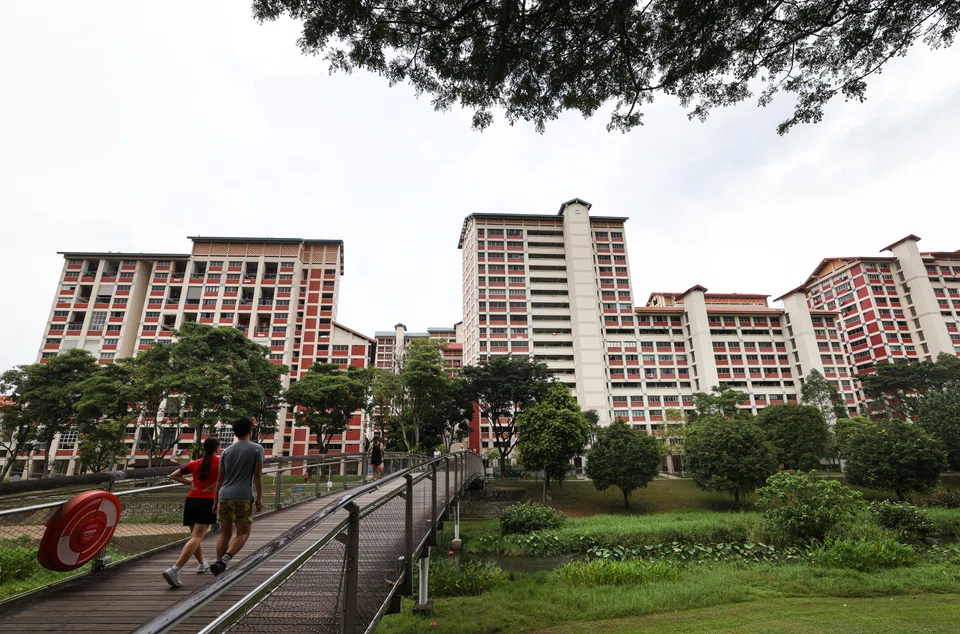
    • HDB flat buyers may have widely differing affordability, as HDB serves a large swathe of the population.
    • HDB flat buyers may have widely differing affordability, as HDB serves a large swathe of the population. PHOTO: YEN MENG JIIN, BT

    POLICYMAKING can be tricky. Give bigger grants to some buyers of Housing and Development Board (HDB) flats, and resale flat sellers may hike prices, thereby negating the effect of the higher grants.

    Sell new HDB Build-To-Order (BTO) flats in choice locations with tighter restrictions to curb the size of windfall gains, and some buyers may make a beeline for existing HDB homes in sought-after locations, which have fewer restrictions.

    Then there is the housing affordability question. Many older Singaporeans worry if the young can afford to own their homes, while younger locals fret over how far they can or should stretch their finances to become homeowners.

    Nonetheless, housing affordability here appears to be fine by numerous measures. Unlike their peers in various other major cities, many young Singaporeans who marry in their 20s or 30s can become homeowners around the time of marriage. The proportion of resident households living in owner-occupied homes was about 90 per cent in 2023.

    HDB resale flat prices rose strongly post the Covid-pandemic. Still, around eight in 10 first-timer families who collected the keys to their resale flats in 2023 used 25 per cent or less of their monthly household income to service their HDB housing loan – meaning monthly loan instalments can be serviced by monthly CPF contributions, with little to no cash outlay.

    However, concerns over housing affordability concerns might stem from job insecurity amid rising job market disruptions. Do couples need to depend on two incomes from continuously working for, say, 25 years to be able to own a home?

    Varying affordability

    Importantly, affordability can vary widely among flat buyers, because HDB serves a large swathe of the population. About 78 per cent of resident households live in HDB dwellings.

    In short, HDB homes may cater to households ranging from those in the lowest decile with average monthly household income from work, excluding employer CPF contributions, of S$2,129, to those in the eighth decile with average income of S$17,442. 

    Sure, a local couple needs to meet the monthly household income ceiling of S$14,000 to buy a BTO home. However, some locals who bust the said ceiling can and do buy various types of HDB resale flats where no income ceiling applies to buyers. 

    Take HDB resale flats that sell for over a million Singapore dollars each. While such transactions represent a small fraction of total resale flat deals, reports of such sales can create much anxiety among potential homebuyers.

    Still, paying S$1 million or even S$1.5 million may be easily affordable for some HDB homebuyers.

    An older couple in their 50s or 60s who sell a private home for over S$3 million can buy a spacious HDB resale home for S$1.5 million without bank financing and free up a substantial sum of money to ensure retirement adequacy.

    A young high-flying couple with a combined annual income of S$220,000, who cannot buy a BTO home or a new executive condominium unit where the applicable monthly household income ceiling is S$16,000, may opt to purchase an HDB resale home for S$1.1 million – or five times their annual income.

    To put such a decision in context, a leasehold resale condominium nearby might cost over 50 per cent more than a resale HDB four-room or five-room unit in a choice location. And the recurring costs of owning an HDB home are generally lower than a condominium unit.

    Also, housing affordability can differ among young couples with broadly similar income levels depending on the availability of financial assistance from parents.

    While some BTO buyers may strongly emphasise securing a reasonably priced home, others may think it’s acceptable to pay more for a large unit in a good location. Indeed, some buyers might like HDB to spend more to build well-designed flats with high-grade finishings, even if this means higher selling prices.

    Catering to the many

    Could the HDB’s job be made much simpler if it stepped away from building homes for a large proportion of residents and restricted itself to providing homes for about half of resident households, comprising generally the lower- to middle-income?

    Should HDB BTO and resale flat prices be largely within certain multiples of annualised median monthly household income from work, including employer CPF contributions among resident employed households, which was S$10,869 in 2023? A BTO home priced at five times an annualised monthly income of S$10,869 would cost about S$652,000. 

    If HDB shifts to serve fewer households, private developers could step up their housing development activities. Instead of trying to scale up by venturing overseas, local developers might then have their hands full building homes at home.

    However, on reflection, there is much to cherish about HDB housing the vast majority of residents. 

    In a world where many societies are fracturing, a key strength of Singapore is its social cohesion. Common experiences provided by the local education system, national service and HDB living help build social cohesion. 

    HDB towns rightly aspire to be spaces where different races, age groups and socio-economic groups live together harmoniously in proximity to each other.

    The building of more BTO homes in choice locations is a very progressive move that helps ensure that numerous choice locations islandwide offer diverse housing options. Such homes may be Plus or Prime flats that attract higher subsidies.

    Still, BTO Plus or Prime flats might cost significantly more than Standard ones. Hence, giving higher housing grants to lower-income first-timer families can help level the playing field for such buyers, so Plus and Prime BTO projects will draw households of different income levels.

    Invariably, HDB policies will have to constantly evolve to meet the changing and diverse needs of a large pool of homebuyers. Some tweaks may have unintended adverse consequences. Meanwhile, a myriad of rules governing HDB flats can leave some homeowners befuddled and make people who cannot meet various eligibility criteria unhappy.

    Ultimately, despite public housing policies here drawing flak from some quarters, HDB should press on with serving many people who have widely varying affordability, and making HDB towns good homes for diverse communities.