THE LEVEL GROUND

More property cooling measures? Locals buying their first homes could be hit 

Don’t rule out locals paying 5 per cent ABSD for transactions over S$1 million

Leslie Yee
Published Mon, Dec 16, 2024 · 01:55 PM
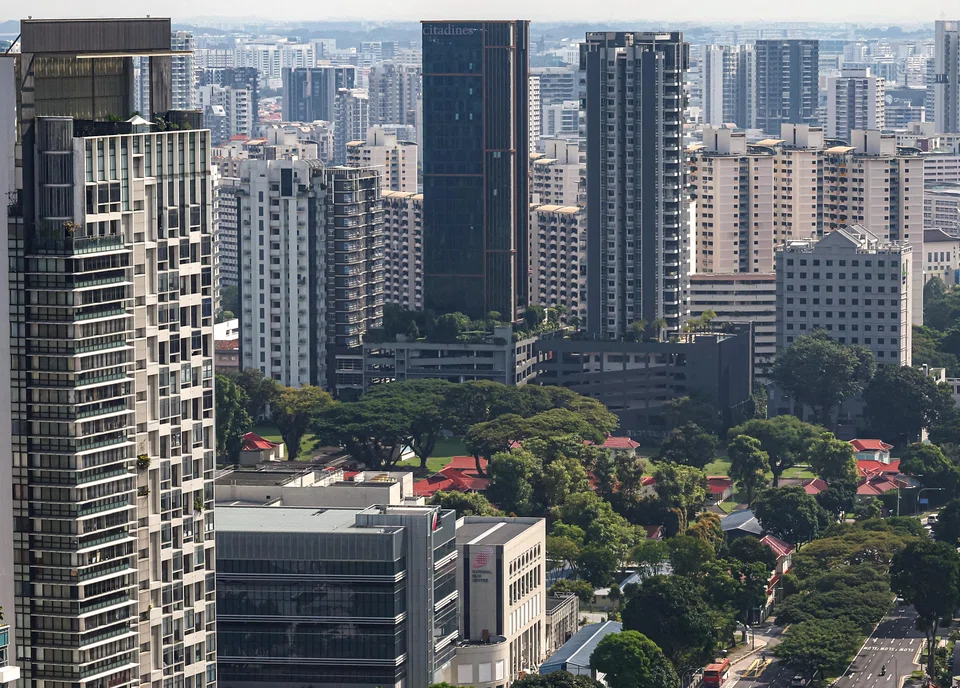
    • A heating up of the private housing market could see more property cooling measures being rolled out.
    • A heating up of the private housing market could see more property cooling measures being rolled out. PHOTO: BT FILE

    MORE than 13 years ago, the Additional Buyer’s Stamp Duty (ABSD) was introduced for the purchase of homes in Singapore. Over time, ABSD rates have generally increased.

    For example, when ABSD was rolled out in December 2011, the rate of 3 per cent applied to Singapore citizens buying their third and subsequent home. Today, the ABSD rate for locals is 20 per cent for a second home and 30 per cent for a third and subsequent residential property. Foreigners and entities buying homes now pay ABSD of 60 per cent and 65 per cent respectively versus 10 per cent when ABSD was first introduced.

    ABSD is paid in addition to Buyer’s Stamp Duty, where the rates for homes range from 1 per cent for the first S$180,000 to 6 per cent for the remaining amount over S$3 million. 

    Can ABSD rates increase even further? It is possible, if the momentum in new private home launches remains strong and home prices climb quickly over the coming few months. 

    New condo launches in November did exceedingly well. Large condo projects Emerald of Katong and Chuan Park sold 99 per cent of 846 units and 76 per cent of 916 units, respectively, at their launch weekends.

    Counter-intuitively, developers and marketing agents might hope that upcoming new condo launches in early 2025 achieve more moderate sales at launch of say around 50 per cent instead of 80 per cent or more.

    After all, a “hot” private housing market could draw government intervention by way of additional property cooling measures.

    When ABSD was last raised in April 2023, Singapore citizens and permanent residents (PRs) buying their first home were unaffected. ABSD does not apply to citizens buying their first homes, while PRs buying their first home pay 5 per cent ABSD.

    Perhaps a potential new round of ABSD revision will hit locals and PRs who are buying their first homes, with say rates of 5 per cent and 10 per cent, respectively. And these rates could apply to homes that sell for more than S$1 million each. 

    Ever since ABSD was introduced, locals buying their first home do not need to pay any ABSD. However, there are possible reasons to apply ABSD of 5 per cent to locals buying their first home.

    Preferential rates

    One, given where ABSD rates sit today – even after slapping local and PR first homebuyers with ABSD of 5 per cent and 10 per cent, respectively – these buyers enjoy significantly preferential tax rates relative to others. 

    For example, a local buying a first home for owner-occupation who pays 5 per cent ABSD continues to be hugely advantaged over other homebuyers such as a local purchasing a second home for investment or any foreigner buying a home.

    An effective tax

    Two, levying 5 per cent ABSD on local first-time homebuyers may not deter those who are buying a home for occupation and can thus be an effective source of additional tax revenue.

    With pressure to spend more on areas such as healthcare amid an ageing population, security in a world fraught with geopolitical tensions and the transition to a greener economy, new tax revenue sources will be welcomed.

    Moreover, taxing local first-time homebuyers is efficient as such a tax is hard to avoid. And taxing home purchases is a form of wealth tax, which aids in tackling wealth inequality.

    HDB resale flats

    Three, applying ABSD of 5 per cent to locals and 10 per cent to PRs who purchase Housing and Development (HDB) resale flats costing more than S$1 million may help to cool a strong HDB resale flat market.

    For one thing, buyers may pay lower prices for choice HDB resale flats should they face higher transaction taxes.

    It can be fair, too, for the state to get a larger slice of proceeds from transactions of sought-after HDB flats when Build-to-Order (BTO) owners, who bought their homes from the HDB at subsidised prices, sell their units. 

    Furthermore, levying ABSD on HDB resale flat deals of more than S$1 million each will not affect more than 90 per cent of HDB resale flat transactions.

    Private housing

    Four, applying 5 per cent ABSD to many private homebuyers can help ensure a more stable market. Paying higher upfront taxes means that buyers have to find more funds for their non-debt funded portion of a property purchase. Also, buyers of new condos bought off-plan using the progressive payment scheme, where most of a home’s purchase price is paid later on, may think twice if they need to pay more at the initial stage.

    As for the many private homebuyers who sell an HDB BTO home to buy a private home, their buying power can be affected by lower HDB resale flat prices for choice units as well as higher taxes on new private home buys.  

    Moreover, paying heftier transaction taxes will stymie buyers of new homes bought off plan who hope to profit from a sub-sale. A sub-sale occurs when one who has signed an agreement to buy a home from a developer sells the unit before a property’s official completion and the issuance of all necessary certificates.

    Removing demand

    Five, levying 5 per cent ABSD on local first homebuyers may remove some demand for investment homes from groups such as local married couples and local minors.

    As it stands, a local couple can buy two homes today without incurring ABSD provided the homes are owned under separate names. This means a couple can live in one home and use the other unit to earn rental income.   

    Currently, subject to various conditions, the effective ABSD for the purchase of a home by a Singapore citizen who is under 21 via a trust can be zero.

    Where remission of ABSD (Trust) has been granted, part or all of the ABSD (Trust) of 65 per cent paid upfront will be refunded.

    The amount refunded is based on the difference between what the ABSD (Trust) paid and the ABSD payable, based on the highest profile of the beneficial owners of the residential property in the transaction.

    Ultimately, should the private housing market heat up further, do not rule out the government rolling out more property cooling measures.

    And if additional measures are warranted, locals and PRs buying their first home may find themselves in the line of fire.