

Some ways to tweak ABSD for greater equity

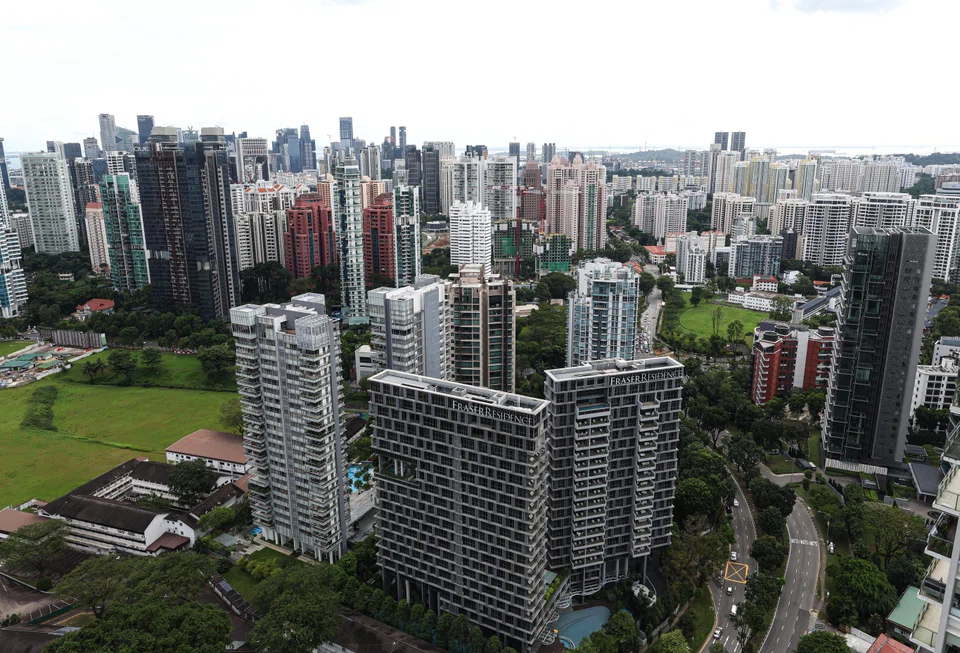
IT HAS been nearly 12 years since the Additional Buyer’s Stamp Duty (ABSD) on residential property purchases was introduced.
Billions of dollars in ABSD have since been collected, and the tax looks to be an entrenched and possibly much-needed feature of the residential property market.
Levying ABSD on home purchases has helped keep prices in check. The hiking of ABSD rates on various groups of buyers in April, such as foreigners and locals buying multiple homes, has helped cool the red-hot housing market.
Private home prices rose 28 per cent between Q1 2020 and Q1 2023, according to data from the Urban Redevelopment Authority (URA). They fell 0.2 per cent quarter on quarter in Q2, and rose 0.8 per cent in Q3.
The number of new private homes excluding executive condominiums (ECs) sold in 2023 could be lower than in 2022.
There are, nevertheless, some inequities in the apportionment of ABSD and other property tax rates. These could be tweaked for various buyer and occupier profiles, in order to achieve better outcomes.
Foreign buyers
First, the ABSD regime disadvantages some foreigners to a very large degree.
ABSD for foreigners who are not Singapore permanent residents (SPRs) recently rose from 30 per cent to 60 per cent. Meanwhile, some foreign first-time homebuyers pay zero ABSD.
Because of free trade agreements, nationals and permanent residents of Iceland, Liechtenstein, Norway, Switzerland and the United States enjoy the same stamp duty treatment as Singapore citizens. A US national, like a Singapore citizen, pays no ABSD when buying a first home.
The huge increase in ABSD has pushed some foreign buyers out of the property market.
In Q1, caveats lodged showed Singapore citizens accounted for 72.7 per cent of purchases of new private non-landed homes excluding ECs. SPRs accounted for 15.1 per cent, and non-SPR foreigners accounted for 11.8 per cent.
In Q3, the same figures for citizens, SPRs and non-SPR foreigners were: 86.4 per cent, 11.5 per cent and 2.1 per cent.
The share of purchases by China nationals of new private non-landed homes excluding ECs fell from 9.2 per cent in Q1 to 2 per cent in Q3, according to a check on the URA’s Realis as at Oct 27.
Given how the luxury end of the local property market has weakened in recent months, there may now be room to woo some of these foreign buyers back.
Perhaps the ABSD rate for properties worth over S$3 million can be lowered for non-SPR foreigners. This would at the same time reduce the gap in ABSD rates between non-SPR foreigners and persons from the five countries who are accorded the same stamp duty treatment as Singaporeans.
The second major gap is that between SPRs and non-SPR foreigners. ABSD rates were left unchanged in April for Singapore citizens and SPRs buying their first homes.
SPRs pay only 5 per cent in ABSD, which is far less than the 60 per cent faced by non-SPR foreigners.
Narrowing that gap by hiking the ABSD rate for SPRs buying their first homes would further prioritise citizens over SPRs. A distinction could also be made based on the length of the SPR status by, for instance, applying a higher rate to those who have been SPRs for fewer than three years.
Measures for investors
The April ABSD hikes have also made it tougher for locals to build a portfolio of investment properties. The rate is 20 per cent for a buyer of a second home, and 30 per cent for a buyer of a third and subsequent home.
A more equitable means of deterring overly speculative property investment might be lowering the ABSD rates for Singapore citizens buying multiple homes, while raising non-owner occupier property tax rates.
Such a move will help close the gap between locals building a portfolio of homes today and those who already own a residential property portfolio. From a revenue perspective, recurrent property tax might also be preferable to lumpy ABSD.
Finally, wealthy individuals buying a home in trust for a child enjoy a significant advantage thanks to a rule that allows the refund of the ABSD under specific circumstances.
A trust buying any home here pays ABSD (Trust) of 65 per cent. Part or all of the ABSD (Trust) will be refunded if the home is held in trust for identifiable individual beneficiaries.
The amount refunded is based on the difference between the ABSD (Trust) rate and the ABSD rate corresponding to the profile of the beneficial owner with the highest applicable ABSD rate.
This means a trust buying a first home for a Singapore citizen who is below 21 years old can get a full refund on the ABSD paid.
As such a rule potentially worsens inequality and hurts social cohesion, perhaps the ABSD (Trust) rate can include a non-refundable component.
A similar condition exists for housing developers. They pay 35 per cent ABSD that may be remitted upfront subject to conditions, plus 5 per cent ABSD that is non-remittable.
Land is a scarce resource and equitable allocation will always be difficult. The guiding principles, however, are easy to understand.
Locals buying homes for occupation should enjoy priority treatment. Some investment transactions are good to ensure there is adequate supply of homes for lease by foreigners as well as locals. Also, as a global city with an open economy, Singapore should welcome some foreign interest in buying homes here.
Tweaking the taxation regime can help achieve greater equity among homebuyers with different profiles, while preventing runaway price rises.
TRENDING NOW
Far East Organization’s The Serra Residences sells less than a quarter of units released at average S$3,460 psf

A bumpy road ahead for some of Singapore’s fresh graduates in their job search
Philippine power giant First Gen rebuffs foreign offers, plans up to US$2.6 billion in expansion

No chicken feed: How Malayan Flour Mills built an empire from flour to fowl

