Rise in foreign buying of luxury homes in Singapore in Q2 a sign of market thawing after cooling?
Q2’s uptick is the first rise in foreign buyers’ share of the market since the government raised ABSD rates in April 2023

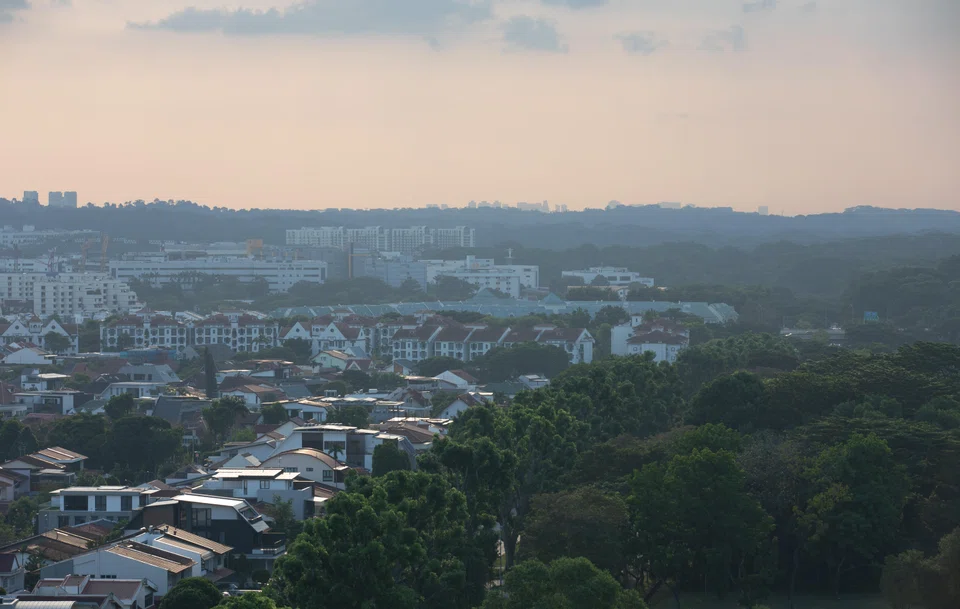
FOREIGN buying of Singapore luxury homes is slowly on the rise again, after steep hikes in stamp duties all but smothered the market last year.
But it is still too early to say if a fresh wave of wealth is descending on the island, given current economic uncertainties and still-tight home-purchase restrictions for foreigners, said analysts.
Figures from Savills Singapore showed that in the second quarter of 2024, foreigners (excluding permanent residents) bought 47 non-landed homes in the Core Central Region (CCR) – a market segment often seen as a proxy for high-end and luxury property. In comparison, this group of buyers bought 21 units in the previous quarter.
Alan Cheong, Savills Singapore’s executive director of research and consultancy, noted that while demand was significantly lower than that shown by Singaporeans and permanent residents (PRs), the share of foreign buyers nearly doubled to 6.7 per cent in Q2, from 3.4 per cent in Q1.
This was also the first quarter-on-quarter rise after four straight quarters of contraction between Q2 2023 and Q1 2024, he noted.
In April last year, the government doubled the Additional Buyer’s Stamp Duty (ABSD) for foreigners purchasing any residential property to 60 per cent.
Demand from foreigners – who typically account for a larger share of sales in the prime CCR than in the city fringe and suburban areas – evaporated as a result, and has yet to recover.
Caveats data showed that in Q2, foreigners made 82 non-landed residential transactions, less than a third of Q1 2023’s 264 transactions before the higher ABSD was rolled out.
Huttons Asia senior director of data analytics Lee Sze Teck pointed out that some ultra-high-net-worth individuals (UHNWIs) prefer to maintain a low profile and may not lodge caveats on their purchases.
“So even though the caveats showed a downward trend, it is not a true reflection of the demand,” said Lee.
For one, UHNWIs are seeking a stable and politically neutral haven such as Singapore, given that geopolitical tensions are not abating, he said. The 60 per cent ABSD is, in some quarters, viewed as a “safety premium” to live in the city-state.
Lee also noted that the 60 per cent ABSD, spread over a holding period of 10 to 15 years, translates to a compound annual growth rate of 3.2 per cent to 4.8 per cent – similar to price gains in the CCR from Q2 2009 to Q2 2024.
Other industry watchers said interest in luxury housing has grown, despite the current market conditions.
“There were more transactions for bungalows in Good Class Bungalow (GCB) areas in the first two months of Q3, than in Q1 and Q2. Recent GCB buyers tend to be new citizens or those from the second or third generation of local wealthy families.”
Lewis Cha, List Sotheby’s International Realty executive director
List Sotheby’s International Realty executive director Lewis Cha said there were more transactions for bungalows in Good Class Bungalow (GCB) areas in the first two months of Q3 than in either Q1 or Q2. While GCBs can only be purchased by Singapore citizens, recent GCB buyers have tended to be new citizens or those from the second or third generation of local wealthy families, he said.
Those figures do not include some reported deals for which no caveats were lodged, he said. For instance, two adjoining freehold bungalows on Belmont Road were sold in July for S$131.4 million or around S$3,000 psf on land area. The buyer was Jennifer Tzelee Teo, a Singapore citizen in her late 40s who is linked to Zhang Lei, the founder and chairman “of East Asian heritage” private equity firm Hillhouse Investment.
Luxury apartment buyers, for the most part, are new PRs seeking larger (2,000 to 4,000 square feet) CCR condominiums for their own homes, said Cha.
Knight Frank research head Leonard Tay pointed out that the total value of luxury non-landed transactions in the first half of 2024 was S$736.7 million, up 28.2 per cent from the previous half-year’s S$574.7 million.
Transaction volume grew 36.1 per cent to 98 units in H1 2024, from 72 in H2 2023, as more Singaporean buyers sought family-sized, ready-to-move-in units, said Tay.
“A key point that is often overlooked is that the majority of demand in recent years has come from Singaporeans and PRs, not just foreign buyers,” said joint managing directors Harmeet Singh Bedi and Himmat Singh at Christie’s International Real Estate Singapore.
The auction house’s luxury property arm, which exited the Singapore market in early 2019, has returned, opening an office two weeks ago as part of its plans to expand in South-east Asia.
High-net-worth individuals are “still willing to navigate the additional costs to invest in such a prestigious and stable environment”, said Bedi and Singh.
Beyond homes
Besides residential properties, Lee of Huttons said global UHNWIs are keen to invest in commercial assets such as offices and shophouses. No ABSD is payable for commercial property.
These properties sometimes house their businesses or family offices, said Nicholas Keong, head of residential and private office at Knight Frank.
Chia Siew Chuin, head of residential research, research and consultancy at JLL, noted that between 2020 and 2023, single-family offices more than tripled in number to 1,400, from 400.
“Around 25 per cent of all Indian cross-border wealth is held here, making Singapore the top centre for Indian wealth.”
Chia Siew Chuin, JLL head of residential research, research and consultancy
While China remains Singapore’s largest source of new wealth, the city-state draws capital from other rapidly growing economies. For example, around 25 per cent of all Indian cross-border wealth is held in the Republic, making it the top centre for Indian wealth, she said.
Shophouses and quality office assets are valued, with prices holding firm despite a slowdown in transactions, because of their limited supply. Huttons’ Lee noted that prices of strata offices in Suntec City exceeded S$3,800 per square foot (psf) in 2024. In July, a single floor at the freehold Solitaire on Cecil was sold for S$55.2 million or S$4,200 psf.
Analysts reckon that interest in Singapore’s real estate market will be sustained as investors eye wealth preservation.
Luxury properties here are also “comparatively fairly valued” relative to other established cities, she said.
Citizens from some countries – such as Liechtenstein, Iceland, Norway, Switzerland and the US – are accorded the same stamp duty treatment as Singaporeans under free-trade agreements. “Notably, the most active foreign buyers among these countries in H1 2024 were those from the US,” said Chia.
JLL Singapore country head Chris Archibold added that Singapore may attract more global interest in the future, as it climbs the ranks in real estate transparency.
The city moved up a spot to place 13th in JLL’s latest Global Real Estate Transparency Index, joining the most highly transparent markets for the first time. Singapore “is also one of the world’s most liquid listed property sectors, accompanied by robust corporate governance and information disclosure standards”, he said.
Nonetheless, Cheong from Savills suspects that any return of foreign UNHWIs to Singapore’s real estate market is likely at an incipient stage.
“Activity in the shophouse, retail and strata office markets are still at a low after the February 2023 crackdown on the group of money launderers,” said Cheong. “It’s still early days for all sectors. But the residential sector appears to be showing the first signs of thawing.”
In its 2024 Wealth Report, Knight Frank noted that even though Singapore has seen “great success” in building its ultra-wealthy population, coaxing them to invest locally presents another challenge altogether.
“Though family office numbers have risen in Singapore, the link to direct spending and investing is not clear-cut,” it said.