

Rising UK house prices defy Budget tax fears, mortgage-lender Nationwide says
As buying activity was held off ahead of the Budget, prices may rise in the coming months: Capital Economics
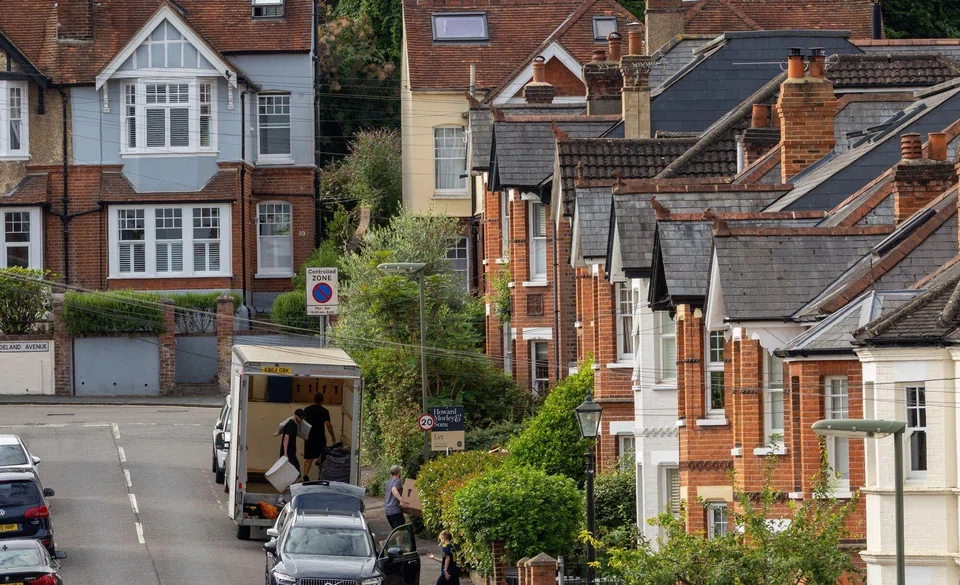
[LONDON] House prices in the United Kingdom rose for a third consecutive month in November, said one of the country’s largest mortgage lenders, showing that the market defied the looming threat of tax hikes ahead of the Labour government’s Nov 26 Budget.
The average home value increased 0.3 per cent to £272,998 (S$468,049) in November, the Nationwide Building Society said on Tuesday (Dec 2), building on a downwardly-revised 0.2 per cent increase in October.
This gain marked a third back-to-back rise in prices, and was stronger than the 0.1 per cent expected by economists.
The figures suggest that the housing market is holding up, with buyers largely undeterred by reports that the Chancellor of the Exchequer Rachel Reeves would slap wealth taxes on high-value properties to fill a fiscal hole on Nov 26.
In the end, her statement was less far-reaching. A levy was imposed only on homes worth more than £2 million, providing some cautious optimism.
“It’s clear that prices have held up against the Budget uncertainty better than the drop in buyer sentiment indicators suggested,” said Ashley Webb at Capital Economics.
“To the extent that some activity was postponed in anticipation of the Budget, the bigger Budget bark than the Budget bite may prompt a boost in prices in the coming months,” he added.
Capital Economics forecasts a 3.5 per cent growth in house price next year, and a 3 per cent growth in 2027.
Based on the Nationwide report, annual house price growth softened to 1.8 per cent in November, down from 2.4 per cent in October and the lowest since June 2024.

Bank of England (BOE) data on Monday showed that the number of mortgage approvals dipped less than expected in October, in another sign of resilient demand.
“Against a backdrop of subdued consumer confidence and signs of weakening in the labour market, this performance indicates resilience,” said Robert Gardner, Nationwide’s chief economist.
Mansion tax
The housing market is emerging from a period of disruption caused by an increase in transaction costs earlier this year.
The changes have disproportionately affected activity in London and the wider south-east region, home to the UK’s priciest properties. The top-end of the market has also been affected by fiscal worries, as Labour raises revenue to pay for higher public spending.
Labour’s so-called “mansion tax” targets less than 1 per cent of all properties in England.
However, most homes worth more than £2 million are in London, where property agents are warning that the tax could amplify turbulence in the capital’s market.
The BOE could provide more support for aspiring homebuyers on Dec 18, when officials are expected to deliver another interest rate cut.
Borrowing costs remain elevated as the BOE takes a cautious approach to easing policy amid sticky price pressures.
Gardner predicted that housing affordability is likely to improve modestly in the future. BLOOMBERG
Decoding Asia newsletter: your guide to navigating Asia in a new global order. Sign up here to get Decoding Asia newsletter. Delivered to your inbox. Free.
Share with us your feedback on BT's products and services
TRENDING NOW

Far East Organization’s The Serra Residences sells less than a quarter of units released at average S$3,460 psf

A bumpy road ahead for some of Singapore’s fresh graduates in their job search

Philippine power giant First Gen rebuffs foreign offers, plans up to US$2.6 billion in expansion

No chicken feed: How Malayan Flour Mills built an empire from flour to fowl

