In rural New York, some see proposed AI centre as a needless intrusion
The facility, to be built between Buffalo and Rochester, will raise electric bills and harm a nearby Indigenous reservation, opponents argue
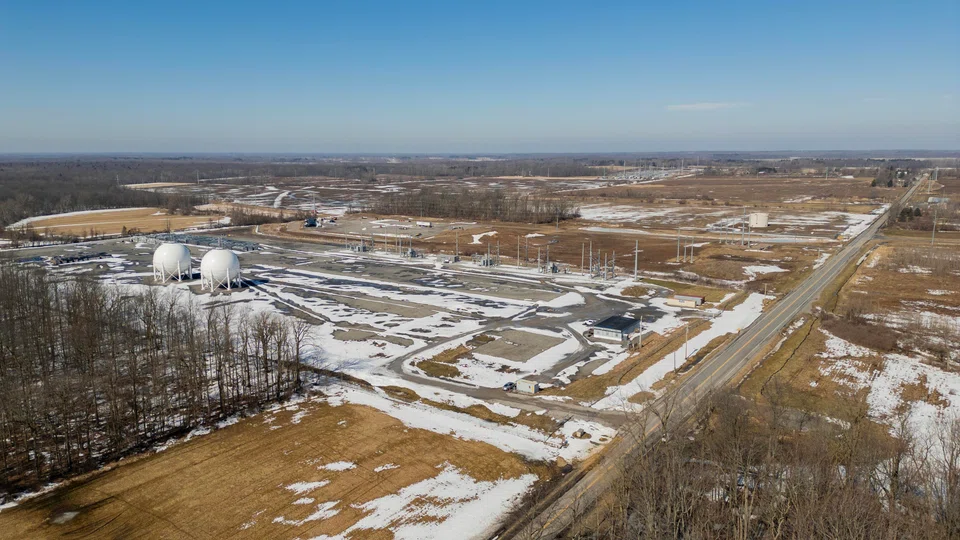
[NEW YORK] A proposal to build an artificial intelligence (AI) data centre between Buffalo and Rochester, New York, is facing opposition from critics, including residents, who say they fear that the sprawling facility’s droning supercomputers will disturb Indigenous communities and animal life, strain the power grid and raise utility rates.
The US$19.4 billion data centre, to be constructed in the town of Alabama in rural Genesee County, would require 500 megawatts of electricity, according to the proposal, equivalent to 20 per cent of the electricity generated daily by the nearby Niagara Falls hydropower plant.
The 2.2-million-square-foot complex would also be constructed a mile from the territorial home of the Tonawanda Seneca Nation and situated close to the Iroquois National Wildlife Refuge and several smaller animal preserves.
“I can’t think of one good reason for it,” said Arthur Barnes, a resident of Shelby, a town just north of Alabama, who was one of about 60 people who attended an informational meeting on the data centre last month at the Alabama Fire Hall.
Like many attendees, he wore a button with a line through the words “STAMP project”, the center’s informal name. The complex would be built at the Science, Technology and Advanced Manufacturing Park – or STAMP – in Alabama.
“I have been going to the reservation for over 50 years, and it’s pristine,” Barnes, 68, said, speaking of the Tonawanda Seneca reservation. “Of all the places to put something like this, did they have to put it right next to a sovereign nation and a national wildlife refuge?”
Increasing resistance
America’s AI boom, driven by tech giants like Meta, Google and Microsoft, has created a need for data centres across the country that can support the technology involved. But the centres, many of them slated to be built in rural communities like Alabama, are being met with increasing resistance from local residents concerned about the environment, the noise and rising electricity bills, among other issues.
Mark Masse, the president and CEO of the Genesee County Economic Development Center, the industrial development agency advancing the STAMP project, said that a nondisclosure agreement prevented it from releasing the name of the tech company that would operate the centre.
The project’s developer, the Dallas-based Stream Data Centers, expects construction to start this year, with basic operations at the complex beginning in 2027. The centre would not be fully up and running until 2030.

Before work can begin, Alabama’s Planning Board has to approve the project, and it must receive a state environmental review. The centre’s opponents are also considering a lawsuit, which could delay it or stop it entirely.
Among opponents’ concerns are the subsidies luring Stream to New York. The company, owned by the private equity firm Apollo Global Management – which in September 2025 reported assets of US$449.5 billion – would receive US$1.4 billion in tax subsidies. That is an average of US$11.2 million for each of the centre’s 125 anticipated employees, each of whom would likely earn an average of US$80,000 a year.
Masse said that the subsidies were necessary to ensure that New York remained competitive with other states. “We don’t look at the calculation of benefits per job,” Masse added, noting that the project was expected to create more than 1,000 construction positions.
The possibility that the data centre’s presence will increase utility rates is also raising alarms.
The three states with the nation’s highest concentration of such data centres – Illinois, Virginia and Ohio – saw their electricity bills increase twice as much or more than the national average in August 2025 as compared with the same month in 2024, according to the US Energy Information Administration. Prices rose 16 per cent in Illinois, 13 per cent in Virginia and 12 per cent in Ohio.
Mayor Sean Ryan of Buffalo believes that New York residents can expect a similar increase if the STAMP project moves forward. “In addition to massive tax subsidies, the energy usage is going to impact every ratepayer in New York state,” he explained.
If the project is built, the county’s Economic Development Center stands to receive US$145 million in fees. That money, according to Masse, would be used in part to develop more business parks in the area and to upgrade the wastewater treatment plant in nearby Oakfield, so that it can handle the estimated 20,000 gallons of water to be used daily by the centre.
Genesee County, Alabama and the local school district would also receive a combined US$285 million over the course of STAMP’s 30-year contract with Stream, while the county and state would also split an estimated US$27 million in annual sales tax revenue generated by the centre’s electricity usage.
Another flashpoint
The fact that the development agency is overseeing the state-required environmental review of the project is another flashpoint. Critics say that the agency’s need to find tenants for STAMP and the fees it stands to gain from them have created a conflict of interest. In January, nearby Orleans County joined the Sierra Club and the Tonawanda Seneca Nation in requesting, unsuccessfully, that the State Department of Environmental Conservation oversee the review instead.
Grandell Logan, a Tonawanda Seneca spokesperson, said that the project threatened the environment and the Indigenous community’s way of life. “The noise from this data centre alone will irrevocably change the soundscape of the area,” he noted.
Masse, however, said that there were environmental misperceptions about the project. “I think people go on the Internet and think all data centres are exactly the same.”
He added that the rooftop air-conditioning units used to cool the centre’s data servers would lower its water usage, and that a study by the New York Independent System Operator, which manages the state’s power system, had found that the project would not negatively affect the electric grid.
Masse also said that the noise produced by the centre, while constant, would generally not exceed 65 decibels, similar to the volume of an air-conditioning unit. However, a Sierra Club-funded analysis by the Noise Pollution Clearinghouse, a nonprofit advocacy group based in Vermont, found that the STAMP proposal had not provided enough information for the organisation to accurately assess the centre’s noise level.
Tyson Slocum, the energy programme director at Public Citizen, a non-profit consumer advocacy organisation, said that the STAMP project highlighted the need for a deeper discussion about the increasing role of AI and data centres in people’s lives. “What has been missing from the discussion over data centres is what is in the public interest,” Slocum noted. NYTIMES
Decoding Asia newsletter: your guide to navigating Asia in a new global order. Sign up here to get Decoding Asia newsletter. Delivered to your inbox. Free.
Share with us your feedback on BT's products and services