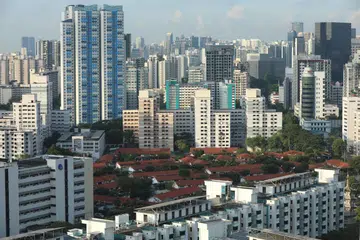
S-E Asia real estate markets stay the course amid global uncertainties
Foreign direct investments in the region are growing; domestic consumption is also boosting economic growth
Singapore
RECENT reports which dominate headlines reveal uncertainty and slower growth in the world's economy. The International Monetary Fund projects the global economy to grow by 3.3 per cent in 2019, and 3.6 per cent in 2020. This is slower than the 20-year average of 3.8 per cent per annum.
For the first time, Asia-Pacific exports fell year-on-year in the first half of 2019, after growing 10 per cent in 2018.
Even powerhouse China, whose economy expanded about 7 per cent annually in the last five years, is expected to see growth slow to about 5 per cent annually over the next few years.
South-east Asia is not immune to these pressures. Growth in this region is expected to slow down to 4.8 per cent, from 5.3 per cent last year.
Countries like Singapore are already anticipating further headwinds ahead. The Ministry of Trade and Industry recently cut gross domestic product forecast for 2019 to between zero and 1 per cent.
But fundamentals in South-east Asia remain strong and bode robustness ahead. Across the region, foreign direct investments (FDI) are growing strongly, especially in manufacturing. Domestic consumption is also boosting economic growth.
In both Indonesia and Vietnam, FDI grew 8 per cent to 9 per cent year-on-year in the first half of 2019. In the Philippines, FDI approvals doubled in 1Q19 compared to a year ago and Thailand saw net annual inflows of FDI rising to US$11 billion in April, higher than the 10-year average of US$9 billion per annum.
The outlook is bolstered by political stability. Indonesian President Joko Widodo received a boost of confidence with another term in April.
The elections in the Philippines in May this year set President Rodrigo Duterte up for another strong three years, with potential for corporate tax cuts.
The sluggish outlook has already prompted the United States Federal Reserve to cut rates for the first time since 2008. With more cuts anticipated over the next 18 months, there is more room for South-east Asian central banks to ease back on policy interest rates to support growth.
We expect very little undue pressure on the region's currencies, a positive sign for further investments into the region as well as its real estate markets.
Demand for commercial space continues to be healthy as technology companies, financial services and insurance firms, outsourcing and professional services providers continue to expand.
We expect office rents to rise 7 per cent on average over the next 2.5 years, with the strongest growth coming through Singapore, Manila and Bangkok.
On the retail front, international retailers are still keen to expand in the region. International and regional food and beverage brands opened new branches, supporting new leasing activity across the markets.
Japanese brands Uniqlo and Takashimaya have announced plans to expand their presence in Manila while American pizza chain, Little Caesar, opened in Singapore and the Philippines at the end of last year and has plans to grow further in the region.
With inflation and limited supply of retail space, rents are projected to grow 3 per cent per annum in the next few years.
The industrial outlook is also looking positive. In the first half of 2019, exports to the US from Thailand and Vietnam rose over 20 per cent year-on-year, potentially due to the increase in tariffs imposed on China by the United States.
Manufacturers continue to expand their industrial and logistics facilities, especially in Thailand, Vietnam and Indonesia. Developers are also investing to create more supply in anticipation of further growth.
For instance, Frasers Property Thailand has set up joint venture companies to develop integrated industrial estates and logistics parks in the eastern park of Bangkok close to the Eastern Economic Corridor.
Given these developments and barring any major setbacks to the global economy, growth in South-east Asia, whilst slower, will stay steady in the second half of 2019.