

Sabana Reit unitholders revolt: a tale of lost trust
What is needed is a legal framework that provides unitholders sufficient ammo to push for better discipline and accountability from Reit managers

Anita Gabriel
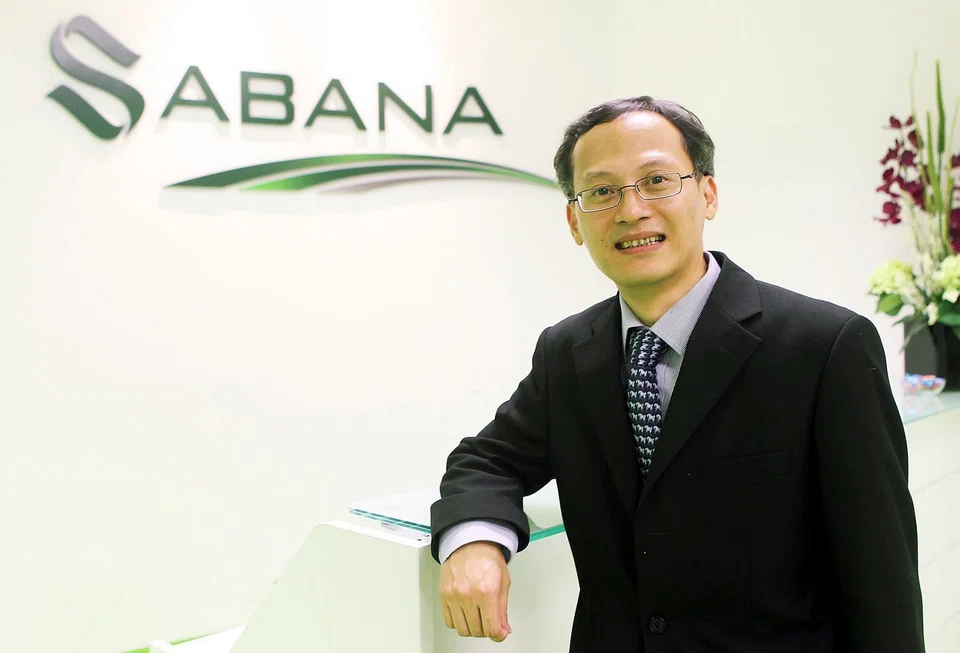
A UNITHOLDER revolt unlike any other in Singapore's largely steady and uneventful real estate investment trust space is showing up the unattractive spots in one of the city state's most exalted success stories and with that, could turn the sector into a hotbed for reforms.
At the heart of the backlash at Sabana Shari'ah Compliant Industrial Reit are several key flashpoints - drooping distribution per units (DPU), overpriced acquisitions backed by sale and leaseback arrangements and handsome fee payouts to the Reit manager.
Underpinning that - and this is key - is unitholders' loss of trust in Sabana Reit's manager, Sabana Real Estate Investment Management, the one squarely tasked with bringing in the DPU digits.
A group of 66 unhappy unitholders who collectively own 0.6 per cent of Sabana Reit and led by the fighting spirit of former stockbroker Jerry Low is seeking a special meeting for the Reit's investors to get the manager to ship out.
There are more irked unitholders. This other group is led by associate professor Koh Yee Kan and although they share a common goal with Mr Low's camp - to safeguard their investments - they have a different tack on how to rein in the perceived excesses of the manager. They too plan to requisition a meeting for unitholders to vote on their resolutions, one of which according to Prof Koh calls for an amendment to the fee structure to make the manager more accountable as opposed to adding properties to the Reit to maximise fees.
What an uneasy time this must be for Singapore regulators to watch this episode unfold in an industry that since its birth in 2002 has drawn over 40 listings on the Singapore Exchange and won them a great deal of praise.
The unitholders' heroic efforts aside, the truth is that even as a cohesive group, which the rebels are evidently not, the odds are hugely stacked against them.
For one thing, under the Code on Collective Investment Schemes, a Reit manager can be removed through a simple majority vote of unitholders. But the Reit manager and its related parties are also allowed to vote on the matter. This could make it difficult for dissenting unitholders to get what they want, say observers.
But let's assume the opposing unitholders get their wish to boot the manager. Then what? According to one lawyer who is also a unitholder of Sabana Reit, while the Trust deed expressly states that it is the trustee's (Sabana Reit) job to hire a replacement manager, nothing else is mentioned by way of a guide on how the new manager is to be found.
"In the absence of such a provision, we assume that the unitholders can direct the Trustee, although it is ultimately the Trustee's obligation to effect the new appointment," he says.
Indeed, expecting unitholders who are no different from any other retail investors to make informed decisions on a replacement manager may be a tad overreaching.
This also means that ultimately, the position of the Reit manager still remains well entrenched.
Sense of fiduciary duty
Against such potential dejection, the Singapore Exchange's pointed queries to the Reit manager must have rung through like a sweet endorsement of sorts for unitholders' grievances.
The frontline regulator must have smelt blood; it demanded an explanation on S$215 million property revaluation losses over three years incurred by the manager and the acquisition of Changi South property from Sabana Reit's sponsor, Vibrant Group, at S$23 million, more than double the price at which the vendor had acquired the asset at back in 2011. This even as the manager, in its response to SGX, points to the waning industrial property market in Singapore.
As the Reits sector appears to have hit a governance bump, this may be the right time to resurrect a 2005 speech by Ho Ching on the potential perils of Reits.
Then, the Temasek Holdings chief executive had warned that a trust manager who lacks a sense of fiduciary duty to unit holders may indiscriminately ramp up the portfolio size, particularly if the manager is paid based on a percentage of the portfolio value and the size of the acquisitions.
She had also called for retail investors to be cautious of Reit managers who are heavily remunerated by the size of the portfolios they manage.
These, 12 years later, are but some of the niggling points at the heart of the disquiet among Sabana Reit's unitholders whose newly-found temerity heralds a new era of activism in Singapore's Reits space.
Even so, without a legal framework that provides unitholders sufficient ammo to push for better transparency, integrity, discipline and accountability from Reit managers, this so-called unitholder uprising could just as quickly turn into a dead duck.
It would be crying shame if nothing is done to remedy that.
READ MORE: Sabana Reit manager responds to questions on valuation of acquisition
TRENDING NOW

IOI Properties and CapitaLand Investment closer to acquiring One Raffles Place in joint bid

OCBC sheds S$8 billion in value as shares close nearly 6% down; analysts cautious on banks

Grab CEO’s wife Chloe Tong on life with Anthony Tan and finding her purpose

Crystal Jade closes four more outlets, cuts 120 jobs ahead of proposed sale

