

Saudi Arabia opens property market as crown prince courts overseas investors
More than 600,000 homes are expected to be built in the country by 2030, according to Knight Frank
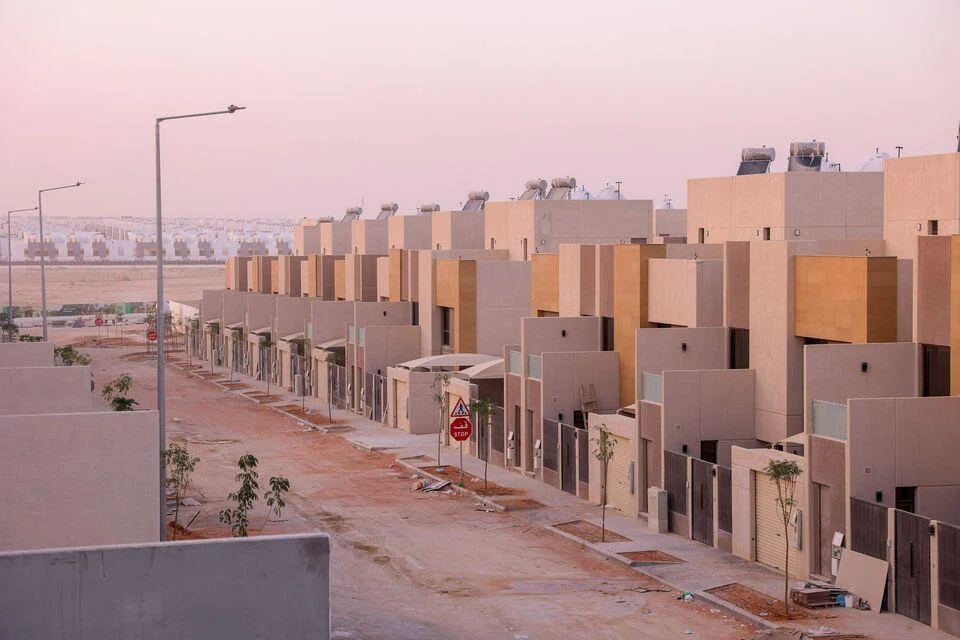
[DUBAI] After driving for nearly an hour north of Riyadh, the sand dunes start to give way to an emerging metropolis with thousands of newly built single-family homes stretching over the horizon. They could be part of any American suburb.
Khuzam, as this more than 100 billion riyal (S$34 billion) project is called, offers a window into Saudi Arabia’s efforts to beat the affordability problem plaguing housing markets from New York to Sydney. It’s also part of Crown Prince Mohammed bin Salman’s broader efforts to reshape the real estate market while attracting foreign investors and buyers to bolster the economy.
The nation’s largest developer, the government-backed National Housing Company (NHC), which has projects worth 250 billion riyals across the kingdom, is spending billions on sprawling developments like this one while private firms across the nation are joining the race to build.
The market has lured even the Trump Organization, the US president’s family property firm, which is working with a Saudi partner to add luxury apartments in the kingdom.
Helping the construction boom are new reforms that are expected to take off in January to allow overseas buyers to own property in Saudi Arabia’s real estate market.
Equities market also opening up
They dovetail with other reforms. The kingdom this week opened its equities to all foreign investors, the latest step to boost flows into the Middle East’s largest market.
It’s a long-anticipated step that developers are hoping will draw buyers and international investors to a market that remained largely off-limits to foreigners for decades.
The kingdom has been easing certain restrictions for some resident expats in stages, and it’s now looking to designate developments and zones where foreigners are allowed to buy. Yet even as the nation draws more money from overseas, it will have to ensure a sufficient supply of new homes to make sure that local Saudis are not priced out.
The new law will “be a real game changer for the market”, said Matthew Green, head of Middle East and North Africa research at real estate firm CBRE Group. “There is a massive amount of capital that wants to be there and you will start to see those opportunities open up both on the development and the financing side.”

The excitement in the property market is palpable. A similar law in Dubai has helped drive both supply and demand for new homes and lured buyers from India to the UK and Russia. Saudi developers are launching marketing campaigns for their projects overseas and building networks with brokers across the world.
Still, many wealthy foreigners have snapped up second homes in Dubai partly because it’s seen as a fun vacation destination.
Social mores remain conservative in Saudi Arabia. Although the kingdom is adding resorts, Riyadh still does not offer the lifestyle perks of many other international cities, even as some restrictions on alcohol sales have been loosened in recent weeks.
However, some investors see the Saudi housing market as a more stable bet than nearby Dubai, where the population is mostly made up of expats, some of whom have left during previous downturns after losing their jobs.
By contrast, Saudi Arabia’s population of about 35 million, the Gulf’s largest with nearly 20 million citizens, provides a solid case for future demand. About 34 per cent of Saudis are below 14 years old, according to government data, which is likely to boost demand for homes in the coming years.
“Housing is central to the crown prince’s vision because it’s tied to a number of domestic dynamics,” said Sanam Vakil, director of the Middle East and North Africa Programme at Chatham House.
“Legitimacy internally is so important and he is not yet king. He has to deliver transactional and transformational policies to take this younger generation on the journey with him.”
The law is also expected to breathe new life into many Saudi projects that the government started but may struggle to finance on its own, such as Diriyah and Qiddiya, which are near population centres and will likely see a quick return on the investments.
Foreign developers, suppliers and contractors will be able to enter the market through joint ventures with local firms on a more even footing as the law comes into practice, experts say.
Meanwhile, more than 600,000 homes are expected to be built in Saudi Arabia by 2030, including 110,942 to be delivered in 2026 alone, according to Knight Frank.
But there are also challenges, especially to the government’s affordability agenda. Apartment prices in Riyadh surged 96 per cent from early 2019 to the third quarter of 2025, while villa prices surged 53 per cent. Thousands of Saudis have migrated to Riyadh in search of job opportunities.
Expats add to rent surge
Meanwhile, the expats who arrived as the government pushed companies to relocate their regional headquarters to the kingdom have contributed to the surge in rents, which have been climbing an average of 8.5 per cent a year, according to CBRE.
The crown prince has ordered a freeze on rent increases in Riyadh for five years and vowed to halt an “unacceptable” rise in property prices.
To ensure that prices do not keep taking off, modern new homes will need to be built quickly.
Key to those efforts are firms such as NHC, where chief executive officer Mohammad Albuty has been tasked with helping lift homeownership rates to 70 per cent by 2030. That means building hundreds of thousands of new homes across the kingdom.
So far, the developer has managed to build only about 60,000 of those, but Albuty says delivery of entire communities will pick up sharply in the coming years as much of the groundwork needed to ease bottlenecks and address logistical and supply issues has been done.
In his quest to create a development machine, Albuty has turned to many foreign firms.
NHC has inked agreements with developers from New Jersey to Egypt and construction firms from China to South Korea through joint ventures. The goal is bringing construction capacity while creating badly needed supply chains closer to home.
The firm has over 164,000 homes under construction from Jeddah on the kingdom’s west coast and Dammam on the east coast, as well as in the holy cities of Mecca and Madinah.
“We are not building housing or boxes in the middle of a desert,” Albuty said. “We are building a city within a city. It has all services and all amenities nearby.”
The firm had record sales of 27 billion riyals in 2024, the CEO said. He estimated that sales in 2025 exceeded 30 billion riyals, with more people moving into the growing communities.
Out are the bare towers that were a hallmark of Gulf construction in the 1970s and in come American-inspired housing subdivisions that include offices, shops, entertainment, hotels, parks, gyms, clinics, schools and nurseries to reduce commuting time and provide a better quality of life.
On a recent afternoon at one of Khuzam’s newly occupied neighbourhoods, women clad in black abayas sipped tea from paper cups while children played in a green park just a few hundred metres from their home in the newly completed community.
The change would have been unthinkable years ago, when most Saudis preferred their own home gardens surrounded by high walls that protected families from prying eyes. But as the cost of living bites, many young Saudis are forgoing the costly housing of their parents’ generation in favour of apartments, townhouses and shared community amenities.
Future is in Saudi
Elsewhere, Abdulrahman Aldhyem, the CEO of privately owned Liwan Real Estate Development, is planning a new 4.5 billion riyal development with 2,500 homes in the capital, along with a 300-room hotel.
Liwan, which is owned by members of several prominent Saudi families, has previously made bets in Turkey and Dubai, surviving a sharp downturn in the emirate after the 2008 financial crisis.
But now, with the kingdom on the cusp of allowing foreigners to buy in Saudi Arabia, Aldhyem sees the future in his home market, and he cannot hide his excitement.
“For a while, we were being approached by Saudi institutions looking to buy entire buildings for recurring income,” Aldhyem said. “But now, that’s changing and we are seeing regional investors from the Gulf as well as a Chinese fund that’s looking to buy in our project.”
Large institutional investors are also likely to come into Saudi Arabia much faster than in Dubai because they are now more familiar with the region’s markets, CBRE’s Green said.
“We are going to see more investment, more developers, more joint ventures and more partnerships come out” of the new rules, he said about Saudi Arabia. BLOOMBERG
Decoding Asia newsletter: your guide to navigating Asia in a new global order. Sign up here to get Decoding Asia newsletter. Delivered to your inbox. Free.
Share with us your feedback on BT's products and services
TRENDING NOW
Singapore updates renewable energy certificate standard to tackle greenwashing; unveils new solar efforts
Director of PR firm sacked for secretly recording internal meeting loses wrongful dismissal claim
Indonesia says gas export cuts to Singapore remain within contract terms
Time for MAS, SGX to scrutinise issue managers

