Seoul housing rally gathers pace, deepening BOK’s policy dilemma
Apartment prices in Seoul rose 0.29% in the week through Jan 19 – the biggest weekly increase since Oct 20
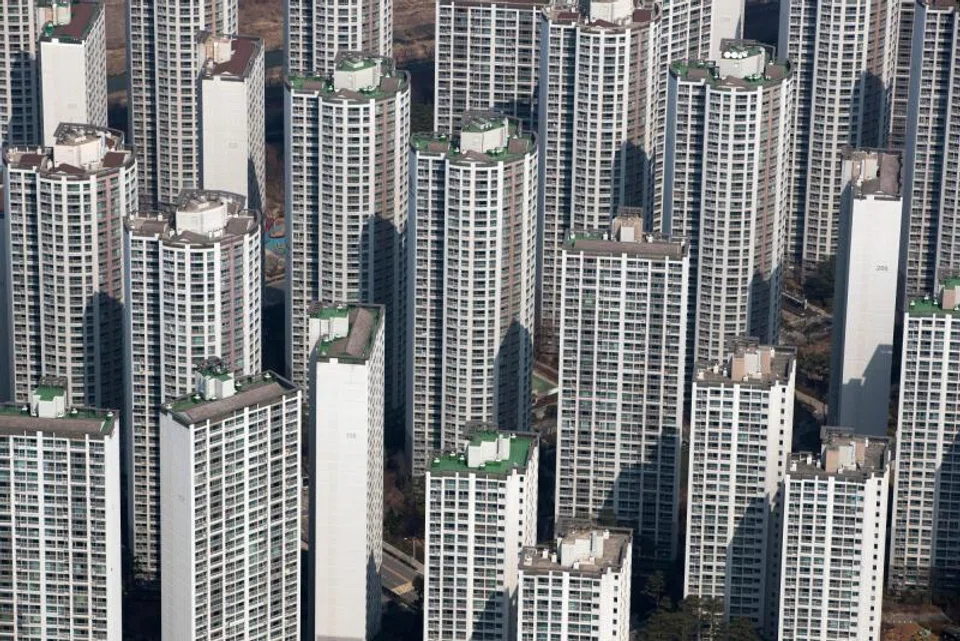
[SEOUL] A housing rally in South Korea’s capital extended to almost a full year, further complicating the Bank of Korea’s (BOK) policy calculus after the economy slid into contraction during the final quarter of 2025.
Apartment prices in Seoul rose 0.29 per cent in the week through Jan 19 – the biggest weekly increase since Oct 20 – when prices climbed 0.5 per cent, according to data released on Thursday (Jan 22) by the Korea Real Estate Board (KREB). It was the 51st consecutive week of advances. Nationwide prices also gathered pace, rising 0.09 per cent.
The latest figures mark a clear acceleration from earlier this month, highlighting the limitations of steps undertaken by the government last year that were meant to cool speculative demand.
Prices in Seoul rose 0.18 per cent in the week through Jan 5, followed by a 0.21 per cent gain in the week ended Jan 12, extending last year’s momentum after an almost 9 per cent advance in 2025.
Price gains have been driven by steady demand for preferred complexes, including redevelopment projects, newly built apartments and large-scale developments, the KREB said.
Buying inquiries have continued to rise in sought-after districts with strong residential conditions, such as top school zones and neighbourhoods with easy subway access, with some complexes experiencing shortages of listings that pushed transaction prices higher.
The resilience of the capital’s housing market stands in contrast to broader economic weakness, complicating policymakers’ efforts to balance supporting growth against the need to ensure financial stability.
Authorities have tightened credit conditions, including imposing caps on mortgage lending, but those measures have yet to cool price increases in Seoul.
The data follow figures earlier on Thursday showing South Korea’s economy unexpectedly contracted in the fourth quarter of 2025.



Last week, the BOK left its benchmark interest rate unchanged at 2.5 per cent for a fifth straight meeting and removed language in its statement referencing a potential rate cut, signalling a greater focus on containing financial risks.
Most economists now see the easing cycle as effectively over, warning that elevated property prices could fuel household debt and amplify currency-related volatility.
Policymakers have also flagged the concentration of wealth and economic activity in the capital as a growing concern, with a prolonged housing rally threatening to widen regional disparities. BLOOMBERG
Decoding Asia newsletter: your guide to navigating Asia in a new global order. Sign up here to get Decoding Asia newsletter. Delivered to your inbox. Free.
Share with us your feedback on BT's products and services