Serviced apartments seen as ‘game-changer’ for CBD rebuilds, but sustainability condition may raise costs
Updated incentive scheme requirements may deter developers and investors due to higher expenses, longer timeline: market watchers
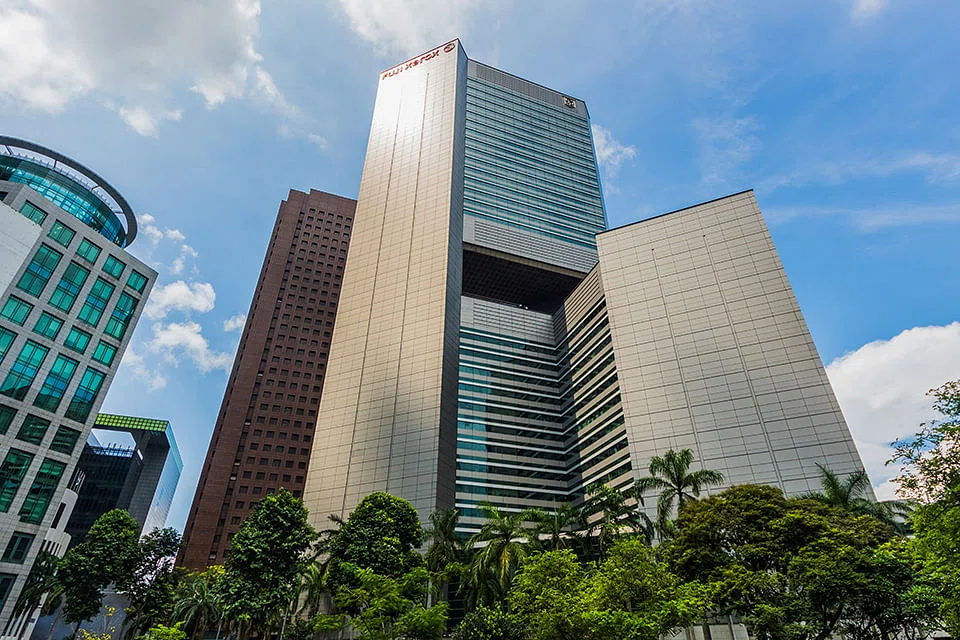
GRANTING redevelopments in the Cecil and Anson areas the option to retain commercial use if long-stay serviced apartments (SA2) are included in their proposals could be transformative for projects in the Central Business District (CBD), market watchers said.
However, the new sustainability requirement that all proposals under the Strategic Development Incentive (SDI) and CBD Incentive (CBDI) schemes must meet is likely to hike costs for developers.
The move to include serviced apartments could be a “game-changer” as a wider range of developers and investors may be willing to consider projects under this scheme, said Edwin Loo, an associate director at real estate consultancy Cistri.
Some strata-titled office buildings in Cecil Street which date back to the 1970s and 1980s – such as GB Building, Tong Eng Building and The Octagon – will soon need rejuvenation, he noted.
Encouraging redevelopment will help to improve the quality of Singapore’s office market, he added, while also expanding the range of CBD housing options through the inclusion of SA2.
The expansion of options to include long-stay serviced apartments “gives developers greater flexibility to meet market needs and introduce new living concepts”, said a City Developments Ltd (CDL) spokesperson.
CDL and its joint-venture partner, Mitsui Fudosan, are the first developers to work on an SA2 project at their Zion Road mixed-development site acquired in April 2024.
UOL group chief executive Liam Wee Sin noted that recent state land tenders with SA2 components received weak responses “due to the risks associated with this untested rental category”.
While the sustainability requirements under the updated SDI and CBDI schemes show the government understands the need to consider the impact of embodied carbon in property development, Loo said it may be neither feasible nor desirable to retain all, or some parts, of an existing building in every circumstance.
UOL’s Liam said: “Construction in the CBD tends to be more costly. The inclusion of a sustainability requirement may further add to the cost and make the construction timeline more protracted, and this may be a deterrent.”
The sustainability requirements may also “add a level of difficulty” for strata-titled buildings in the area which are attempting collective sales, said Tan Hong Boon, JLL capital markets executive director.
To incentivise redevelopment, Liam suggested that the five-year sales deadline faced by developers acquiring land for residential development be eased to seven years, for residential units built under CBDI and SDI schemes.
Developers face a hefty Additional Buyer’s Stamp Duty payment on the land purchase if they fail to sell at least 90 per cent of a project’s units within five years.
TRENDING NOW
MAS allocates S$1.45 billion to five asset managers in third EQDP batch: Chee Hong Tat
‘My grandfather’s legacy’: Sherman Kwek lays out three-year plan for CDL to drive returns
He built the Vingroup empire. Now South-east Asia’s richest man is handing some key roles to his sons
‘How many will survive?’: Bubble fears arise as China’s humanoid robotics face reality check