

Share of loss-making deals in condo resales creeps up in Q4: report
The biggest losers were mainly in the prime Core Central Region, with losses of S$407,531 to S$2.2 million

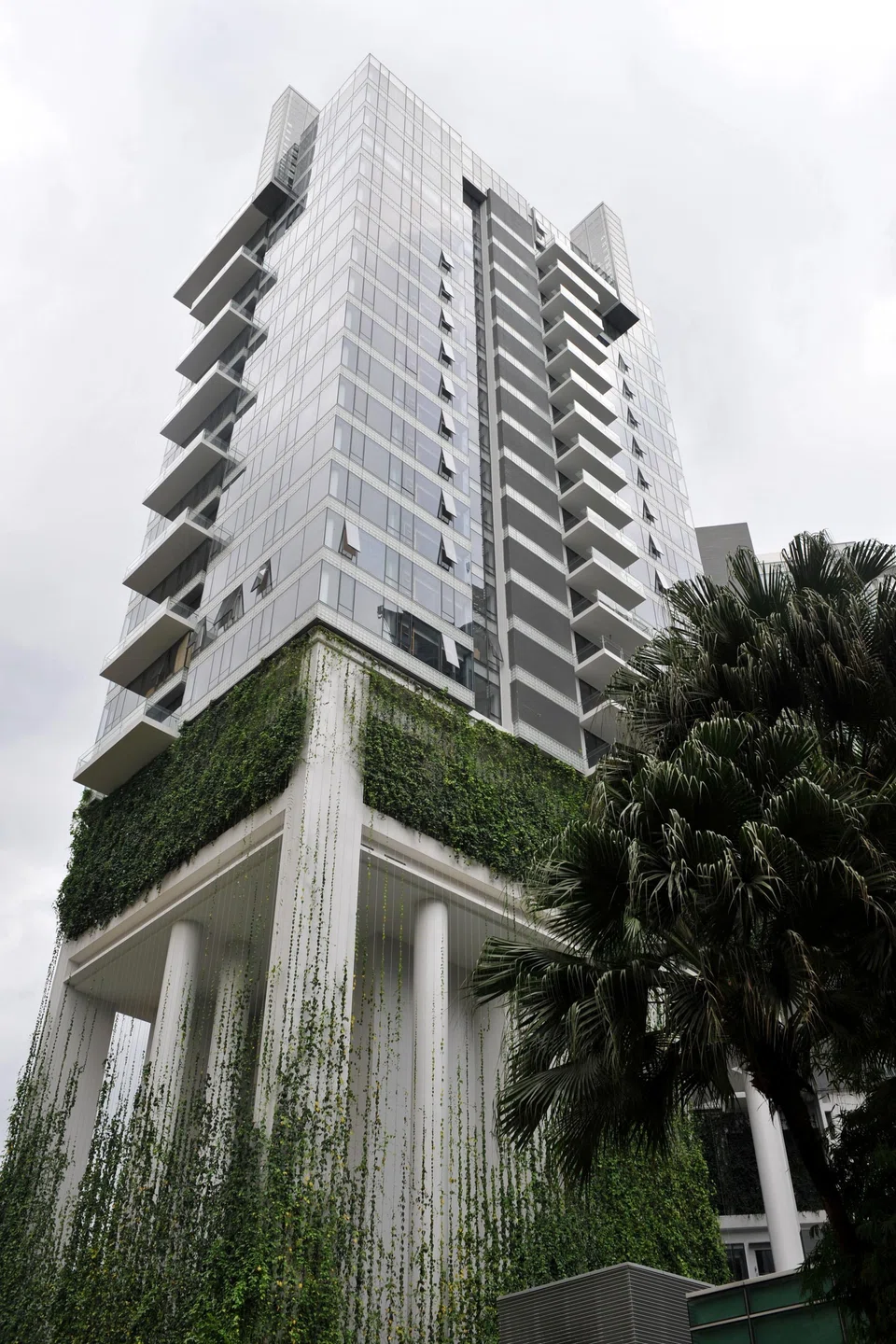
[SINGAPORE] The share of private residential properties resold at a loss edged up for the third straight quarter in the fourth quarter of 2025.
Based on data consolidated for The Business Times by real estate consultancy Cushman & Wakefield, 3.9 per cent of all resale transactions in Q4 2025 were made at a loss, up from 3.8 per cent in the third quarter.
It follows the 3.2 per cent posted in the second quarter and 2.7 per cent in the first quarter.
At 3.9 per cent, the proportion of loss-making exits is at its highest since Q2 2023, when 4.1 per cent of transactions were sold at a loss.
Cushman & Wakefield research head Wong Xian Yang noted that on an absolute basis, the number of loss-making deals was slightly lower in Q4, at 107 transactions compared with 108 in Q3. This was mainly due to a lower volume of deals in the quarter, with 3,955 recorded in Q4 versus 4,250 in Q3.
The data also showed that loss-making transactions in Q4 were less than a fifth of the level seen at its peak in Q2 2020, when 21.8 per cent of resale deals lost money. This happened during the early stages of the Covid-19 pandemic, when lockdown measures were introduced and market uncertainty was at its highest.
Since then, volumes and sentiment have recovered.
Over the past three years, the share of loss-making transactions ranged from 2.6 to 4.5 per cent. On average, around 3.5 per cent of all resale deals made losses per quarter.
Average gains on profitable transactions, excluding costs such as stamp duties, also rose to S$524,000 in 2025, from S$465,000 in 2024. On the flip side, average losses on loss-making deals increased to S$275,000 in 2025, from S$182,000 in 2024.
To be fair, Wong noted that while higher prices could have lifted profits, part of the increase in losses may be influenced by the inclusion of 2025 transactions, given that the analysis period is fixed from 2012 rather than based on a rolling 10-year window.
In the coming year, Wong reckons that overall levels of loss-making deals will remain low, given rising home prices.
Private residential prices are projected to rise 2 to 4 per cent in 2026, supported by low borrowing costs, increasing land prices, resilient buyer confidence and still-low unemployment rates, said Wong.
Public housing upgrader demand is likely to persist, even as momentum moderates, he added. In 2025, resale public home prices grew 2.9 per cent, the slowest annual increase since 2019.
“Affordability concerns are likely to play a larger role in shaping upgrading decisions, particularly as private home prices continue to climb,” Wong noted. Buyers may therefore become more selective in 2026, favouring better “value-for-money” segments or projects.
The biggest losers
Data compiled by Cushman & Wakefield showed that in Q4, properties in Singapore’s prime Core Central Region (CCR) and a few in the city fringe, or Rest of Central Region (RCR), suffered the largest losses in absolute terms, ranging from S$407,531 to S$2.2 million.
The seller of a 2,002 square foot (sq ft) unit at the freehold Helios Residences in District 9 chalked up the biggest loss in Q4. The unit was sold for S$5.2 million or S$2,572 per square foot (psf) in mid-November. This was a loss of S$2.2 million over the original purchase price of S$7.3 million or S$3,655 psf in January 2013.
Based on a holding period of nearly 13 years, the seller made annualised losses of 2.7 per cent.
By percentage, the biggest loss-making transaction was a 657 sq ft unit at the 103-year leasehold The Scotts Tower in District 9. It changed hands at S$1.2 million or S$1,828 psf in early October – nearly half the initial purchase price of S$2.5 million or S$3,833 psf in September 2012. This works out to annualised losses of 5.5 per cent over a holding period of just over 13 years.
Caveat data of landed and non-landed private homes also showed that the majority of loss-making deals – 66 per cent – were prime CCR properties. RCR accounted for 20 per cent of such deals, and the Outside Central Region (OCR), 14 per cent.
The most lucrative resale deal in Q4 was for a 2,885 sq ft unit at the luxury condo Ardmore Park in District 10. The unit was sold at S$12.5 million or S$4,333 psf in late October, reaping the seller a cool S$3.9 million in profit over the original purchase price of S$8.6 million or S$2,981 psf.
This translated to an annualised profit of 3.7 per cent, based on a holding period of 10.3 years.
In terms of percentage gains, executive condominium (EC) transactions were yet again the most profitable in the quarter, with gains of 133 to 143 per cent, continuing a trend that emerged in Q1 2023.
Four of the top five gainers by percentage were from Hundred Palms Residences EC in Yio Chu Kang, which reached its five-year minimum occupation period in December 2024.
Caveats data showed 106 resale transactions since then, at a median price of S$1.8 million or S$1,830 – more than double the median price of S$857,300 or S$844 psf that new sales recorded.
Topping the list in Q4 was a 1,270 sq ft EC unit at Hundred Palms Residences, which sold for S$2.6 million or S$2,015 psf in early October. The seller made a S$1.5 million profit – 143 per cent of the initial price of just over S$1 million or S$828 psf in July 2017. This works out to an annualised profit of 11.5 per cent over a holding period of 8.2 years.
Excluding ECs, all the top-five percentage gainers were for units in the suburban OCR.
The top money-making deal by percentage gain was a 1,q227 sq ft unit at the 99-year leasehold River Isles in District 19’s Punggol. It transacted at S$2.1 million or S$1,695 psf in early December, almost double the original purchase price of around S$1 million or S$853 psf in August 2012. Based on a holding period of 13.3 years, the seller made an annualised profit of 5.3 per cent.
For its study, Cushman & Wakefield examined caveats for non-landed private homes that were transacted in Q4, and which had prior purchase history between January 2012 and December 2025. The analysis excludes transaction costs and taxes, such as buyer’s stamp duty and seller’s stamp duty.
TRENDING NOW

Once staunchly pro-China, Malaysian Chinese businesses are now distancing themselves from Beijing

Looking beyond looming CEO succession, should UOB potentially pursue a transformative merger?

Could stablecoins be the future of money?

Grab CEO’s wife Chloe Tong on life with Anthony Tan and finding her purpose

