Shorter leases for commercial land unlikely to depress CBD Grade A office rents

IF AND when the Singapore government releases more commercial sites with lease durations below 99 years, there could be downward pressure on rents of some office spaces, especially those in suburban locations.
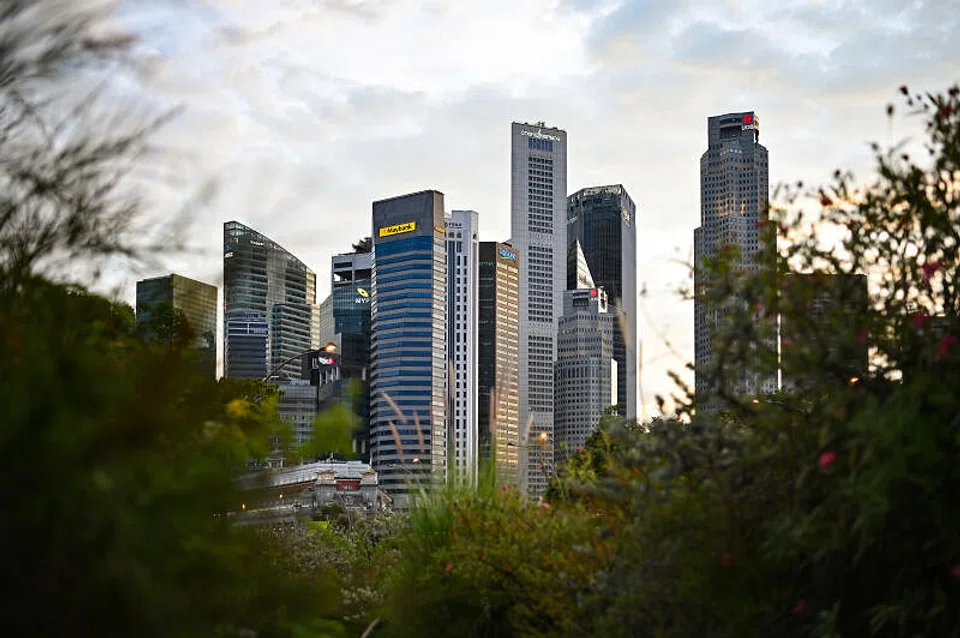
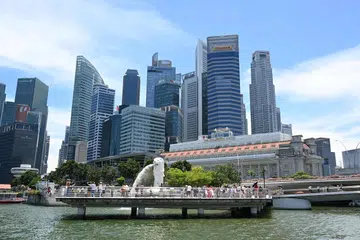
However, Grade A buildings in the Central Business District (CBD) are unlikely to face significant competition from these shorter-tenured spaces, real estate analysts told The Business Times (BT).
The Urban Redevelopment Authority (URA) is exploring rolling out more short-term lease sites to provide more options and flexible spaces, under its latest Long-Term Plan Review (LTPR). This will potentially allow Singapore to refresh its land uses in shorter cycles.
URA will take into account stakeholders' considerations, such as the need for property developers to recoup their infrastructure outlay and to cater to their potential tenants' requirements.
Studies are underway for such sites, and more details will be shared when ready.
Second Minister for National Development, Indranee Rajah, likewise said at an Apr 9 dialogue session that the government intends to introduce commercial sites with shorter-term leases.
Shorter leases for commercial land "will provide businesses with more flexibility, allowing spaces to support evolving business operations", Indranee noted at the virtual event, which is part of URA's public engagement exercise for the LTPR.
"Shorter leases will allow us to respond to future uncertainties more nimbly. Some of these will also be sited outside the CBD, improving transport outcomes and bring greater convenience to residents," she added.
Commercial land in Singapore has generally come with 99-year tenures, with the exception of a few parcels that carried shorter leases of 15 to 60 years. Roughly a decade ago, URA also sold 7 experimental transitional office sites on 15-year leases.
Wong Xian Yang, head of research, Singapore at Cushman & Wakefield, does not anticipate any freshly released sites with shorter leases to have an impact on the upward trajectory of office rents over the medium term, as new supply would still need to be built up.
"Considering the sale process and construction period, future developments would only be completed after 2027," he said in response to BT's queries.
Additionally, the number of commercial sites rolled out in the CBD will likely be limited, given the government's stance to decentralise commercial activities away from the city centre and to provide workspaces closer to homes, Wong noted. New sites are also expected to be released gradually to avoid a future supply glut.
"As such, the overall impact on CBD Grade A rents may be limited," he said.
And if shorter-tenured commercial sites become prevalent, that will increase the value of longer-tenured land, as the latter will be perceived to be more scarce, Wong pointed out.
Savills Singapore executive director of research and consultancy, Alan Cheong, highlighted that the current basket of Grade A CBD offices are a category disjoint from the offices that will be built on short-term land leases.
Given a longer lease to recoup development costs, the build quality of Grade A office buildings will be much higher than those built on land with much shorter tenures, he said.
However, he flagged a possible negative impact if the length of the ground lease is equal to the economic life of a Grade A skyscraper. "If the length of the ground lease is, say, 50 years, a top-quality office building can still be constructed and if this is located in the CBD, it will be a competitor to similar-grade office buildings in the vicinity."
This is unlikely to depress rents significantly if the office market is tight. "But if the building (sitting on shorter-tenured land) happens to be marketed at a time when conditions are slack, then with a significant discount given on the land cost, the landlord has the latitude to undercut the rest who had recently purchased land based on a longer lease life," Cheong said.
CBRE head of research for South-east Asia, Tricia Song, similarly noted that while a shorter land lease can lower the upfront land cost, it may also reduce the incentive to build up quality specifications, as the higher costs would need to be amortised over a shorter period.
In her view, assuming that the same amount of supply will be released regardless of land tenure, and considering that rents are not dependent on land tenure, overall rents would not be affected. The length of the land tenure typically affects capital values as the same rent is now capitalised over a shorter period of time, Song said.
Regina Lim, head of strategy advisory, capital markets at JLL Asia-Pacific, thinks that shorter land leases are unlikely to support changing business needs. "In contrast, when land leases are very short, developers and investors may find it challenging to invest in quality developments with the right scale and efficiency that will support the expansion and establishment of regional businesses in Singapore."
That said, Lim agrees with the URA's objective to give businesses more flexibility, which she reckons may be best achieved by having more flexible zoning rules as economic trends tend to change every 3 to 10 years. "For instance, we could review the overlaps between the allowable uses between business park, B1 and office zoning, as many businesses find that their operations continue to evolve and cannot neatly fit into one zone or the other," she suggested.
Meanwhile, Catherine He, Colliers' head of research for Singapore, told BT that the introduction of commercial sites with shorter leases will not affect rents in the CBD, where occupiers tend to value the relative prestige and convenience of a CBD address over possible cost savings from lower rents.
However, it might affect suburban rents, depending on the product offering and location. "If these offices (with shorter land leases) are of better quality and more accessible than those around Jurong Lake District and Punggol Digital District, they will come into direct competition," said He.
She added that ultimately, the goal of these short-lease commercial sites is to realise Singapore's decentralisation plans, by providing more decentralised options for businesses and workers, as well as to alleviate congestion in the CBD.
At the LTPR dialogue session on Apr 9, Indranee said the government will focus its efforts on decentralisation, and continue to inject workspaces in islandwide economic centres such as the Jurong Lake District and the Punggol Digital District so that jobs will be closer to where people live.
"We will also explore providing more co-working spaces to meet changing needs," noted Indranee, who is also Minister in the Prime Minister's Office and Second Minister for Finance.
Lim from JLL is in favour of the strategy to inject workspaces into regional hubs of critical mass. "As more businesses are increasing the flexibility in how their employees work, such regional hubs will facilitate companies that may want to provide options both in the CBD and outside the CBD for their teams," she said.
In previous years, URA has sold a number of commercial sites with lease durations shorter than 99 years. For instance, in March 2013, Fragrance Group clinched a 11,607 square metre (sq m) food and beverage site at Punggol Point with a 15-year lease duration for about S$11.4 million.
In 2002, a 30-year, 1,088 sq m commercial site at Fullerton Road and Esplanade Drive fetched S$9.3 million after a state tender that attracted 3 bids. And in 2006, a hotly contested 60-year hotel and commercial plot at Collyer Quay, spanning some 26,704 sq m in land area, was purchased by a Sino Land unit for S$165.8 million.
To quickly tackle a shortage of office space and soak up demand before the global financial crisis, the government also sold sites on 15-year leases for development into transitional office projects. Between 2007 and 2011, URA awarded 7 sites in this category, amounting to nearly 79,000 sq m in land area.
At the time, property analysts said transitional offices could fill the gap for occupiers with constrained budgets or those whose business models required large headcounts.
The first transitional office site, along Scotts Road and next to Newton MRT station, was awarded at a state tender in August 2007. Subsequent parcels were located in Tampines, Mountbatten Road, Scotts Road and Anthony Road, and Mohamed Sultan Road. Their 15-year leases will expire between 2022 and 2026.
READ MORE:
- CBD office rents continue northwards, underpinned by healthy demand: Colliers
- Singapore CBD Grade A office rents book fastest quarterly growth since recovery: JLL
- PropertyBT: Will demand for Grade A office space return?
- Singapore office Reits poised to benefit from positive rental momentum
- What will happen to the experimental transitional office sites?