

Singapore central region retail rents down 0.4% in Q3, recovery on the cards
Corinne Kerk
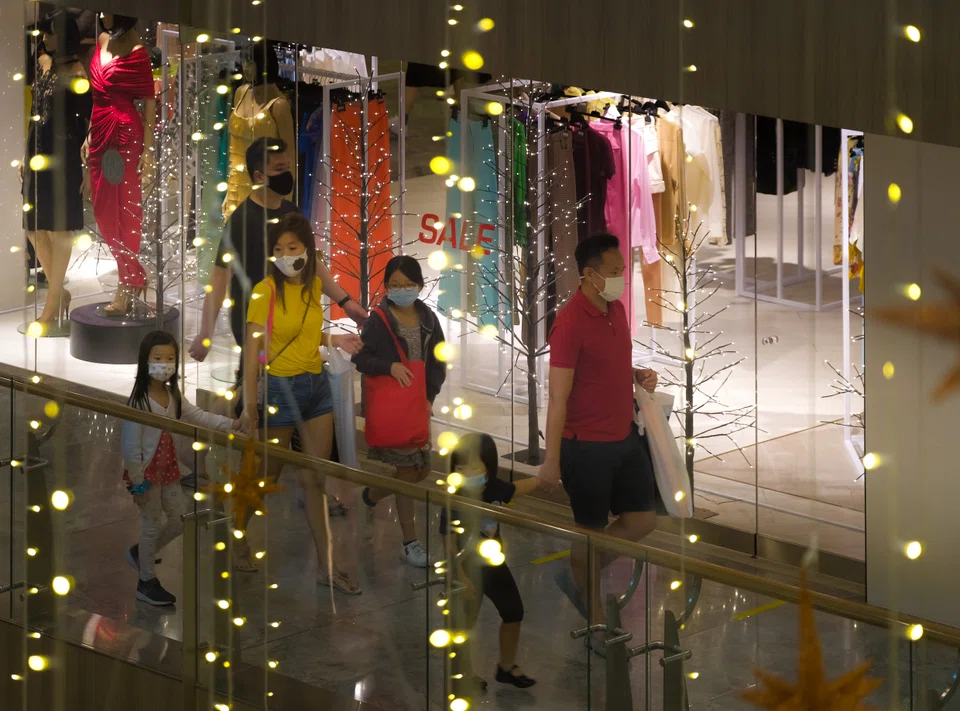
HIGHER inflation, manpower shortages and recession concerns will continue to weigh on the retail market, but the sector appears to be on its way to recovery, supported by a tight supply pipeline.
Rents of retail spaces in Singapore’s central region fell for the third quarter in a row this year. Q3 2022 rents slipped 0.4 per cent quarter on quarter, marginally better than Q2’s 0.5 per cent decline, according to figures from the Urban Redevelopment Authority (URA) released on Friday (Oct 28).
Prices of retail space in the central region also fell by 3.2 per cent in Q3 after it dipped 1.2 per cent in Q2.
Nevertheless, analysts expect both prime and downtown retail to recover this year and next with the return of tourists, as well as resumption of meetings, incentives, conventions and exhibitions (Mice) events and business travel.
“Retailers are once again encouraged to set up shops or expand their existing footprint,” said Leonard Tay, head of research at Knight Frank. In Q3, about 2.2 million international tourist arrivals were recorded, compared to the 1.3 million in Q2, bringing buzz back to retailers, he noted.
Added Colliers’ head of research Catherine He: “Other retail indicators continued to show further signs of recovery, in tandem with the substantial relaxation of safe management measures and border restrictions.”
Retail sales (excluding motor vehicles) continued its positive growth since February 2021 at 14 per cent year on year in August 2022, after accounting for seasonal effects.
Consumers have also been incentivised to purchase from brick-and-mortar stores for smaller purchases as e-commerce players are charging higher delivery fees for smaller deliveries due to surging logistics costs, said He.
Further, improved retail footfall and sales with the shift in demand from goods to services, removal of restrictions and resumption of events and atrium activities, are likely to spur healthier leasing activity, she added.
Tricia Song, CBRE’s head of research, South-east Asia, said the retail market is largely two-tiered, with the overall market weighed down by the performance of secondary malls and corridors, while prime retail rents have embarked on a nascent recovery in Q3.
She said retailers are taking a long-term view and are confident of the eventual recovery of Singapore’s retail market, with events such as the Formula 1 Singapore Grand Prix and accompanying MICE events held in Q3 helping boost retailer sentiment.
“While F&B operators were the main drivers of demand, there were also some local online fashion and athleisure retailers pursuing omnichannel strategies,” said Song.
Though retailers are “understandably cautious” on overcommitting to high rents in this sombre climate, Lam Chern Woon, Edmund Tie’s head of research and consulting, has observed rental recovery in prime Orchard and suburban malls.
Meanwhile, the drop in retail space prices was likely driven by falling retail rents and investor expectations of higher property yields in a rising interest rate and inflationary environment, and recessionary concerns, said Angelia Phua, JLL’s consulting director, research and consultancy, Singapore.
At the end of Q3 2022, there was a total supply of 415,000 square metres (sq m) gross floor area of retail space from projects in the pipeline, compared with the 438,000 sq m in the previous quarter.
Average new retail supply in the next few years is approximately 30 per cent of the historical 10-year average, with limited supply for prime retail, thus lending support to a more meaningful improvement in rents and occupancies in the coming quarters, said Colliers’ He.
In Q3, the stock of retail space rose by 10,000 sq m net lettable area (NLA), compared with the increase of 1,000 sq m in the previous quarter. The third quarter also saw the amount of occupied retail space increase by 30,000 sq m of NLA, versus the increase of 8,000 sq m in Q2.
By the end of September, islandwide vacancy rate decreased to 7.8 per cent, from 8.2 per cent as at end June.
This is the lowest level recorded since the start of the pandemic in early 2020, said Edmund Tie’s Lam, adding that vacancy rates are gradually inching closer to the pre-pandemic level of 7.5 per cent recorded in Q4 2019.
“While vacancies were unchanged in the Outside Central Region, all other areas experienced a fall in vacancies, with the Orchard Area recording the sharpest decline among the various subzones due to buoyant leasing demand,” he said.
In the last quarter of the year, notable events such as the 11.11 Sale, Black Friday, Christmas, as well as New Year’s Eve, are expected to drive retail spending. “Riding on the encouraging momentum towards a sustainable recovery, prime retail rents are on course to grow by the earlier projection of 2 per cent to 4 per cent for the whole of 2022,” said Knight Frank’s Tay.
While headwinds could obstruct recovery, the retail market is set to witness further growth with the updated Retail Industry Transformation Map 2025 anticipated to spur innovation in the retail scene, said Edmund Tie’s Lam.
He expects prime first-storey Orchard rents to lead the market recovery and clock around 10 per cent rental growth this year, while other segments are poised for between 3 per cent and 8 per cent growth. For 2023, due to significant cost pressures and headwinds, he expects lower rental growth of between 8 per cent and 9 per cent for the former, and between 3 per cent and 6 per cent for the latter.






