

Singapore co-working players face slower growth; landlords wary after WeWork bankruptcy
Samuel Oh
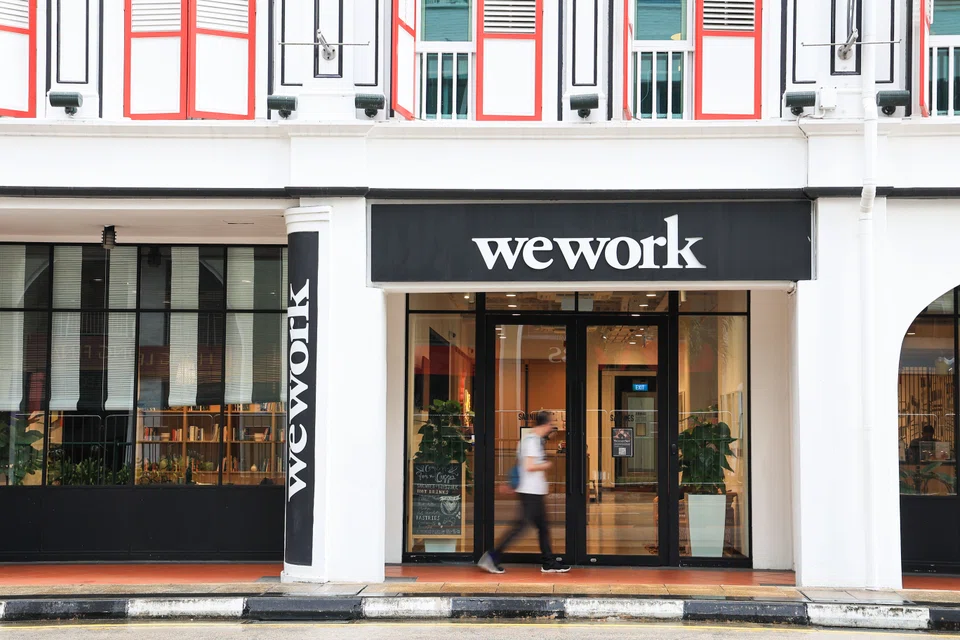
THE collapse of co-working giant WeWork in the United States has caused some jitters in Singapore, where co-working operators are already experiencing significantly slower growth in a crowded market.
But some players are optimistic that demand for flexible work space is intact, and are even eyeing WeWork’s spaces here for expansion.
A WeWork Singapore spokesperson told The Business Times that there are no plans to downsize or shutter any of its 14 locations here for now, “even as we are in a real estate rationalisation exercise globally”.
WeWork’s landlords may have other plans.
Co-working operator The Executive Centre (TEC) “is in direct communication with landlords in Singapore and throughout Asia and Australia” to explore certain opportunities, founder and chief executive Paul Salnikow told BT, when asked whether TEC had plans to take over any of WeWork’s operations.
“Since WeWork’s bankruptcy filing, TEC has been approached by 17 WeWork landlords across TEC’s 33 markets,” he said. TEC operates eight centres in Singapore.
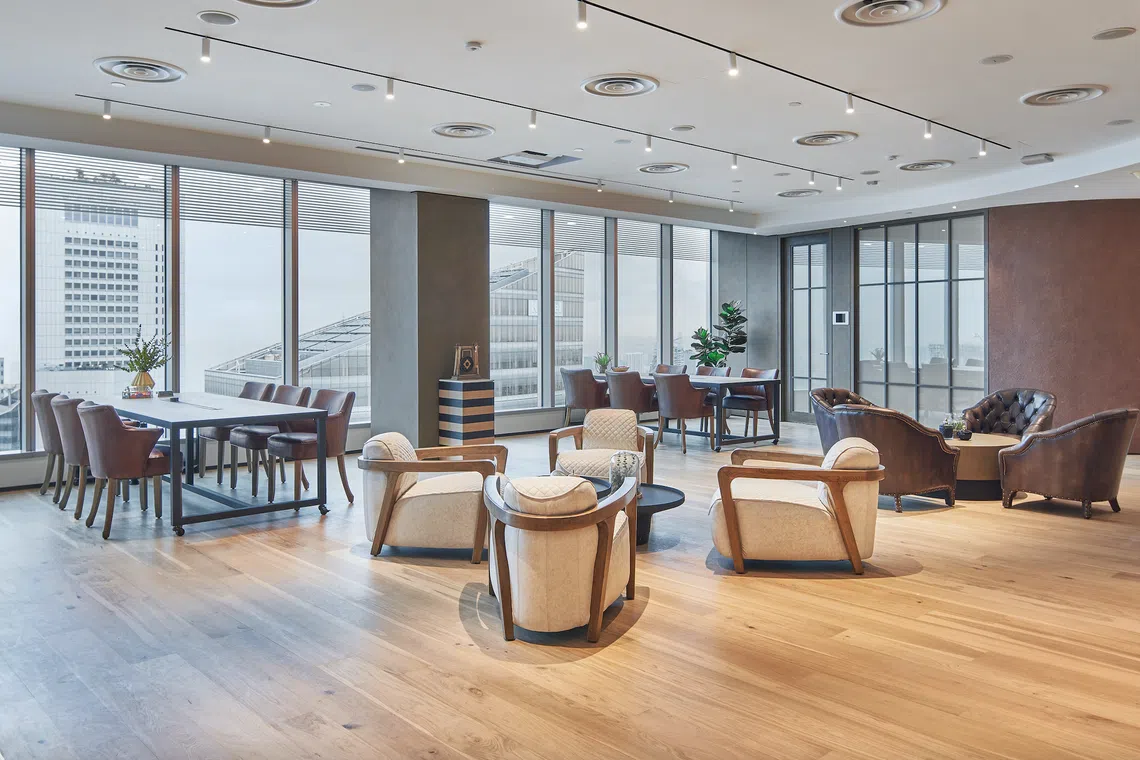
Colliers Singapore’s managing director Bastiaan van Beijsterveldt anticipates that other co-working operators would be interested in evaluating WeWork’s locations for potential expansion, if WeWork eventually exits any of its Singapore centres.
TEC’s Salnikow added, however, that “most of the WeWork centres are too large, (and) have been poorly built and badly managed”.
“WeWork clients have benefited from WeWork selling their space at below-cost prices. Anyone looking to take over WeWork centres will have to contend with the issues of too much capacity, the need to upgrade the facilities, and the need to reprice and thus, most likely, turn over the existing client base,” he said.
Even with the economy “firing on all cylinders”, the co-working market is oversupplied, said Alan Cheong, Savills Singapore’s executive director for research and consultancy.
“But give it another year. Market forces would cull enough in the market to build a base for those still left standing. Therefore, even though there are still players out there who have the financial sustenance to make it through the crucial coming year, most will still be very conservative when it comes to expanding,” he said.
Landlords are still receptive to signing up or renewing leases with co-working providers, said Noeleen Goh, head of real estate at The Work Project (TWP), which runs 10 centres in Singapore.
“However, they are likely to be more discerning with the quality of the operator, and the total amount of exposure to co-working tenants,” Goh said.
A CBRE report on the flexible office market in the first half of 2023 estimated there were 72 operators in Singapore, occupying close to 4 million square feet (sq ft) of space as at June this year, compared to 2.5 million sq ft in 2018.
Growth in supply has slowed significantly, with flexible office stock up a mere 4 per cent in 2022 and for the first six months of 2023, said CBRE.
This pales in comparison with the double-digit growth of 34 per cent in 2018, and 31 per cent in 2019; after that, supply edged up by 6 per cent in 2020 and another 6 per cent in 2021.
For 2023, CBRE expects flexible office market supply to grow by 6 per cent.
Tenants may be turning to other options. “There is more shadow space in the market, which competes with co-working operators in offering tenants a readily fitted office,” said Colliers’ van Beijsterveldt, referring to space that is leased but not currently being utilised.
Yvonne Lim, managing director of South-east Asia at TEC, expects demand for flexible workspaces in Singapore to rise, given that more companies have adopted flexible lease terms following the pandemic.
With the lack of top-grade office vacancies, however, it is challenging to find suitable prime space for expansion, she added.
Funding is another challenge faced by co-working companies, said Savills’ Cheong.
“For brands to remain in the race to prove to both landlords and tenants that they are here to stay, they need funding,” he added.
While co-working operators are still expanding, the pace of expansion has slowed significantly.
“Many co-working operators are also shifting towards a capital-light model and favouring management contracts rather than a direct lease. However, many landlords still prefer a direct lease, as they do not wish to take on operational risks,” said Jeryl Teoh, co-head of commercial leasing at Cushman & Wakefield.
“Some of the major landlords in Singapore are also active in the co-working space, and have either partnered with co-working operators, or have developed their own co-working spaces,” Teoh added.
Being asset-light may be the way to go when signing management contracts with landlords to manage their real estate spaces, said Kong Wan Long, chief commercial officer of JustCo, which operates 21 centres in Singapore.
JustCo works with landlords under “partnership models” on a performance-based revenue-sharing or profit-sharing model. The company declined to comment when asked whether it planned to take over any of WeWork’s operations.
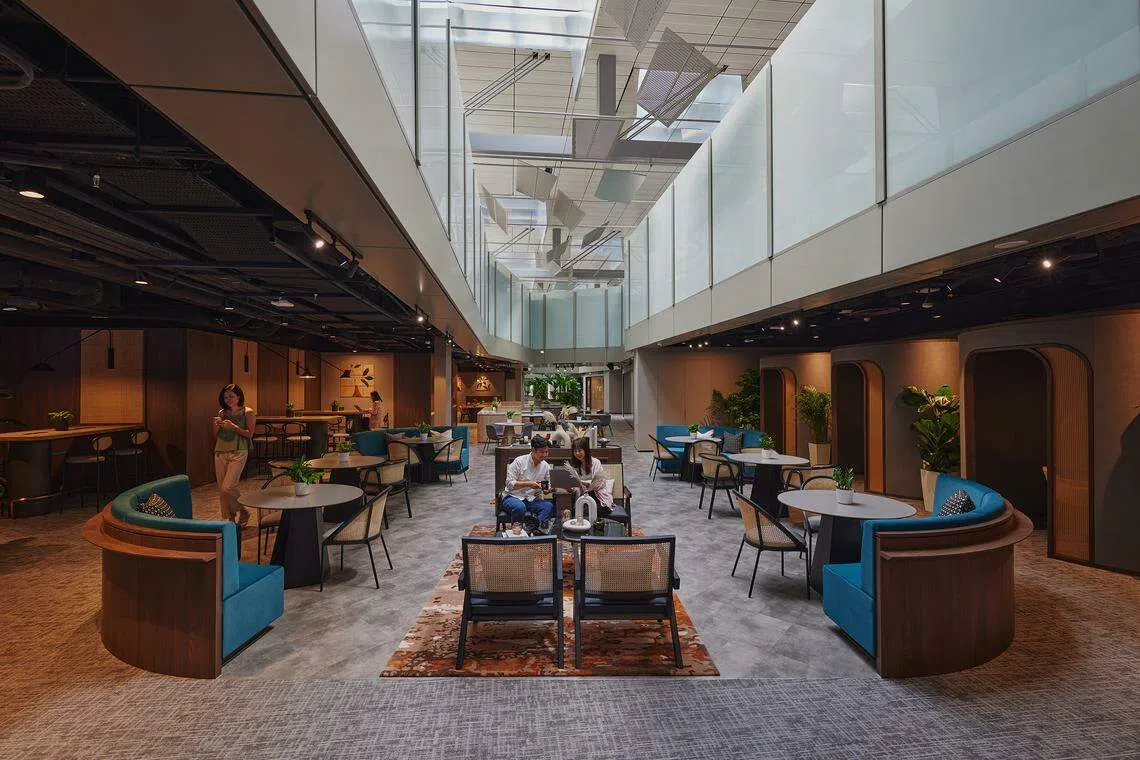
According to CBRE, eight co-working centres opened in the first half of this year, adding more than 180,000 sq ft, amid a softening of the overall office market.
Major new openings include the Network Hub in Guoco Midtown with 80,000 sq ft, Capital Square by TEC with 30,000 sq ft, Central Plaza by JustCo with 22,000 sq ft, and Eu Yan Sang Building by The Great Room with 22,000 sq ft.
Co-working operators generally sign medium- to long-term lease agreements of at least five years with an option to renew for another five years, noted Colliers’ van Beijsterveldt.
Conventionally leased office space typically costs S$6 to S$14 per sq ft per month. The average rent for a co-working space ranges from S$600 to S$1,400 per desk per month, said Knight Frank’s director for occupier strategy and solutions, Karen Tan.
According to CBRE, desk rates in the central business district (CBD) were up 6 per cent to 10 per cent in the first half of 2023, from end-2022. CBRE put average desk rates in core CBD locations at S$900 to S$1,500 per month; fringe CBD centres charge S$800 to S$1,200 per month.
Several co-working operators say they still want to grow.
TEC will have 29 new centres across the Asia-Pacific and the Middle East, with 474,000 sq ft of space by end-2023. In Singapore, TWP recently took on a full floor in Capital Tower and another full floor in CapitaGreen; JustCo plans to open a new centre in Raffles Place in Q1 2024.
“We do see corporations increasing their use of flexible working space. Many companies also view co-working space as complementary to traditional office spaces (that) can inject flexibility in an occupier’s real estate portfolio,” added Teoh from Cushman & Wakefield.
TRENDING NOW
From AI financing to Indonesia outlook: 4 takeaways from Singapore banks’ Q3 results
VinFast, Mitsubishi weigh Philippine EV production as state incentives near
Analysts cut DBS target price on lower 2027 earnings, but see buying opportunity after share price slide

Could Japan trigger the next global financial crisis?

