Singapore developers, architects urged to design buildings for easier maintenance, major cost savings
BCA study shows owners of commercial buildings can save up to S$950,000 a year in upkeep

[SINGAPORE] Designing buildings for easier maintenance from the outset can generate annual operational savings of up to S$950,000 for commercial buildings, preliminary findings from a Building and Construction Authority (BCA) study showed.
The upfront spend would be no more than 1.5 per cent of total construction cost.
Buildings with features designed for maintainability saw reduced annual maintenance man-days, with many achieving savings of more than 60 per cent, and the biggest productivity gains coming from architectural decisions such as floor materials, ceiling types and facade access.
Sharing the results of the BCA study at the opening of Singapore Archifest 2026 on Wednesday (Jul 22), Minister for National Development Chee Hong Tat pointed to the newly redeveloped Shaw Tower as an example.
By including a simple cat ladder for access to its cooling tower instead of requiring scaffolding to be set up for each round of maintenance, “Shaw Tower can enjoy lifecycle savings of over S$750,000 with a payback period of just three years,” said Chee.
“With cooling towers having a typical 15-year service life, recovering the investment in three years means net positive returns thereafter for the remaining 12 years.
“I would like to encourage more developers and architects to adopt DfM (Design for Maintainability) to reap the cost and manpower savings,” added Chee. “Eventual building owners and tenants would also appreciate the value that has been created upstream, which will add value to their properties.”
The BCA study, conducted with Surbana Jurong (SJ Group), looked at DfM, an approach that factors longer-term maintenance needs into a building’s design from the outset to lower upkeep costs and manpower demands over its life cycle.
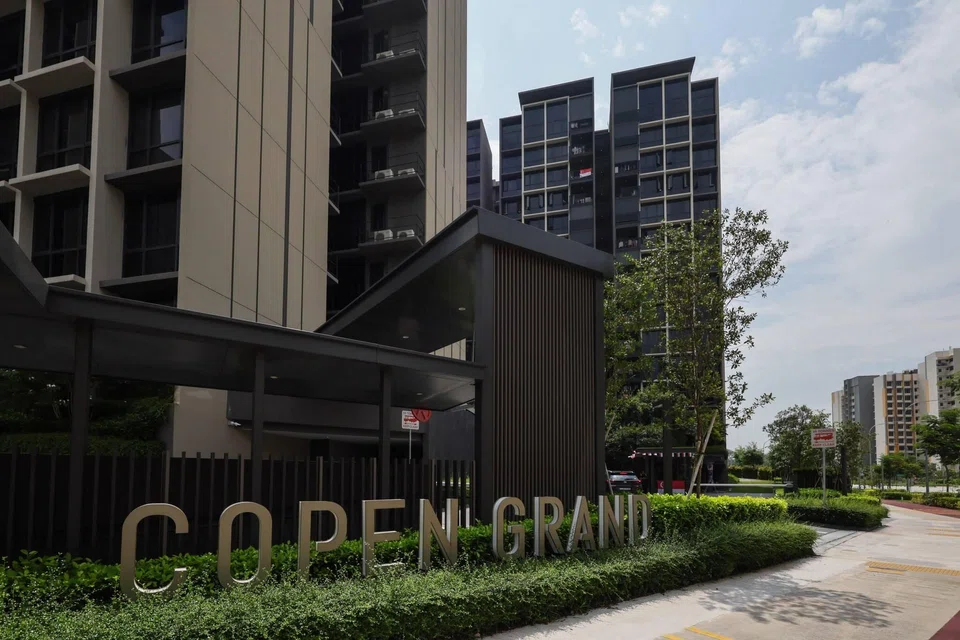
It examined four local developments: two existing commercial buildings, SJ Campus and CapitaLand Development’s Ascent; the new Shaw Tower, owned by Shaw Towers Realty with Lendlease as project and development manager; and Copen Grand, an executive condominium (EC) in Tengah developed by City Developments Ltd (CDL) and Sunway MCL.
Across the three commercial buildings, potential annual operational savings from adopting DfM ranged from S$310,000 to S$950,000, with the majority of measures achieving payback in under six years, BCA said.
For Copen Grand, potential savings could reach up to S$110,000 a year, with most measures paying back within five years.
The additional cost of incorporating these features was modest, at 0.6 to 1.5 per cent of total construction cost for the commercial buildings, and just 0.2 per cent for the residential development.
As Singapore’s building stock grows and ages, while the workforce available to maintain it shrinks, designing buildings that last longer and cost less to upkeep will be key. To date, 67 projects have obtained the Green Mark Maintainability (Mt) Badge, which recognises exemplary adoption of DfM measures.
Deva Lutchia, principal manager at BCA’s facilities management transformation department, told The Business Times that the study changes the nature of the agency’s conversations with developers.
“Where we were yesterday, we could only tell them that this is important. Where we are today is at a juncture where we can tell them convincingly that not only is this important, but I’ve been able to prove to you why it is important, in terms of clear figures, hard figures that we have,” he said. “That makes a lot of difference when it comes to our confidence when we talk to the developers.”
BCA will take the findings into account in its review of the maintainability section under its Green Mark 2021 certification scheme, he pointed out.
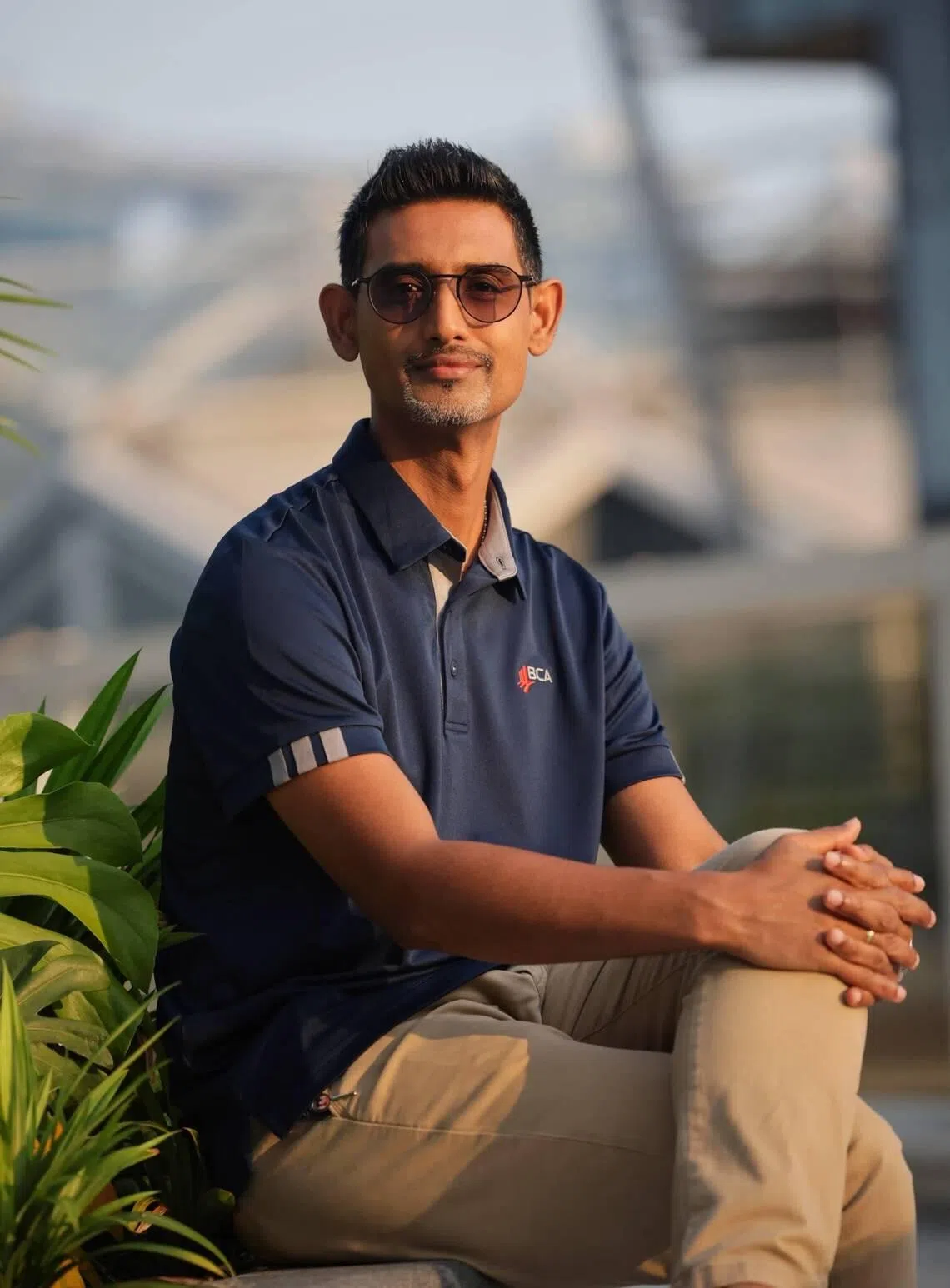
While DfM is a design-stage framework, Lutchia noted that it is also relevant to Singapore’s building stock, which is primarily made up of existing buildings.
Major addition and alteration works offer “a good window” to integrate maintainability features, he said, such as switching to more durable materials during re-tiling.
At Copen Grand, a 639-unit EC which obtained its Temporary Occupation Permit in April 2025, DfM features include gondola access to all residential block facades, gravel paths that reach planting areas without disturbing them and rain cover overhangs at lift lobbies.
It is also the first BCA Green Mark Platinum Super Low Energy EC in Singapore.
Tay Seok Cheng, CDL’s senior vice-president and deputy head of property development division, told BT that the developer had incorporated design for maintainability features into its developments “far before BCA formally introduced this”, drawing on feedback across its past projects. The completed Tembusu Grand, Lumina Grand and Copen Grand carry the Mt Badge, she said, as do Norwood Grand, Zyon Grand, Union Square Residences and The Orie, which are under construction.
BCA and SJ Group will hold a series of industry engagements to gather feedback on the findings before the final report is released later this year.
Decoding Asia newsletter: your guide to navigating Asia in a new global order. Sign up here to get Decoding Asia newsletter. Delivered to your inbox. Free.
Copyright SPH Media. All rights reserved.